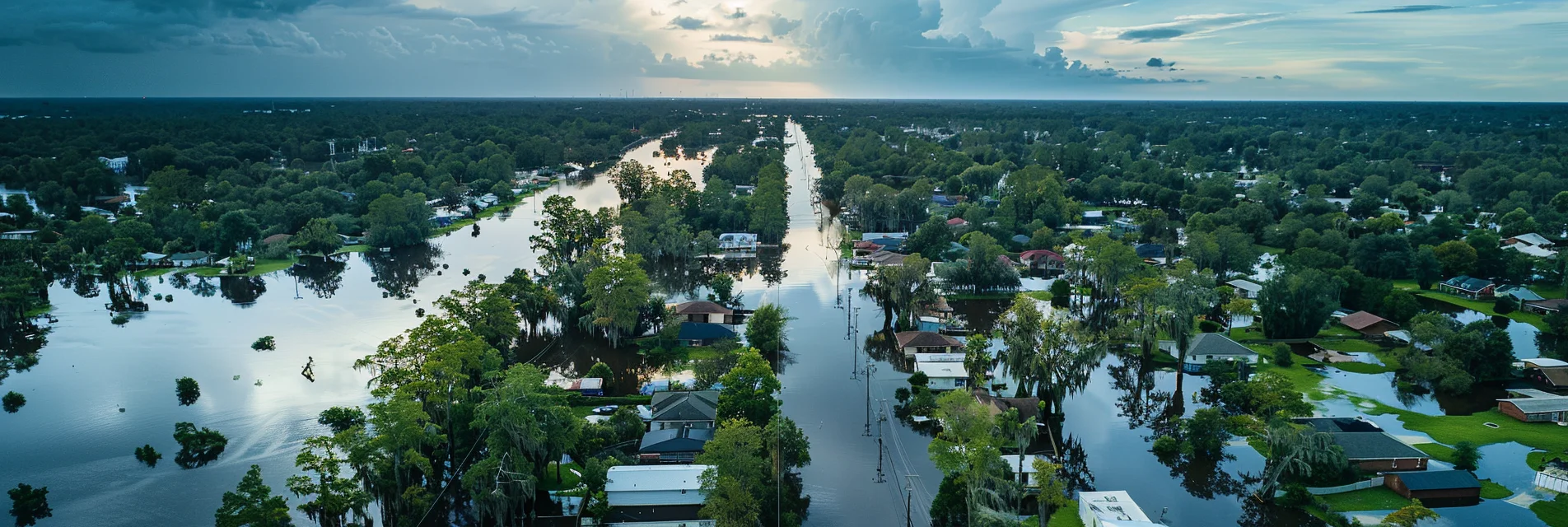
South Carolina ranked third nationally in the IBHS 2024 building code ratings — a major improvement driven by stronger enforcement of the 2021 IRC along the coast. Coastal counties from Horry to Beaufort follow wind-borne debris region requirements mandating enhanced roof attachment. Hugo (1989), Floyd (1999), Matthew (2016), and Dorian (2019) define South Carolina's storm history.
Storm damage on South Carolina coastal roofs
The Lowcountry and Grand Strand face Atlantic hurricane tracks that have historically produced some of the most damaging landfalls on the entire East Coast.
Hurricane Hugo's 1989 landfall near Charleston remains the benchmark — roofs across the Lowcountry were stripped, recovery took years, and rebuilding codes were significantly strengthened in the aftermath. More recent storms — Matthew (2016), Dorian (2019), and multiple tropical storms — produce consistent wind damage from Myrtle Beach south through Hilton Head. The sandy barrier islands amplify surge and wind exposure significantly.
Inland South Carolina — Columbia, Greenville, Spartanburg — regularly sees significant roof damage from severe thunderstorms, tornadoes, and hurricane remnants tracking inland. South Carolina averages 3–5 significant hail events per year statewide.
🌀 Recent South Carolina storm benchmarks
Hugo (1989), Floyd (1999), Matthew (2016), and Dorian (2019) are South Carolina's defining storm events. Hugo caused $7 billion in 1989 dollars — approximately $18 billion adjusted — making it one of the costliest landfalls in US history at the time.
Coastal roof types & how they hold up in South Carolina
The right roof for a South Carolina coastal home balances wind rating, cost, and local climate exposure.
Architectural shingle
Most common statewide. Class 4 impact-rated strongly recommended for Horry, Charleston, and Beaufort county homes.
Metal roofing
Excellent for Lowcountry humidity and wind. Salt air resistance and long lifespan make it popular on barrier islands.
Tile and slate
Present in Charleston's historic district and high-end coastal markets. Requires licensed historic specialist after storm damage.
📋 South Carolina building code overview
South Carolina follows the 2021 IRC statewide with ASCE 7-16 high-wind coastal provisions. Horry, Georgetown, Charleston, Colleton, Jasper, and Beaufort counties are wind-borne debris regions requiring enhanced roof attachment and impact-resistant openings where wind speeds exceed 130 mph.
2026 roof repair & replacement ranges
Ranges reflect 2026 quotes from licensed South Carolina roofers. Coastal Horry, Charleston, and Beaufort counties run at the higher end.
| Roof work | Typical range | Best for |
|---|---|---|
| Minor storm repair | $350 – $1,500 | Missing shingles, flashing, small leaks |
| Section / slope replacement | $1,500 – $6,500 | Wind or hail damage, one slope |
| Full roof replacement | $8,500 – $23,000+ | Major storm damage, aging roof |
| Free inspection | $0 | Every homeowner after a storm |
Myrtle Beach and Hilton Head markets see elevated post-storm demand. Request inspections promptly after any named storm affecting the coast.
Your roofing product or service here. Reach homeowners actively comparing storm-damage roofing options across 13 coastal states. High-intent audience, zero waste.
Storm roof claims in South Carolina
South Carolina's strong building code has reduced losses — but storm damage claims still require documentation and prompt filing.
South Carolina homeowner insurance covers wind and storm damage under standard policies. Flood damage requires separate NFIP coverage. Post-storm documentation — dated photos plus a written inspection report — is what gives adjusters what they need. South Carolina allows one year from the date of loss to file a claim.
💰 Wind-mitigation discounts in South Carolina
South Carolina homeowners who install Class 3 or Class 4 impact-resistant shingles or achieve FORTIFIED certification can qualify for insurance premium reductions. Charleston historic district properties may require additional approval for materials — a licensed local roofer navigates historic district requirements while pursuing the best available wind rating.
What to do once it's safe
Stay safe & tarp if needed
Don't climb a damaged roof. Cover active leaks from inside and call a pro for emergency tarping if water is actively entering. Step-by-step tarp guide →
Document everything with dates
Take dated photos of all visible damage — roof surface, ceilings, walls, attic, and any affected belongings. Date and timestamp are critical for claim correlation.
Get a free licensed inspection
A licensed local roofer assesses hidden damage — shingle seal failure, deck saturation, flashing separation — and produces a written report for your claim.
File within your window
Submit your claim promptly with the inspection report. Most South Carolina policies allow one year from the date of loss — but earlier is always stronger.
South Carolina's storm window is June through November — act immediately
Atlantic storms can develop rapidly and make landfall with little notice along the Grand Strand or Lowcountry. Filing windows close quickly after a declared event. A free inspection creates dated documentation that protects your claim.
How to verify a roofer in South Carolina
After any major storm, unlicensed contractors target affected neighborhoods. Here is how to protect yourself.
South Carolina roofing contractors must hold a South Carolina Contractor's License through the Contractor's Licensing Board. Verify at llr.sc.gov before signing any contract. After major coastal events affecting Myrtle Beach and Charleston, out-of-state storm chasers are common — always verify South Carolina state licensure.
Verify state license
Check the state licensing board before signing anything.
Confirm insurance
Ask for a certificate of liability and workers' comp.
Use a local roofer
Local contractors know your county's permit process and are accountable after the job.
Licensed & insured
we connect you with local South Carolina contractors and stay out of your way — no commission, no pressure.
State licensed
Contractors in our South Carolina network represent themselves as state-licensed. Always verify before signing — check llr.sc.gov/con ↗
Fully insured
Liability and workers' compensation insurance confirmed on every contractor.
Local experience
Pros who know South Carolina code, your county's permit office, and local claim patterns.
South Carolina counties we cover
Pick your county for its local storm history — from Hugo to Matthew, Florence, and Ian — plus SC Wind Pool and hurricane-deductible guidance, LLR licensing notes, and licensed roofers near you. Each county page lets you drill down to your city.
Get your free South Carolina roof inspection
No cost, no obligation. A licensed local roofer typically reaches out within 24–48 hours.
Request received!
A licensed local roofer will reach out within 24–48 hours to schedule your free South Carolina inspection.