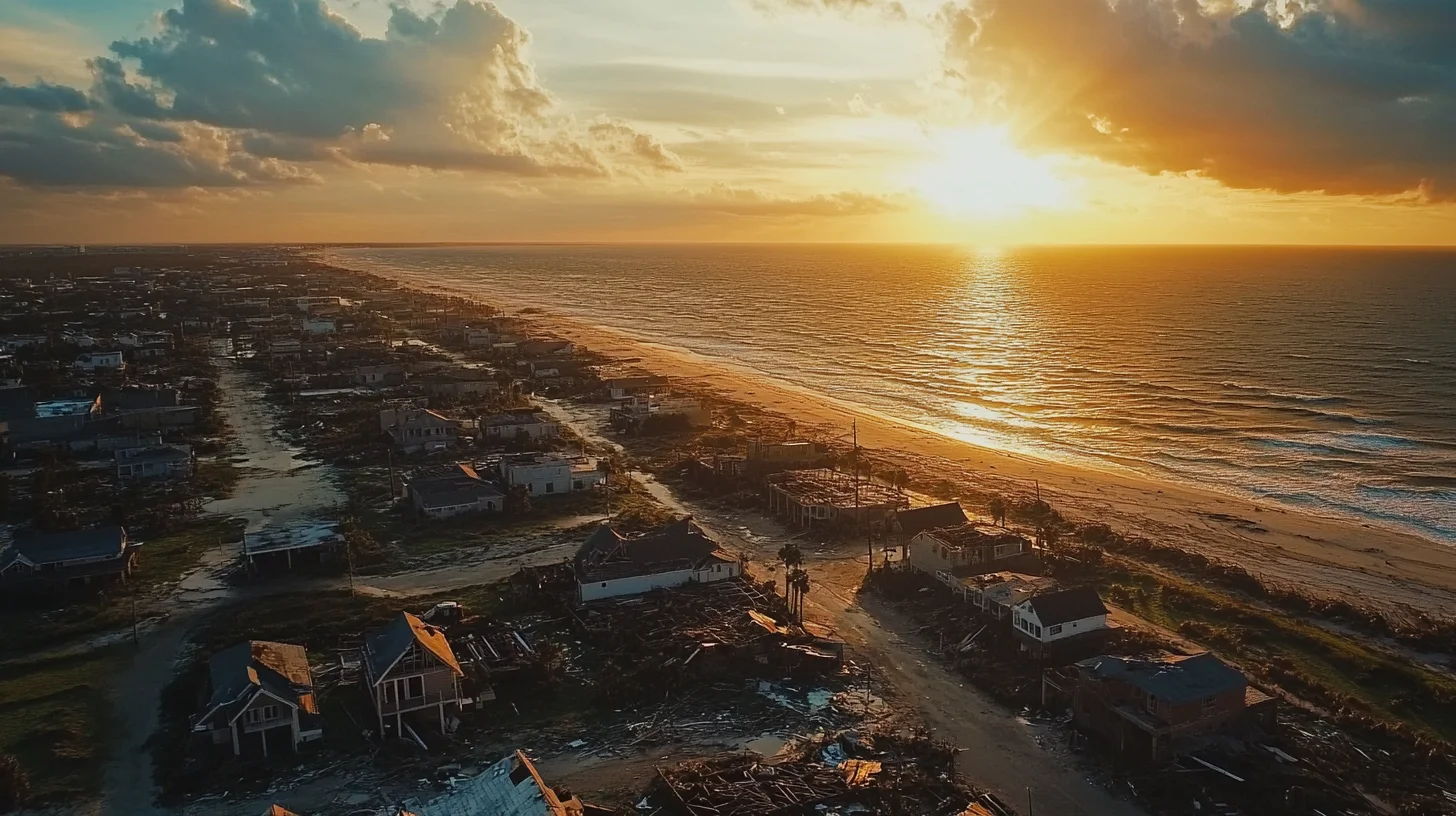
Horry County — Myrtle Beach, North Myrtle Beach, and Conway along the Grand Strand — is South Carolina's busiest stretch of coast and has weathered Florence, Matthew, and Ian in recent years.
Storm damage on Horry County roofs
Horry County roofs face real, repeated storm exposure — and the most expensive damage is often invisible from the ground.
Hurricane Florence (2018) brought catastrophic, record flooding to Conway and the Grand Strand along with damaging winds, and Hurricane Matthew (2016) tore roofs and downed trees across Myrtle Beach. Hurricane Ian (2022) destroyed the Cherry Grove pier and battered the North Strand. As a high-wind coastal county, Horry roofs face direct Atlantic exposure and frequent storm impacts.
🌀 Horry County storm history
Florence (2018, record flooding), Matthew (2016), and Ian (2022) are the defining recent storms along the Grand Strand.
📋 Horry County building & wind code
South Carolina's Building Code (the 2018 IBC/IRC with state amendments) includes SC High Wind Zone provisions for the eight coastal counties — Beaufort, Berkeley, Charleston, Colleton, Dorchester, Georgetown, Horry, and Jasper — with design wind speeds reaching 130 mph or more and wind-borne-debris requirements. Reroofs must meet these standards and be permitted by the local authority; work near tidelands may also need an OCRM critical-area permit. Building to current wind standards holds up far better in the next storm.
Coastal roof types in Horry County
The right roof here balances wind rating, salt-air durability, and impact resistance.
Architectural shingle
Most common. Class 4 impact-rated shingles resist wind and hail and may earn an insurance credit.
Metal roofing
Excellent wind and salt-air resistance — a strong fit for the hurricane-prone South Carolina coast.
Tile & specialty
Durable but heavier; needs a structural review and proper wind detailing after any impact.
2026 roof repair & replacement ranges
Ranges reflect 2026 quotes from licensed roofers serving Horry County. Beachfront addresses run toward the higher end.
| Roof work | Typical range | Best for |
|---|---|---|
| Minor storm repair | $400 – $1,500 | A few damaged shingles, small leaks |
| Section / slope replacement | $1,800 – $6,500 | Localized wind or hail damage, one slope |
| Full roof replacement | $9,000 – $30,000+ | Widespread damage, aging roof, full tear-off |
| Free inspection | $0 | Every homeowner after a storm |
Confirm the quote includes a permit pulled with the local building authority — and near the water, an OCRM critical-area permit may also apply.
Your roofing product or service here. Reach homeowners actively comparing storm-damage roofing options across 13 coastal states. High-intent audience, zero waste.
Storm roof claims in Horry County
Along the South Carolina coast, wind and hail are often handled separately from your standard policy — and your deductible may be a percentage, not a flat amount.
Many coastal homeowners carry wind and hail coverage through the South Carolina Wind and Hail Underwriting Association (the "Wind Pool") and face a separate hurricane deductible. Document storm damage thoroughly with dated photos; a licensed roofer's written report strengthens your claim, and a permitted, code-compliant repair protects its validity.
💰 Hurricane deductibles & the Wind Pool
Coastal South Carolina policies frequently carry a percentage-based hurricane or wind/hail deductible, and the South Carolina Wind and Hail Underwriting Association provides wind coverage where standard insurers limit it. Know your deductible before a storm, and keep your roof documentation current — it speeds claims and can support credits for impact-resistant or upgraded roofs.
What to do once it's safe
Stay safe & tarp if needed
Don't climb a damaged roof. Cover active leaks from inside and call a pro for emergency tarping. Step-by-step tarp guide →
Document everything with dates
Dated photos of all visible damage — roof, ceilings, walls, attic. Timestamps help tie damage to a specific storm.
Get a free licensed inspection
A licensed local Horry County roofer finds hidden damage and writes the report your claim needs.
File within your window
Submit promptly with the inspection report, and confirm the repair will be permitted.
How to verify a roofer in Horry County
South Carolina has one of the lowest licensing thresholds in the country — and using a licensed roofer isn't optional, it's the law.
Residential roofers register as a Residential Specialty Contractor (Roofing) with the SC Residential Builders Commission, while larger residential and commercial roofing requires a General Contractor license with a roofing classification from the SC Contractor's Licensing Board — both under the Department of Labor, Licensing and Regulation (LLR). Unlicensed residential contracting is a misdemeanor in South Carolina, and an unlicensed contractor can't even enforce the contract against you. Verify any roofer's license at LLR before signing, and confirm insurance.
Verify the LLR license
SC requires a licensed or registered roofer — check the Department of Labor, Licensing and Regulation.
Confirm insurance
Ask for liability and workers' comp certificates.
Use a local roofer
Local pros mobilize fast after a storm and stay accountable.
Find your Horry County city
Choose your city for a local, no-cost storm-damage roof inspection and a roofer near you.
Get your free Horry County roof inspection
No cost, no obligation. A licensed local roofer typically reaches out within 24–48 hours.
Request received!
A licensed local roofer will reach out within 24–48 hours to schedule your free Horry County inspection.
Recent storm activity in Horry County
Horry County — home to Myrtle Beach, North Myrtle Beach, Conway, and the Grand Strand — has the distinction of being South Carolina's fastest-growing coastal county and also one of its most storm-exposed. Hurricane Florence made landfall near Wrightsville Beach, NC in September 2018 and then slowed to a near-stop directly over the Carolinas, delivering over 30 inches of rain in some Horry County locations over four days. The resulting inland flooding was catastrophic — the Little Pee Dee and Waccamaw rivers reached record levels, inundating communities well inland of the coast and producing a type of sustained water intrusion that overwhelmed roof systems designed for rainstorm exposure, not multi-day saturation. Tens of thousands of Horry County roofs sustained structural damage from the combination of prolonged wind and water exposure.
Hurricane Dorian (2019) passed just offshore as a Category 2 storm, close enough to deliver tropical-storm winds across the Grand Strand for an extended period. The cumulative loading effect on roofs still carrying Florence-related vulnerabilities produced widespread damage that was often misattributed to deferred maintenance by insurer adjusters. Hurricane Matthew (2016) preceded Florence and had already tested the county's housing stock significantly — Horry County's rapid growth includes a large inventory of properties built in the 1980s and 1990s to code standards that have been significantly upgraded since.
The Myrtle Beach resort market adds a unique layer to Horry County's storm damage picture. A significant percentage of the county's housing stock is short-term rental property, often owned by out-of-area investors who may not have local contractors or established insurance relationships. Post-storm roof damage to rental properties often goes undetected for weeks or months, allowing water infiltration to compound into structural damage, mold, and HVAC damage that multiplies the original claim cost dramatically.
What this means for Horry County homeowners
- Florence flooding damage from 2018 may have compromised roof deck and framing integrity in ways not visible from the surface — if your roof hasn't been inspected since 2018, it should be.
- South Carolina's 3-year limitation on insurance suits means underpaid Florence and Dorian claims may still be actionable — consult a public adjuster if you believe your original claim was underpaid.
- Short-term rental properties require immediate damage documentation after any storm — delayed discovery significantly weakens insurance claims and creates liability exposure with guests.
Horry County storm roof claim: what to expect
Horry County's combination of rapid growth, high rental property density, and recurring storm exposure has produced a roofing market with both strong experienced contractors and a persistent presence of storm-chaser operators following each event. Navigating the claim process requires knowing your rights and working with licensed local professionals.
South Carolina claim filing deadlines
SC's 3-year statute of limitations for filing suit after a claim denial is the most generous in the Southeast. File your initial claim promptly after each storm event — internal policy deadlines require "prompt notice" regardless of the longer litigation window.
The Horry County claim process
- Storm hits → Document all damage including attic, ceilings, and exterior within 24 hours. For rental properties: document before any guests check in post-storm.
- Day 1–3 → File your claim with your insurer. If you have a separate flood policy (NFIP), file both simultaneously.
- Day 15 → SC requires insurer acknowledgment within 15 days and investigation completion within 30 days.
- Contractor inspection → Get an independent SC-licensed contractor inspection. Florence damage frequently appears as seemingly minor surface issues that conceal compromised decking — a thorough inspection matters here.
- Payment → SC requires payment within 30 days of satisfactory proof of loss. Delayed payment is actionable.