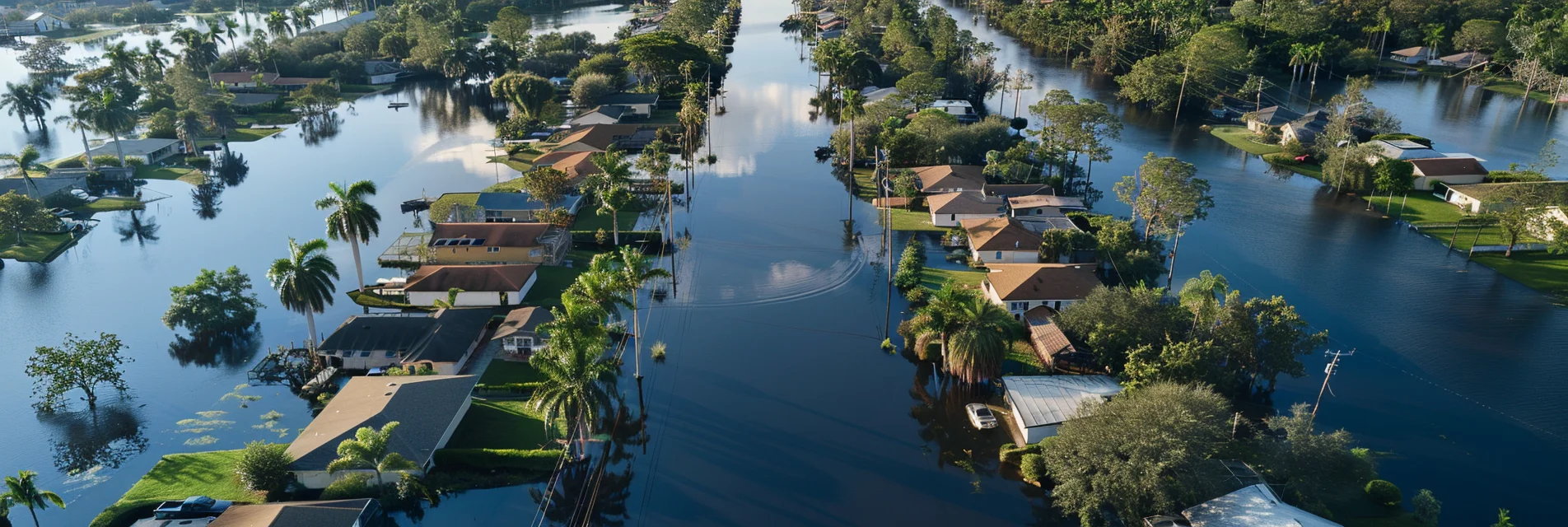
Charleston County — Charleston, Mount Pleasant, North Charleston, and the barrier-island beaches — carries South Carolina's most consequential storm history, defined by Hurricane Hugo in 1989.
Storm damage on Charleston County roofs
Charleston County roofs face real, repeated storm exposure — and the most expensive damage is often invisible from the ground.
Hurricane Hugo (1989) made a catastrophic Category 4 landfall just north of Charleston, devastating the city, Mount Pleasant, and the Sea Islands and reshaping how the Lowcountry builds. Since then, Matthew (2016), Irma (2017), Dorian (2019), and Ian (2022) have all brought flooding and wind. Older Charleston roofs and historic structures need careful, code-compliant repair.
🌀 Charleston County storm history
Hugo (1989, Cat 4) is the defining catastrophe; Matthew (2016), Irma (2017), Dorian (2019), and Ian (2022) have brought more recent damage.
📋 Charleston County building & wind code
South Carolina's Building Code (the 2018 IBC/IRC with state amendments) includes SC High Wind Zone provisions for the eight coastal counties — Beaufort, Berkeley, Charleston, Colleton, Dorchester, Georgetown, Horry, and Jasper — with design wind speeds reaching 130 mph or more and wind-borne-debris requirements. Reroofs must meet these standards and be permitted by the local authority; work near tidelands may also need an OCRM critical-area permit. Building to current wind standards holds up far better in the next storm.
Coastal roof types in Charleston County
The right roof here balances wind rating, salt-air durability, and impact resistance.
Architectural shingle
Most common. Class 4 impact-rated shingles resist wind and hail and may earn an insurance credit.
Metal roofing
Excellent wind and salt-air resistance — a strong fit for the hurricane-prone South Carolina coast.
Tile & specialty
Durable but heavier; needs a structural review and proper wind detailing after any impact.
2026 roof repair & replacement ranges
Ranges reflect 2026 quotes from licensed roofers serving Charleston County. Beachfront addresses run toward the higher end.
| Roof work | Typical range | Best for |
|---|---|---|
| Minor storm repair | $400 – $1,500 | A few damaged shingles, small leaks |
| Section / slope replacement | $1,800 – $6,500 | Localized wind or hail damage, one slope |
| Full roof replacement | $9,000 – $30,000+ | Widespread damage, aging roof, full tear-off |
| Free inspection | $0 | Every homeowner after a storm |
Confirm the quote includes a permit pulled with the local building authority — and near the water, an OCRM critical-area permit may also apply.
Your roofing product or service here. Reach homeowners actively comparing storm-damage roofing options across 13 coastal states. High-intent audience, zero waste.
Storm roof claims in Charleston County
Along the South Carolina coast, wind and hail are often handled separately from your standard policy — and your deductible may be a percentage, not a flat amount.
Many coastal homeowners carry wind and hail coverage through the South Carolina Wind and Hail Underwriting Association (the "Wind Pool") and face a separate hurricane deductible. Document storm damage thoroughly with dated photos; a licensed roofer's written report strengthens your claim, and a permitted, code-compliant repair protects its validity.
💰 Hurricane deductibles & the Wind Pool
Coastal South Carolina policies frequently carry a percentage-based hurricane or wind/hail deductible, and the South Carolina Wind and Hail Underwriting Association provides wind coverage where standard insurers limit it. Know your deductible before a storm, and keep your roof documentation current — it speeds claims and can support credits for impact-resistant or upgraded roofs.
What to do once it's safe
Stay safe & tarp if needed
Don't climb a damaged roof. Cover active leaks from inside and call a pro for emergency tarping. Step-by-step tarp guide →
Document everything with dates
Dated photos of all visible damage — roof, ceilings, walls, attic. Timestamps help tie damage to a specific storm.
Get a free licensed inspection
A licensed local Charleston County roofer finds hidden damage and writes the report your claim needs.
File within your window
Submit promptly with the inspection report, and confirm the repair will be permitted.
How to verify a roofer in Charleston County
South Carolina has one of the lowest licensing thresholds in the country — and using a licensed roofer isn't optional, it's the law.
Residential roofers register as a Residential Specialty Contractor (Roofing) with the SC Residential Builders Commission, while larger residential and commercial roofing requires a General Contractor license with a roofing classification from the SC Contractor's Licensing Board — both under the Department of Labor, Licensing and Regulation (LLR). Unlicensed residential contracting is a misdemeanor in South Carolina, and an unlicensed contractor can't even enforce the contract against you. Verify any roofer's license at LLR before signing, and confirm insurance.
Verify the LLR license
SC requires a licensed or registered roofer — check the Department of Labor, Licensing and Regulation.
Confirm insurance
Ask for liability and workers' comp certificates.
Use a local roofer
Local pros mobilize fast after a storm and stay accountable.
Find your Charleston County city
Choose your city for a local, no-cost storm-damage roof inspection and a roofer near you.
Get your free Charleston County roof inspection
No cost, no obligation. A licensed local roofer typically reaches out within 24–48 hours.
Request received!
A licensed local roofer will reach out within 24–48 hours to schedule your free Charleston County inspection.
Recent storm activity in Charleston County
Charleston County sits at the intersection of South Carolina's most vulnerable coastline and its most historically significant urban core, making every significant tropical system a dual threat — physical roof damage and complex permitting through the city's preservation-minded building review process. Hurricane Dorian (2019) passed offshore but generated tropical-storm-force winds across the county for over 12 hours, causing widespread roof damage through the mechanism of prolonged cyclic loading — repeated wind gusts that flex and fatigue shingle adhesive strips and fastener connections in ways that a single gust does not. This type of damage is frequently invisible from the ground and is often only discovered during the next significant rain event.
Hurricane Matthew (2016) made its closest approach to Charleston as a Category 1 storm and caused significant flooding in the historic downtown, the peninsula, and coastal communities including Folly Beach and Sullivan's Island. The combination of surge and wind drove water under flashings, around dormers, and through the complex roof geometries of Charleston's historic housing stock in ways that standard waterproofing details are poorly equipped to handle. Hugo (1989) remains the defining event for older Charleston homeowners, and the roofing market has spent decades grappling with the insurance and code legacy of that storm.
Since 2020, Charleston County has also begun absorbing the effects of increased tropical activity in the near-shore environment. Tropical Storm Elsa (2021), Nicholas (2021), and Ian (2022) — while primarily impacting other states — all generated sustained winds over Charleston at various points. The cumulative toll on older roofing systems, many of which survived Hugo but have not been replaced since, is significant. The historic district's slate, clay tile, and metal standing seam roofs have excellent longevity but require specialized repair contractors who are in increasingly short supply.
What this means for Charleston County homeowners
- Historic district properties require Board of Architectural Review (BAR) approval for roofing changes — factor 4–8 weeks for BAR review into your repair timeline.
- South Carolina's 3-year statute of limitations on property insurance claims is the most generous in the Southeast — Dorian and Matthew damage may still be actionable if previously underpaid.
- Charleston's drainage and flooding issues mean interior water damage after storms can be difficult to attribute cleanly to roof vs. foundation vs. flood — documentation of the damage mechanism matters enormously for claim routing.
Charleston County storm roof claim: what to expect
South Carolina has a relatively homeowner-friendly insurance environment compared to Florida and Louisiana, but Charleston's specific market — with a high concentration of historic properties, strong demand driving up repair costs, and frequent coastal storm exposure — creates claim dynamics that require careful navigation.
South Carolina claim filing deadlines
South Carolina gives homeowners a generous 3-year statute of limitations to file suit on an insurance claim after a denial — one of the longest in the country. However, your policy's internal notice requirements (typically "prompt notice" or "as soon as practicable") still apply. File your initial claim as soon as damage is discovered, regardless of when you plan to repair.
The Charleston County claim process
- Storm hits → Document all damage with dated photos. For historic district properties: photograph existing conditions before making any temporary repairs — BAR requires evidence of pre-repair condition.
- Day 1–3 → File your claim. Note the specific storm name and date of first observed damage.
- Day 1–30 → SC requires insurers to acknowledge claims within 15 days and complete investigation within 30 days of receiving proof of loss.
- Contractor inspection → Get a SC-licensed contractor's written scope before the insurer's adjuster visits. Verify SC license at llr.sc.gov/con.
- Historic district → If BAR approval is required, get your claim scoped and approved before submitting for BAR review — the insurer's scope and the BAR-approved scope need to align.
- Payment → SC requires payment within 30 days of receiving satisfactory proof of loss.