Electrical Safety <span class=After Storm Flooding" loading="eager" fetchpriority="high" style="position:absolute;inset:0;width:100%;height:100%;object-fit:cover;z-index:0">
Life Safety · Electrical Hazards
Electrical Safety After Storm Flooding

Flooded homes and live wires are a deadly combination. Know the risks before you go back inside.

Water and electricity — your home can be red-tagged from minor roof damage

Most homeowners think red tags mean catastrophic damage. In reality, one of the most common reasons a home gets red-tagged after a storm is water in the electrical system — and it can happen from what looks like a minor leak. Here's what to know before you restore power.

Hidden Danger

Water and electricity — your home can be red-tagged from minor roof damage

Most homeowners think "red tag" means catastrophic structural damage — a collapsed roof, a tree through the living room. In reality, one of the most common reasons a home gets red-tagged after a storm is water in the electrical system — and it can happen from what looks like a minor leak. A small amount of water finding its way into a wall cavity near an outlet, traveling down a circuit to a breaker panel, or pooling under a subpanel can render your entire home legally off-limits until a licensed electrician inspects and certifies every affected circuit. That process takes days. Sometimes weeks.

🏠 What "red tagged" actually means — and who has the authority to do it

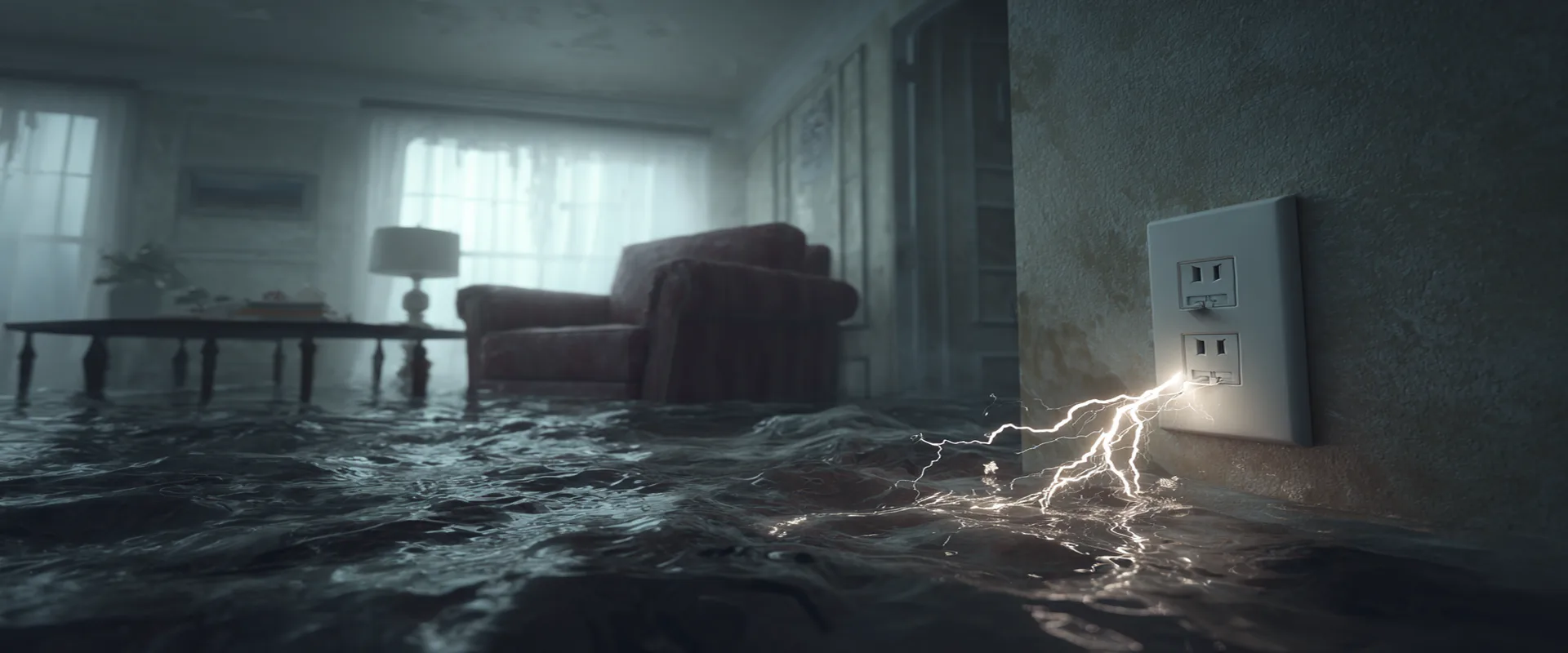
Flooded room with electrical outlet sparking — dangerous

A red tag (also called a "stop work order," "unsafe structure placard," or "do not occupy" notice depending on your state) means the structure has been declared unsafe for occupancy. It is posted on the front door and is legally binding — entering a red-tagged structure without authorization can result in fines or arrest.

Multiple authorities have independent power to red-tag your home after a storm — and any one of them can do it:

Your local building department

Building inspectors do post-storm sweeps in affected neighborhoods. If they observe electrical hazards — exposed wiring, water near the panel, storm damage near service entry — they can red-tag on the spot without the homeowner present.

Your utility company

The utility (FPL, Entergy, Duke, etc.) will not restore power to a home they believe has electrical hazards. After major storms they send meter inspectors before reconnecting. If the meter base, service entrance, or panel shows storm damage or water intrusion, they will tag the meter and require a licensed electrician's clearance before power is restored.

The fire marshal

Fire marshals responding to storm damage calls have independent authority to placard a structure unsafe. Electrical fires in water-damaged homes are a documented post-hurricane cause of secondary casualties — fire marshals are specifically watching for this.

Your own insurance company

Insurers can require a property to be vacated as a condition of coverage during the claims process if they determine it presents a life safety risk. An electrical hazard identified during an adjuster visit can trigger this — often without warning to the homeowner.

How water from a roof leak reaches your electrical system

You don't need a flood to have an electrical emergency. A roof leak that appears minor at the ceiling can travel significant distances through your home's structure before it reaches an electrical component — often completely invisibly.

Through wall cavities

Water enters through a damaged roof section, travels down the exterior sheathing or insulation inside the wall cavity, and reaches an outlet box or switch box below. The outlet may be 8–10 feet away from any visible ceiling stain. The homeowner sees a small drip. The electrician finds a flooded junction box.

Down light fixtures

Recessed ceiling lights and ceiling fixtures are direct pathways from the attic into your living space's electrical system. Water pooling in the attic above a recessed can — a common post-storm scenario — flows directly into the fixture housing where it contacts live wiring. This is a fire ignition source, not just a shock risk.

To the breaker panel

Water that enters near the service entrance — where utility power enters your home — or that tracks down wiring from upper floors to the panel in your garage or utility room can reach the main breaker panel directly. Water in a breaker panel is a whole-house electrical emergency that requires panel replacement, not just drying.

⚠️ Warning signs that water has reached your electrical system

Flooded room with sparking electrical outlet — storm danger

These signs can appear even when the visible water damage looks minor. If you observe any of the following after storm water intrusion, do not restore power and call a licensed electrician before anyone re-enters the affected areas:

  • Breakers tripping repeatedly for no apparent reason after the storm
  • Outlets or switches near the water entry point that are dead or intermittent
  • Flickering or dimming lights that weren't doing that before the storm
  • A burning or acrid smell anywhere in the home — this is electrical arcing
  • Visible rust staining or discoloration around outlet covers or switch plates
  • GFCI outlets that trip immediately when reset near the affected area
  • Any crackling, buzzing, or popping sound from walls near the water entry
  • Water dripping from a ceiling light fixture or recessed can — immediate hazard, kill the circuit at the breaker now
  • Visible moisture or corrosion on the breaker panel face or interior
  • Smoke detector triggering without visible smoke — may be detecting electrical heat
  • Ground fault trips throughout the house, not just near the damage
  • Any shock sensation from touching outlets, switches, or appliances

🔌 Before you restore power — the right order of operations

  1. Do not turn the main breaker back on yourself after significant water intrusion — even if the lights were working when the power went out. Conditions inside walls change as water spreads.
  2. Call your utility company before calling an electrician — ask them to do a service entrance inspection before they restore power to your meter. This is free and they will do it after major storms.
  3. Call a licensed electrician for an interior inspection. In your state, they are required to be licensed — verify before you hire. They will inspect the panel, all outlets in the water-affected zones, and all fixtures in the affected ceiling areas.
  4. Get an Electrical Safety Certificate before power is restored. This is the document the utility requires and what your building department needs to lift a red tag. Without it, the utility will not reconnect.
  5. Document the electrician's findings in writing before any repairs — this becomes part of your insurance claim. Electrical damage from storm water intrusion is a covered loss.

📋 How electrical damage affects your insurance claim

Electrical damage caused by storm water intrusion is a covered loss under standard homeowner policies — it is not excluded as a "mechanical breakdown." The key is establishing that the water entered through storm damage to the structure (the roof, windows, or envelope) and caused the electrical damage as a consequence.

  • File your roof claim and your electrical damage claim together under the same storm event — they are one loss
  • The electrician's inspection report is required documentation — get it in writing with specific circuit and component identifications
  • Do not let any electrician make repairs before the insurer's adjuster has visited — or get written authorization from your insurer first
  • If your home is red-tagged and you cannot occupy it, your Additional Living Expenses (ALE) coverage activates — hotel, rental, and meals above normal costs are reimbursable
  • Keep all receipts for emergency electrical work, hotel stays, and any related expenses from the day of the storm forward

🚨 If power is currently on and you have active water intrusion — do this now

If rain is still entering your home and your power is on, go to your main breaker panel and turn off the circuits for every room with water intrusion. If the panel itself shows any moisture, turn off the main breaker and call your utility company immediately — do not attempt to operate a wet panel.

Water dripping from a ceiling light

Kill that circuit at the breaker immediately. Do not touch the fixture. Do not use the room until an electrician clears it. This is an active fire ignition risk.

Water near an outlet or panel

Do not touch the outlet. Do not use a wet/dry vac near it while power is on. Turn off the circuit at the breaker, then address the water. Standing water and live outlets in the same room is a lethal combination.

Burning smell with no visible fire

Turn off the main breaker and evacuate the home. Call 911 — do not call an electrician first. A burning smell in a water-damaged home is an active electrical fire in the wall until proven otherwise.

After the Water

Restoring electrical service after water intrusion — the complete sequence

Inspector assessing electrical and structural storm damage

Once water has entered your electrical system, restoration requires a specific sequence. Skipping or reordering these steps creates ongoing hazard and may prevent your utility from reconnecting your service.

1

Keep the main breaker OFF until inspected

Never restore power after significant water intrusion. Your main breaker must stay off until a licensed electrician has inspected all affected circuits and the panel.

2

Call your utility for a service entrance inspection

Call your utility before hiring an electrician. They inspect the meter base, service entrance, and weatherhead at no charge after major storms. They will not reconnect to a home with identified hazards — and must disconnect from their side before the electrician can safely work.

3

Licensed electrician inspection — document before repairs

Your electrician inspects the panel, all outlets and switches in water-affected zones, and all ceiling fixtures under damaged roof areas. Get a written report identifying all affected components BEFORE repairs — this is your insurance documentation. Storm-caused electrical damage is a covered loss on your homeowner's policy.

4

Obtain Electrical Safety Certificate

After repairs, your electrician issues an Electrical Safety Certificate. This is what your utility requires before reconnecting service and what your building department needs to lift a red tag. Without it, the utility will not reconnect regardless of how repairs look.

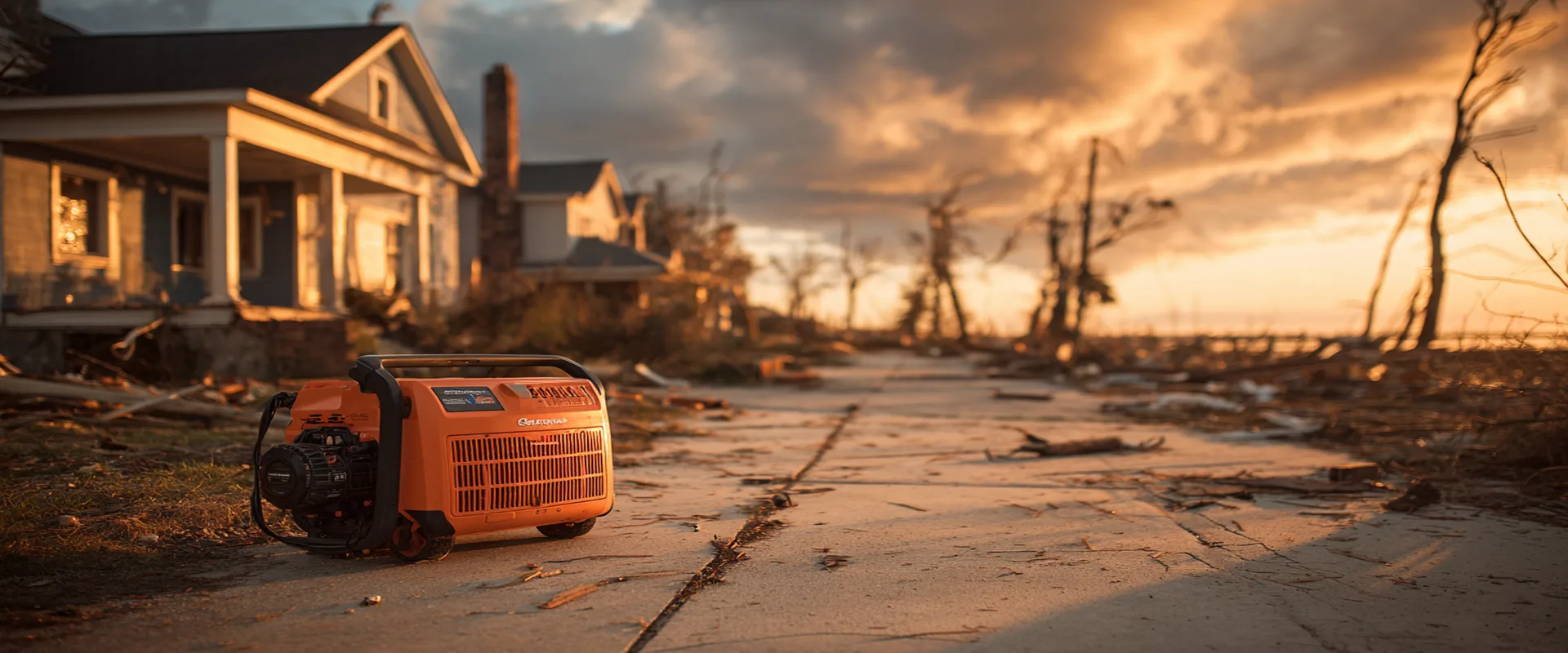
Generator backfeeding — never connect without a transfer switch

Plugging a generator into any household outlet without a proper transfer switch sends power backward through your meter onto utility lines — where linemen restoring power believe the line is de-energized. This has killed utility workers after every major Gulf and Atlantic storm. A cord sold for this purpose is called a "suicide cord" — it is illegal, voids your insurance, and endangers lives.

Use heavy-duty extension cords directly to individual appliances, or have a licensed electrician install a transfer switch ($300–$800). See the complete generator safety guide →

Need Immediate Help?
Free — No Obligation

Get a licensed roofer to inspect your roof

One request. Up to 3 free estimates from licensed local contractors. Takes under a minute.

Get a licensed local roofer on-site today

Emergency tarping, damage assessment, same-day response available in most Gulf and Atlantic coastal markets.

🚨 Request Same-Day Help →
🚨 Emergency Tarping
🚨 Emergency Help ×

Active leak or major storm damage? We can get someone to you fast — or help you tarp right now.

📞 Request Same-Day Help → 🛖 After-Storm Guide →
Tap the red tab on the right edge to open or close this panel anytime.