
Home Inventory Checklist <span class=for Insurance Claims" loading="eager" fetchpriority="high" style="position:absolute;inset:0;width:100%;height:100%;object-fit:cover;z-index:0">
Storm Preparedness · Insurance
Home Inventory Checklist for Insurance Claims

Document what you own before the storm hits. It's the single most important thing you can do for your insurance claim.

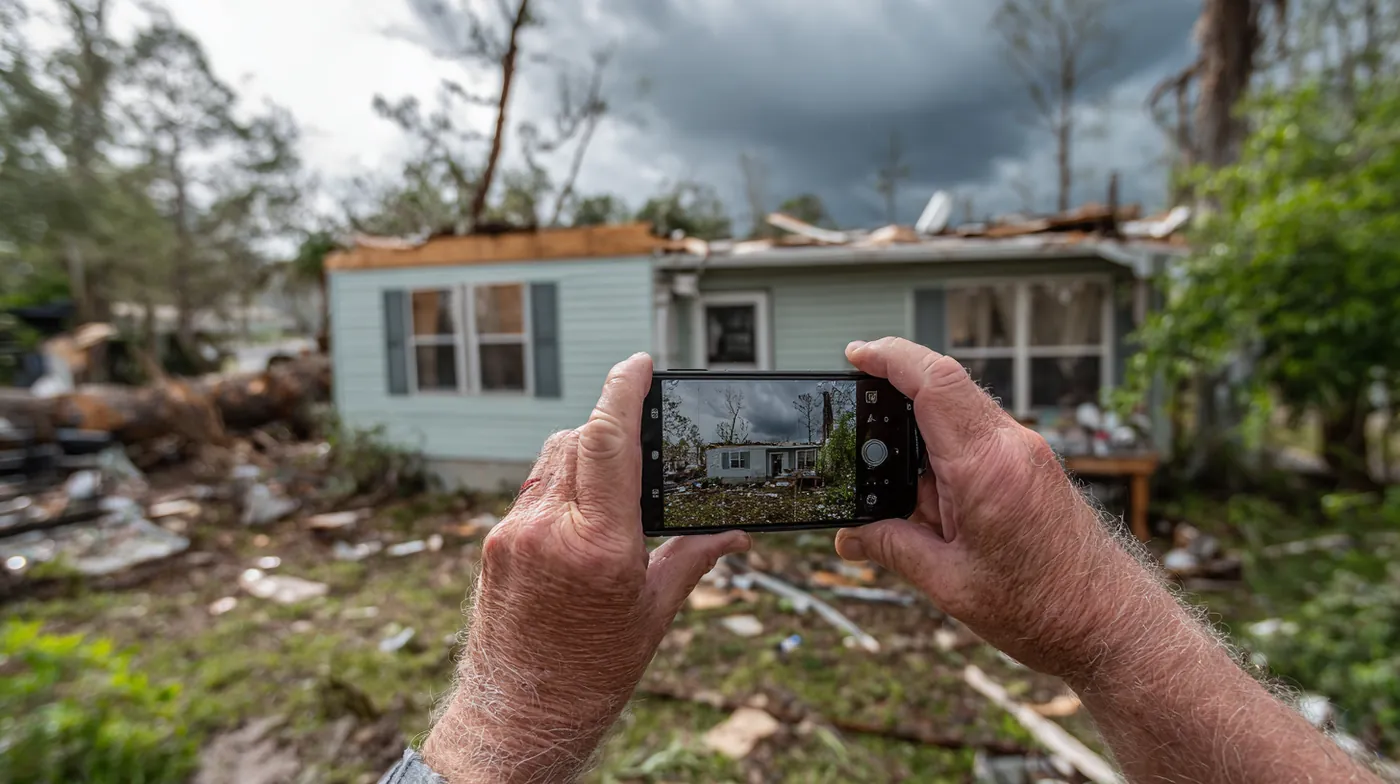
Insurance Inventory — Do This Before Every Season

Home inventory checklist for coastal homeowners — before hurricane season

A home inventory is a detailed record of everything you own, its approximate value, and its documentation trail — receipts, photos, serial numbers, appraisals. Most homeowners have no inventory at all. After a major storm, this means filing a claim from memory while stressed, displaced, and competing with thousands of other claimants for adjuster time. An inventory filed with a claim gets paid faster and more fully than one without.

This checklist covers every category of possessions in a typical coastal home, with specific guidance on what information to record, what documentation to keep, and what coverage gaps to watch for.

📸 Also see: Pre-Storm Photo Documentation Guide →
Before You Start

What a home inventory is — and what it needs to contain to be useful

An inventory that just lists "Samsung TV" and "sofa" will not help you much. An inventory that records model number, purchase price, purchase date, current estimated replacement value, and has a photo of the serial number and the receipt is what adjusters and public adjusters actually use to negotiate claims. The difference in claim payout on a major loss can be tens of thousands of dollars.

For each item, record:

  • Description — specific enough to identify: "65-inch Samsung QLED 4K TV Model QN65Q80C"
  • Serial number — photograph it; transcription errors are common
  • Purchase date — approximate is acceptable; "Spring 2021" is useful
  • Purchase price — original cost, not current value
  • Current replacement cost — what it would cost to buy the same item today
  • Where purchased — retailer name; helpful for verifying purchase history
  • Receipt or invoice — photograph or scan; store in same folder as item photo

Tools you can use:

  • Encircle (encircle.com) — free home inventory app designed for insurance claims, widely accepted by adjusters
  • Sortly — inventory app with photo, barcode scanning, and cloud backup
  • Google Sheets or Excel — simple and effective; template below
  • Your insurance company's app — many major insurers have built-in inventory tools. Check your insurer's app.
  • Video walkthrough with narration — the fastest method; less organized but legally useful as evidence of possession

Critical: Store your inventory outside your home. Cloud backup is mandatory. A USB drive in a fireproof safe at your property may survive a fire but will not survive a storm surge. Email the spreadsheet to yourself and a family member.

Know Before You Inventory

Coverage sub-limits — what standard policies don't fully cover

Understanding sub-limits before you inventory tells you exactly where your gaps are — and where you need a rider, floater, or separate policy. These are the most common sub-limits in standard homeowner policies on the Gulf and Atlantic coast:

Category Typical Sub-Limit What To Do
Jewelry and watches$1,500–$2,500 for theft; higher for fire/stormSchedule high-value pieces; requires appraisal
Firearms$2,500 for theft; no sub-limit for storm/fireSchedule collection if theft risk; serial numbers critical
Art and antiques$1,500–$2,500 or excludedFine art floater or rider; requires appraisal
Wine and spiritsOften excluded or $500Specialty wine insurance for collections over $5,000
Cash and precious metals$200–$500Safe deposit box or bank; not insurable above sub-limit
Business property at home$2,500–$5,000Home business rider or separate business policy
Electronics (aggregate)Usually no sub-limit but verifyDocument all serial numbers; purchase receipts essential
Musical instrumentsVaries; often $1,500–$2,500Musical instrument floater for professional-grade gear
Boats and watercraft$1,500; separate boat policy required aboveSeparate marine insurance policy
Collectibles and memorabilia$1,500–$2,500Collectibles rider or specialty insurer
Room by Room
Creating home inventory documentation
Free — No Obligation

Get a licensed roofer to inspect your roof

One request. Up to 3 free estimates from licensed local contractors. Takes under a minute.

Complete inventory checklist — every room, every category

Homeowner completing room by room home inventory checklist

Work through each room systematically. Open every drawer, every cabinet, every closet. The items you forget are exactly the items that get missed on a claim.

🛋️ Living Areas

  • Televisions — each with model and serial
  • Streaming devices (Apple TV, Roku, Fire Stick)
  • Sound bar, surround sound components
  • Gaming consoles — each with serial
  • Sofas and sectionals — brand, approximate cost
  • Armchairs, recliners — brand, cost
  • Coffee tables, end tables, entertainment center
  • Lamps and lighting fixtures
  • Rugs — size and approximate value
  • Wall art and mirrors — note if high value
  • Decorative items of significant value
  • Book collection (bulk estimate by shelf)

🍳 Kitchen & Dining

  • Refrigerator — model, serial, purchase year
  • Range/oven — model, serial
  • Dishwasher — model, serial
  • Microwave — model, serial
  • Stand mixer, coffee maker, other countertop appliances
  • Cookware sets — brand and approximate value
  • Knife sets
  • Small appliances: blender, toaster, food processor
  • Dining table and chairs — brand and cost
  • China and fine dishware — set value
  • Silver or silver-plate flatware
  • Wine storage or wine cooler
  • High-end liquor collection if applicable

🛏️ Bedrooms (each)

  • Bed frame, headboard, mattress — brand and cost
  • Dressers, nightstands, armoires
  • Closet contents: clothing and shoes — estimate by category (men's suits, women's coats, etc.)
  • Jewelry — every piece with description and estimated value
  • Watches — make, model, serial if present
  • Handbags — brand and approximate value
  • Bedroom TV and electronics
  • Safe contents overview (without photographing sensitive documents)
  • Ceiling fan — brand and model

💻 Home Office

  • Desktop and laptop computers — brand, model, serial
  • Monitors — brand, model, serial
  • Printer, scanner — model and serial
  • External hard drives and storage — model and serial
  • Camera equipment — body and lens serials
  • Desk and office chairs — brand and cost
  • Filing cabinets
  • Office equipment: label makers, shredders
  • Business inventory if home-based business

🎵 Musical Instruments & Hobbies

  • Each instrument — make, model, serial number
  • Amplifiers and audio gear — brand, model, serial
  • Cases and accessories
  • Art supplies and equipment if significant value
  • Photography equipment beyond cameras
  • Craft equipment: sewing machines, etc. — brand and serial
  • Sports equipment of significant value
  • Exercise equipment — brand, model, serial

🔧 Garage & Workshop

  • Power tools — each with brand, model, serial
  • Hand tool sets — brand and approximate value
  • Tool chests and storage — brand
  • Lawn and garden equipment: mower, edger, blower — model and serial
  • Pressure washer — model and serial
  • Generator — make, model, serial, wattage
  • Bicycles — make, model, serial
  • Kayaks, paddleboards, water sports equipment
  • Ladders, scaffolding of significant value

🏊 Outdoor / Pool

  • Outdoor furniture sets — brand and cost
  • Outdoor grill — brand, model, serial
  • Pool equipment: pump, heater, cleaner — each with model and serial
  • Pool screen enclosure — replacement cost estimate
  • Pergola or outdoor structure
  • Outdoor lighting fixtures
  • Irrigation system controller — model
  • Outdoor speakers or entertainment system

🚤 Boats & Recreational Vehicles

  • Boat: make, model, year, HIN (Hull ID Number), engine serial
  • Boat trailer: VIN
  • RV or camper: make, model, year, VIN
  • ATV or golf cart: make, model, serial
  • Boat dock and lift equipment
  • Marine electronics: chartplotter, VHF, fish finder — each with serial
  • Life safety equipment aboard: EPIRBs, life rafts

Note: Boats, RVs, and ATVs are NOT covered under a standard homeowner policy. Each requires a separate policy. Confirm coverage is current before hurricane season.

High-Value Items

Appraisals — when you need one and how to get it

For items above standard policy sub-limits — jewelry, art, collectibles, instruments — an appraisal is both required for scheduled coverage and essential for a full claim payout. An inventory entry that says "diamond ring, estimated value $8,000" without supporting documentation will be challenged. An appraisal report from a qualified appraiser is the document that holds up.

Jewelry and watches

Use a GIA-certified gemologist for diamond jewelry or a certified appraiser from the American Society of Jewelry Appraisers (ASJA) or American Gem Society (AGS). Appraisals typically cost $50–$150 per piece. Update every 3–5 years — replacement values change significantly with metal and gem markets.

Scheduled jewelry riders cost approximately 1–2% of appraised value annually — for a $10,000 ring, $100–$200 per year for full replacement coverage with no deductible.

Fine art and collectibles

Use an appraiser accredited by the American Society of Appraisers (ASA) or Appraisers Association of America (AAA). Art appraisals are more complex — values depend on artist, provenance, condition, and market — and should be updated every 3–5 years or after significant artist market movement.

Fine art floater policies through specialty insurers (Chubb, AXA Art, Berkley One) typically offer agreed-value coverage with no deductible and worldwide protection.

Musical instruments

Professional-grade instruments should be appraised by a luthier or certified instrument appraiser. Vintage guitars, violins, and brass instruments appreciate significantly — an inventory value from 10 years ago may be less than half the current replacement cost.

Musical instrument floaters provide coverage for professional use, travel, and accidental damage beyond what a standard homeowner policy covers.

Make It Easy

Digital tools that make inventory management practical

Dedicated inventory apps

  • Encircle (encircle.com) — purpose-built for insurance claims. Room-by-room photo capture, item tagging, cloud storage, direct export to insurer formats. Free tier available. Most widely accepted by insurance adjusters.
  • Sortly — barcode scanning, photo tagging, custom fields for serial numbers. Works well for high-volume electronics inventory.
  • Your insurer's app — State Farm, Allstate, and other major insurers have built-in home inventory tools within their mobile apps. These integrate directly with the claims system.

The video walkthrough method

For homeowners who won't maintain a formal inventory — and most won't — the video walkthrough is the practical minimum. Once per year in April, do a slow, narrated video walk through every room of your home, opening every closet and cabinet, calling out items and estimated values as you go.

This creates a legally useful record of possession and condition — not as organized as a formal inventory but far better than nothing. Upload immediately to cloud storage and email to yourself and a family member outside your metro area.

Narration tip: say the date at the start of every room. "This is the master bedroom, April 15th [year]." The timestamp is evidence.

Keep It Safe

Where to store your inventory — and what else to keep with it

Storing home inventory documentation safely before storm

Documents to store alongside your inventory

  • Insurance declarations page — most current version
  • All policy documents — homeowner, flood, windstorm, umbrella
  • Insurer contact information and claim filing instructions
  • Agent name and direct phone number
  • Purchase receipts for major items
  • Appraisals for jewelry, art, and collectibles
  • Roof permit and inspection records
  • Home improvement contracts and invoices
  • Vehicle titles and insurance documents
  • Boat documentation and registration

The three-location rule for coastal homeowners

A storm that damages your home may also damage or destroy anything stored at that property — including a fireproof safe, a local external hard drive, or paper documents. The three-location rule: keep your inventory in at least three locations, and at least one must be cloud-based and at least one must be physically offsite.

  • Cloud storage — Google Drive, Dropbox, iCloud. Shared with a family member outside your metro area.
  • Email to yourself — creates a timestamped offsite record. Re-send every time you update.
  • USB drive with family member — ideally someone in a different state. Update annually.

How public adjusters use your inventory

If you hire a public adjuster — a licensed professional who represents you (not the insurance company) in a claim — your home inventory is the foundation they work from. A public adjuster with a complete, documented inventory can reconstruct your entire claim systematically and supplement it with depreciation schedules, replacement cost research, and comparable pricing. Without an inventory, their work is significantly harder and their outcome for you is correspondingly lower.

After major Gulf and Atlantic coast storms, public adjusters are in extremely high demand. Homeowners with organized documentation get their attention first — and their best work.

Before the Season Starts

Get a free pre-season roof inspection

A licensed local roofer documents your current roof condition in writing — the before-storm baseline your insurance claim will stand on. Free. No obligation.

Request Free Inspection →
📷
Free Download

Pre-Storm Documentation Checklist PDF

A photo-by-photo checklist covering roof, exterior, attic, and personal property — the before-storm record that supports every future insurance claim.

⬇ Download Free PDF See all free downloads →
🚨 Emergency Tarping
🚨 Emergency Help ×

Active leak or major storm damage? We can get someone to you fast — or help you tarp right now.

📞 Request Same-Day Help → 🛖 After-Storm Guide →
Tap the red tab on the right edge to open or close this panel anytime.