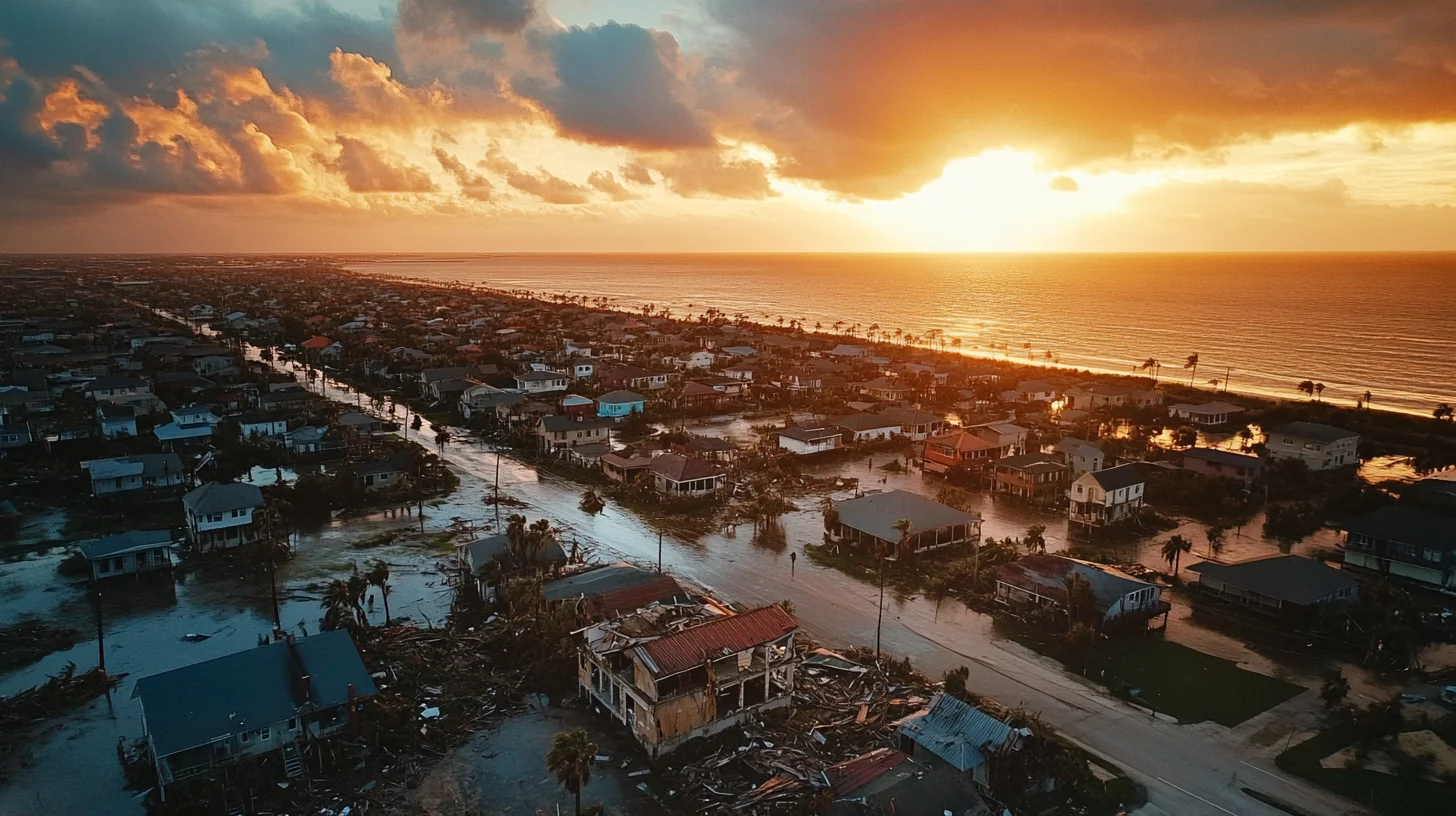
Virginia ranked second nationally in the IBHS 2024 building code ratings — ahead of Florida — driven by strong statewide enforcement of the 2018 IBC/IRC. Hampton Roads' unique geography, surrounded by water on three sides, makes it one of the highest storm-surge-risk metro areas on the East Coast. Roof work in Tidewater must meet ASCE 7-16 coastal high-wind provisions.
Storm damage on Virginia coastal roofs
Hampton Roads, Virginia Beach, and the Eastern Shore face both Atlantic hurricane exposure and some of the most powerful nor'easters on the East Coast.
Hurricane Isabel (2003) produced an historic 8-foot storm surge in downtown Norfolk — the highest in recorded history for the area. Sandy (2012) tracked over Virginia with 70+ mph sustained winds, generating thousands of claims across Hampton Roads and the Eastern Shore. More commonly, nor'easters drive 40–80 mph sustained winds and coastal flooding multiple times per winter. Virginia Beach's oceanfront faces the harshest continuous exposure.
Inland Virginia — Richmond, Fredericksburg, the Shenandoah Valley — sees 2–4 significant hail events per year and substantial wind damage from hurricane remnants. Storm-damage claims are statewide, not just coastal.
🌀 Recent Virginia storm benchmarks
Isabel (2003), Sandy (2012), and Ida (2021 remnants) are Virginia's recent benchmarks. Isabel's 8-foot surge in Norfolk and Sandy's widespread wind damage across Hampton Roads demonstrate the dual hurricane and nor'easter threat.
Coastal roof types & how they hold up in Virginia
The right roof for a Virginia coastal home balances wind rating, cost, and local climate exposure.
Architectural shingle
Most common statewide. Class 4 impact-rated shingles recommended in Tidewater wind zones and inland hail corridor.
Metal roofing
Growing in Hampton Roads for its storm resistance. Handles nor'easter winds and salt-air exposure well.
Slate and synthetic slate
Common in Northern Virginia historic neighborhoods and the Blue Ridge foothills. Requires specialist inspection after storm.
📋 Virginia building code overview
Virginia follows the 2018 IBC/IRC statewide — ranked second nationally by IBHS in 2024. Hampton Roads, Virginia Beach, and the Eastern Shore fall under ASCE 7-16 coastal high-wind provisions. Virginia is a Dillon Rule state; local governments must confirm code amendments with the county building department.
2026 roof repair & replacement ranges
Ranges reflect 2026 quotes from licensed Virginia roofers. Northern Virginia and Hampton Roads run at the higher end of the state range.
| Roof work | Typical range | Best for |
|---|---|---|
| Minor storm repair | $400 – $1,600 | Missing shingles, flashing, nor'easter damage |
| Section / slope replacement | $1,500 – $6,500 | Wind or hail damage, one slope |
| Full roof replacement | $8,000 – $24,000+ | Major storm damage or aging roof |
| Free inspection | $0 | Every homeowner after a storm |
NoVA labor rates are among the highest in the state. Hampton Roads coastal exposure adds modest cost for wind-rated materials and enhanced installation.
Your roofing product or service here. Reach homeowners actively comparing storm-damage roofing options across 13 coastal states. High-intent audience, zero waste.
Storm roof claims in Virginia
Virginia homeowner's insurance covers wind and storm damage — Hampton Roads' nor'easter and hurricane risks make documentation critical.
Virginia insurers accept dated inspection photos and a written assessment as the standard claim support format. Virginia's strong building code means that impact-rated upgrades may qualify for premium discounts — a licensed roofer documents the qualifying installation. Virginia policies generally allow one year from the date of loss to file.
💰 Wind-mitigation discounts in Virginia
Virginia homeowners in Tidewater who install Class 3 or Class 4 impact-rated shingles can qualify for insurance premium discounts. Some Virginia insurers also recognize FORTIFIED certification. A licensed roofer documents qualifying installation for submission to your insurer.
What to do once it's safe
Stay safe & tarp if needed
Don't climb a damaged roof. Cover active leaks from inside and call a pro for emergency tarping if water is actively entering. Step-by-step tarp guide →
Document everything with dates
Take dated photos of all visible damage — roof surface, ceilings, walls, attic, and any affected belongings. Date and timestamp are critical for claim correlation.
Get a free licensed inspection
A licensed local roofer assesses hidden damage — shingle seal failure, deck saturation, flashing separation — and produces a written report for your claim.
File within your window
Submit your claim promptly with the inspection report. Most Virginia policies allow one year from the date of loss — but earlier is always stronger.
Virginia nor'easters strike outside hurricane season — be ready year-round
Atlantic hurricane season runs June–November, but Virginia's most damaging nor'easters often strike October through March. The same documentation rules apply regardless of storm type. A free inspection creates the dated record that protects your claim year-round.
How to verify a roofer in Virginia
After any major storm, unlicensed contractors target affected neighborhoods. Here is how to protect yourself.
Virginia roofing contractors must be licensed by the Virginia Department of Professional and Occupational Regulation (DPOR). Verify at license.dpor.virginia.gov. After major Tidewater events, out-of-state contractors target Hampton Roads — verify Virginia DPOR licensure before signing.
Verify state license
Check the state licensing board before signing anything.
Confirm insurance
Ask for a certificate of liability and workers' comp.
Use a local roofer
Local contractors know your county's permit process and are accountable after the job.
Licensed & insured
we connect you with local Virginia contractors and stay out of your way — no commission, no pressure.
State licensed
Contractors in our Virginia network represent themselves as state-licensed. Always verify before signing — check dpor.virginia.gov ↗
Fully insured
Liability and workers' compensation insurance confirmed on every contractor.
Local experience
Pros who know Virginia code, your county's permit office, and local claim patterns.
Virginia cities & counties we cover
Pick your city or county for its local storm history — Hurricane Isabel, nor'easters, the 2012 derecho — plus DPOR licensing notes, wind-vs-flood claim guidance, and licensed roofers near you. Each page lets you drill down to your area.
Get your free Virginia roof inspection
No cost, no obligation. A licensed local roofer typically reaches out within 24–48 hours.
Request received!
A licensed local roofer will reach out within 24–48 hours to schedule your free Virginia inspection.