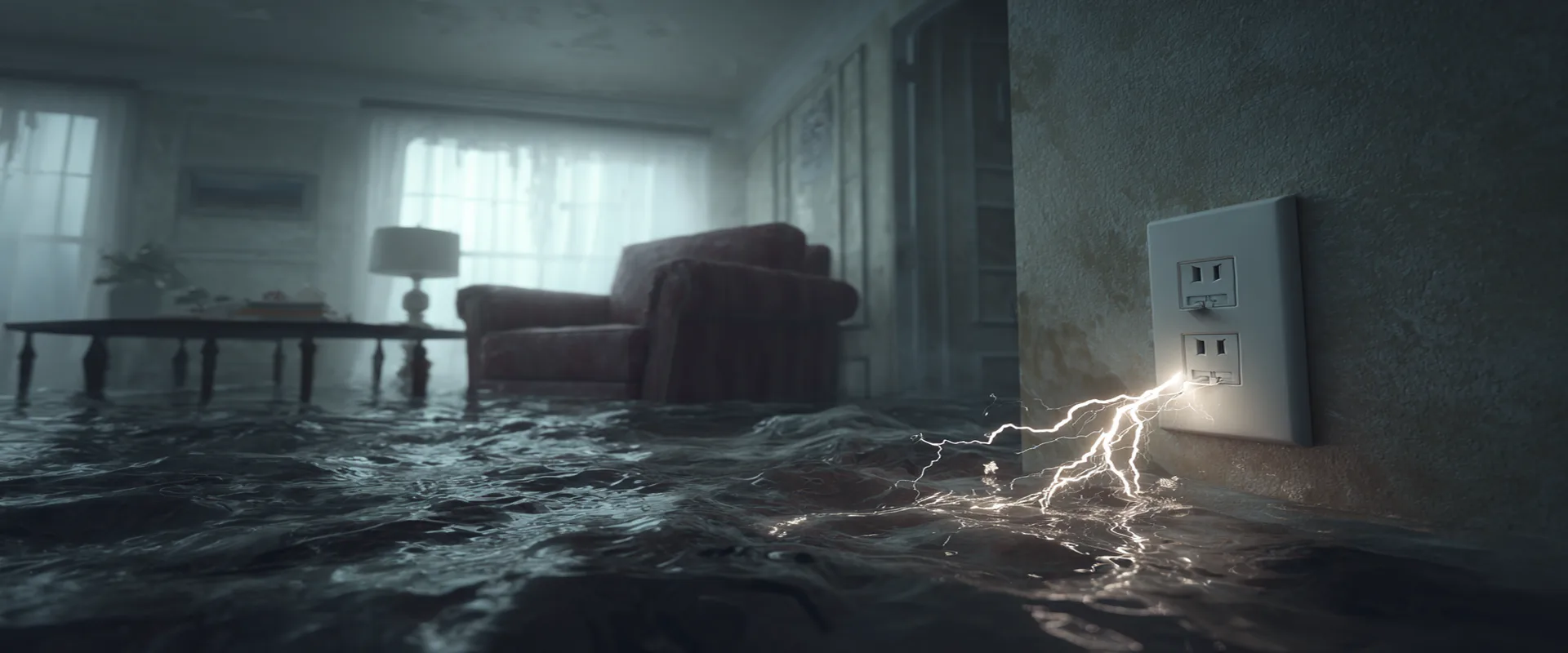
Carbon monoxide is odorless, colorless, and kills within minutes at high concentrations.
You cannot smell it, see it, or taste it. The only warning you will get is from a detector — or when it's already too late.
Why Storms Make CO Poisoning So Dangerous
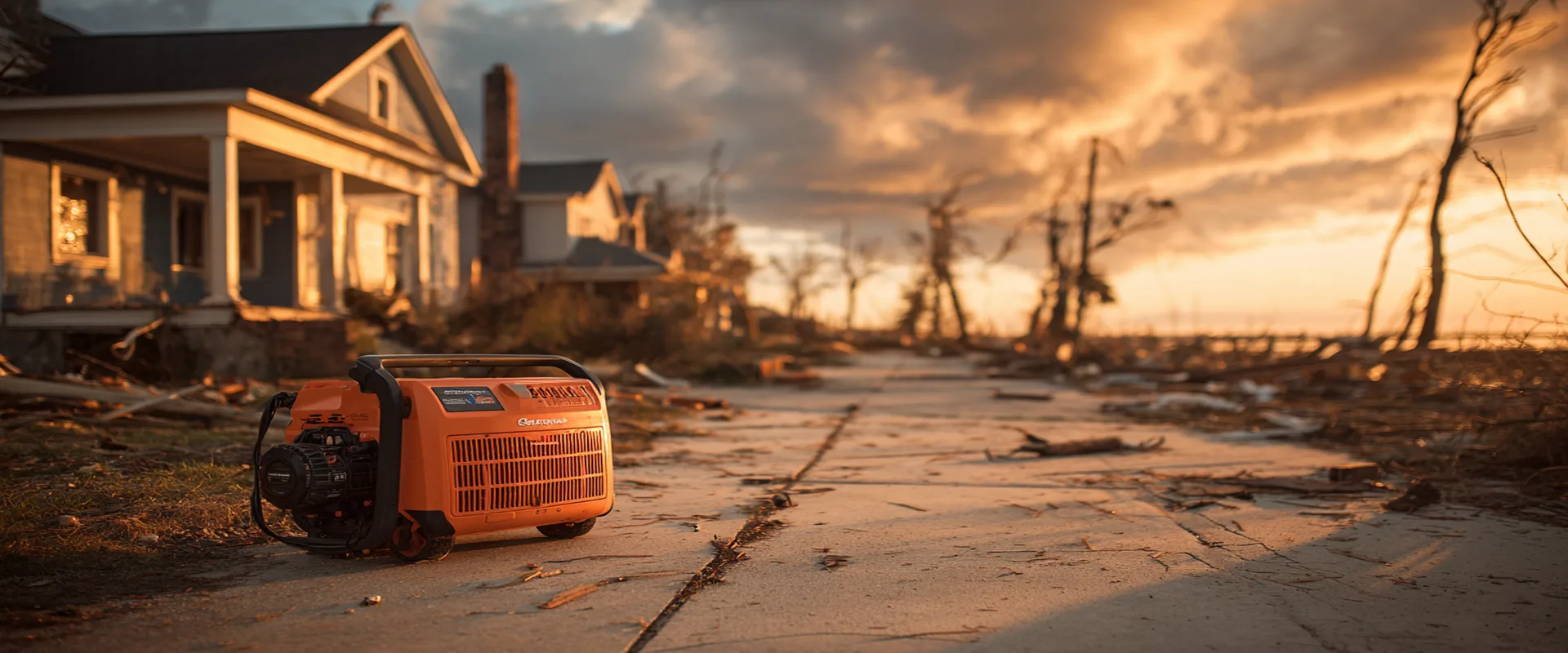
When the power goes out after a hurricane or major storm, millions of households turn to generators, gas-powered pressure washers, charcoal grills, and camp stoves to cook, cool down, and power medical equipment. All of these produce carbon monoxide — and all of them become deadly the moment they're used in an enclosed or semi-enclosed space.
After a storm, people make these mistakes not out of carelessness but out of desperation. The garage door is cracked open, so it feels like "outside." The generator is on the covered porch rather than inside — but it's still too close. Windows are closed for security or to keep out the heat. These small decisions kill people every year, in every coastal state.
The Most Common CO Mistakes After a Storm
- Running a generator inside the garage — even with the door open
- Placing a generator on a covered porch, carport, or under an eave near windows
- Using a gas stove or oven to heat the home during a power outage
- Burning charcoal indoors or in an enclosed porch
- Running a car engine in the garage for AC or to charge devices
- Using a camp stove or propane heater inside a tent, RV, or room
- Sleeping while a generator runs anywhere near the home
Free — No Obligation
Get a licensed roofer to inspect your roof
One request. Up to 3 free estimates from licensed local contractors. Takes under a minute.
How CO Affects Your Body
Carbon monoxide binds to hemoglobin in your blood — the same molecule that carries oxygen — with an affinity 200 times stronger than oxygen itself. Once CO enters your bloodstream, your body can no longer deliver oxygen to your organs, even though your lungs are still breathing.
The symptoms mimic the flu: headache, dizziness, nausea, confusion. Many victims fall asleep before they realize what's happening. In an enclosed space with a running generator, a person can lose consciousness within minutes and die within the hour. Children, elderly individuals, and people with heart or lung conditions are especially vulnerable.
If you feel suddenly dizzy, nauseated, or confused during a power outage — get outside immediately.
Don't stop to grab belongings. Don't try to find the source. Get outside and call 911. Fresh air is the treatment.
The $40 Solution: What to Buy and Where to Put It
A basic UL-listed combination smoke/CO detector costs between $25 and $60 at any hardware store. It requires no professional installation — just plug it in or mount it with two screws. This is the single most cost-effective safety purchase a homeowner can make before storm season.
$40or less
What to look for when buying a CO detector
- UL 2034 certification (the safety standard for CO alarms)
- Combination smoke + CO detector for double protection
- Battery backup so it works during a power outage
- Digital display showing current CO level in PPM
- Interconnected models (when one alarm sounds, all sound)
Where to Place Your Detectors
Placement is just as important as having one. Follow these rules:
-
One on every level of your home
CO can accumulate on any floor. A detector in the basement won't protect someone sleeping on the second floor. At minimum, one per floor — basement, main level, and each bedroom level.
-
Outside every sleeping area
CO poisoning kills most often at night when everyone is asleep. Place a detector within 10 feet of every bedroom door so the alarm can wake you in time to escape.
-
Near (but not in) the garage
Place a detector inside the house near the door that connects to the garage. Car exhaust and generator exhaust migrates through walls and door gaps more easily than people realize.
-
Not directly next to cooking appliances
Normal cooking can cause brief low-level CO spikes that trigger false alarms. Keep detectors at least 5 feet from stoves and ovens — but don't skip the kitchen level entirely.
-
At breathing height, not near the floor
Unlike smoke, CO is roughly the same density as air and distributes throughout a room. Mount detectors at head height — wall-mounted between 4 and 5 feet is ideal.
Generator Safety: The Non-Negotiable Rules
Generators are the single biggest CO risk after a storm. If you own one — or plan to buy one before this storm season — these rules are not optional.
- 20 feet minimum from any door, window, or vent — in any direction, not just away from the house
- Never run a generator in a garage, carport, breezeway, shed, or any partially enclosed space
- Point the exhaust away from the house, not toward it
- Never run a generator while you sleep without a CO detector with battery backup inside
- Do not run a generator during or immediately after heavy rain without a proper canopy specifically designed for generators
- Turn off the generator and let it cool before refueling — spilled gas near a hot engine is a fire risk
- Consider investing in a CO-shutoff generator, which automatically turns off if CO levels spike
Before Storm Season: Your CO Safety Checklist
- Buy a UL-listed combination smoke/CO detector for every floor and sleeping area
- Test all existing detectors — press the test button; replace if no alarm sounds
- Replace detectors older than 5–7 years (CO sensors degrade over time)
- Stock fresh batteries for all detectors before storm season begins
- Know your generator's safe placement distance (minimum 20 feet from structure)
- Brief every household member on CO symptoms and the "get outside immediately" rule
- Post the Poison Control number: 1-800-222-1222
- Know your nearest emergency room location in case of CO exposure
What to Do If Your CO Alarm Goes Off
-
Get everyone out of the house immediately
Don't stop for pets, phones, or belongings. Every second of continued exposure increases the danger. Move quickly to fresh air.
-
Leave the door open behind you
This helps ventilate the space and makes it safer for emergency responders to enter.
-
Call 911 from outside
Do not re-enter to call for help. Fire departments have CO meters and can identify the source safely.
-
Do not re-enter until cleared by emergency personnel
Even if you feel better after reaching fresh air, the CO source may still be active inside.
-
Seek medical evaluation
CO poisoning can cause lasting heart and neurological damage even when symptoms appear to resolve. Anyone with symptoms should be evaluated, especially children and elderly individuals.
Carbon monoxide isn't a fringe risk. It's a predictable, preventable storm aftermath danger that kills real people in real coastal communities every hurricane season — including here in Florida, Texas, Louisiana, and the Carolinas. A $40 detector and a clear plan cost almost nothing. The alternative costs everything.
Protect Your Home Before the Next Storm
Get connected with licensed local roofers who can inspect storm damage and help you prepare your home — at no cost to you.
Get My Free Roof Inspection →