New York State follows the 2020 IBC/IRC statewide; New York City has its own NYC Building Code incorporating enhanced wind and storm provisions. Long Island — Nassau and Suffolk counties — carries ASCE 7-16 coastal high-wind classification. Roofing labor rates in the metro area are the highest in the region ($60–$95/hour). Sandy-era experience has made rigorous documentation the standard practice among New York adjusters.
Storm damage on New York coastal roofs
Long Island, the Rockaways, and Staten Island face Atlantic exposure that Sandy made nationally known — but nor'easters are the more frequent annual threat.
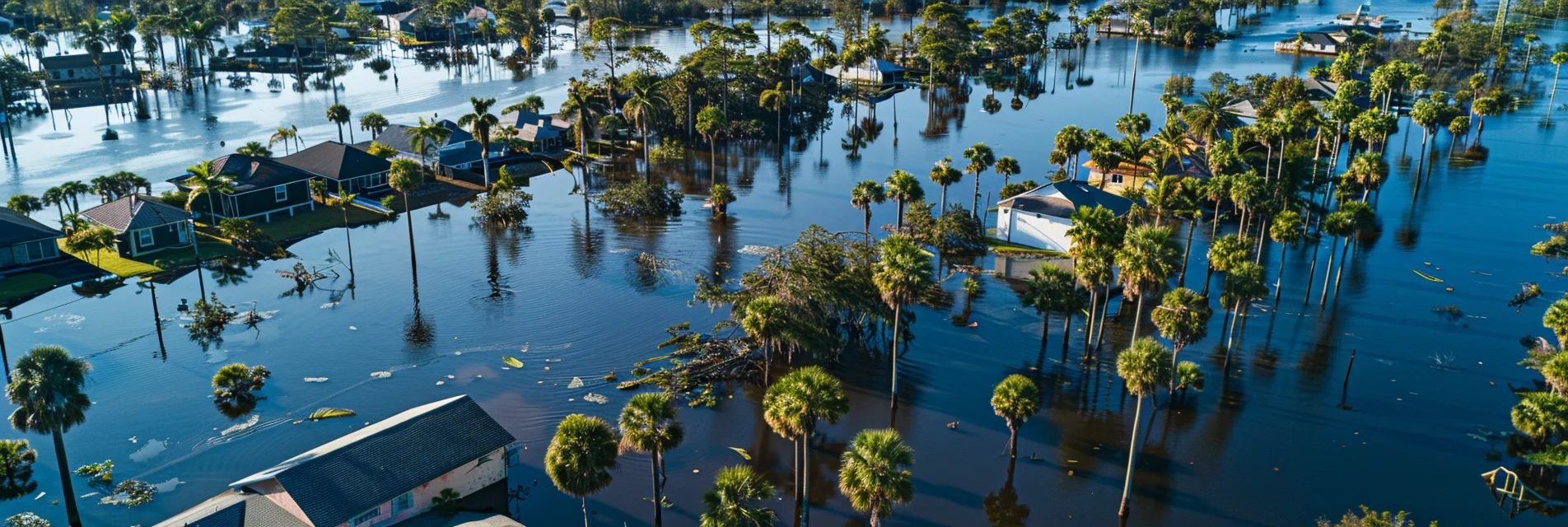
Hurricane Sandy's 2012 landfall produced the largest storm-damage claim event in New York history — over $19 billion in insured losses statewide. The Rockaways, Long Beach, Fire Island, and Montauk all experienced catastrophic damage. More commonly, Atlantic nor'easters strike Long Island and NYC 3–6 times per year with 40–70 mph sustained winds, heavy rain, and coastal surge. Tropical Storm Ida's 2021 remnants produced record rainfall that flooded subway systems and generated thousands of inland roof damage claims.
Upstate New York — Buffalo, Rochester, Syracuse — faces lake-effect snow loading and ice dam damage as the dominant roof threats. Lake-effect systems can deposit 3–5 feet of snow in 24 hours, creating structural load and ice dam conditions that produce significant interior water damage.
🌀 Recent New York storm benchmarks
Sandy (2012), Irene (2011), and Ida's 2021 remnants are New York's defining modern events. Sandy caused $19 billion in insured NY losses and over 300,000 damaged homes. The 1938 Long Island Express hurricane remains the historical benchmark for direct Long Island landfall.
Coastal roof types & how they hold up in New York
The right roof for a New York coastal home balances wind rating, cost, and local climate exposure.
Architectural shingle
Most common on Long Island and metro NYC. Class 4 impact-rated strongly recommended for coastal Nassau and Suffolk counties.
Metal roofing
Excellent for Long Island salt air and nor'easter winds. Also preferred upstate for ice and snow load performance.
Flat / modified bitumen
Common on NYC row houses and beach bungalows. Sandy showed how vulnerable flat roofs are to surge flooding and wind uplift.
📋 New York building code overview
New York City follows the NYC Building Code (2015 IBC with NYC amendments). Nassau and Suffolk counties follow the New York State Building Code (2020 IBC) with ASCE 7-16 coastal provisions. Most NYC roofing work requires a permit — your licensed roofer navigates this.
2026 roof repair & replacement ranges
Ranges reflect 2026 quotes from licensed New York roofers. Long Island, NYC boroughs, and Westchester run significantly higher than upstate markets.
| Roof work | Typical range | Best for |
|---|---|---|
| Minor storm repair | $400 – $1,800 | Missing shingles, nor'easter damage, flashing |
| Section / slope replacement | $1,800 – $8,500 | Wind or hail damage, one slope |
| Full roof replacement | $14,000 – $35,000+ | Major storm damage, Long Island / NYC market |
| Free inspection | $0 | Every homeowner after a storm |
New York has the highest roofing labor costs in the region ($60–$95/hour). Long Island and NYC metro market pricing reflects both labor and material premiums.
Your roofing product or service here. Reach homeowners actively comparing storm-damage roofing options across 13 coastal states. High-intent audience, zero waste.
Storm roof claims in New York
New York homeowner's insurance covers wind and storm damage — Sandy shaped how New York adjusters handle coastal claims today.
New York insurers became significantly more rigorous about storm-damage documentation after Sandy. Dated inspection reports, weather event correlation, and professional assessments are standard requirements. NYC building code also requires permits for most roofing work. NY standard is one year from the date of loss to file.
💰 Wind-mitigation discounts in New York
New York homeowners in Long Island coastal counties who install Class 3 or Class 4 impact-rated shingles can qualify for insurance premium discounts. NYC properties may also qualify depending on the insurer. A licensed roofer documents qualifying installation for submission to your insurer.
What to do once it's safe
Stay safe & tarp if needed
Don't climb a damaged roof. Cover active leaks from inside and call a pro for emergency tarping if water is actively entering. Step-by-step tarp guide →
Document everything with dates
Take dated photos of all visible damage — roof surface, ceilings, walls, attic, and any affected belongings. Date and timestamp are critical for claim correlation.
Get a free licensed inspection
A licensed local roofer assesses hidden damage — shingle seal failure, deck saturation, flashing separation — and produces a written report for your claim.
File within your window
Submit your claim promptly with the inspection report. Most New York policies allow one year from the date of loss — but earlier is always stronger.
New York nor'easters strike year-round — don't wait
Atlantic hurricane season runs June–November, and New York's nor'easter season runs October–April. Sandy demonstrated that delayed documentation leads directly to denied or reduced claims. Act immediately after any storm.
How to verify a roofer in New York
After any major storm, unlicensed contractors target affected neighborhoods. Here is how to protect yourself.
New York State roofing contractors must be licensed under the Home Improvement Contractor law in their county. New York City requires an NYC-specific HIC license. Verify at dos.ny.gov. After Sandy, predatory contractors targeted Long Island communities — always verify NY licensure before signing.
Verify state license
Check the state licensing board before signing anything.
Confirm insurance
Ask for a certificate of liability and workers' comp.
Use a local roofer
Local contractors know your county's permit process and are accountable after the job.
Licensed & insured
we connect you with local New York contractors and stay out of your way — no commission, no pressure.
State licensed
Contractors in our New York network represent themselves as state-licensed. Always verify before signing — check dos.ny.gov ↗
Fully insured
Liability and workers' compensation insurance confirmed on every contractor.
Local experience
Pros who know New York code, your county's permit office, and local claim patterns.
New York localities we cover
Pick your county or borough for its local storm history — Superstorm Sandy on Long Island and the coast, Hurricane Ida's flash flooding, the Hudson Valley and Catskill floods — plus local licensing guidance, wind-vs-flood claim tips, and licensed roofers near you.
Get your free New York roof inspection
No cost, no obligation. A licensed local roofer typically reaches out within 24–48 hours.
Request received!
A licensed local roofer will reach out within 24–48 hours to schedule your free New York inspection.