Legal Protection · All 13 States
Storm Contractor Fraud & Price Gouging
Know your rights. Verify licenses. Avoid scams. State-by-state AG contacts and reporting tools.
Read the Guide ↓
Know your rights. Verify licenses. Avoid scams. State-by-state AG contacts and reporting tools.
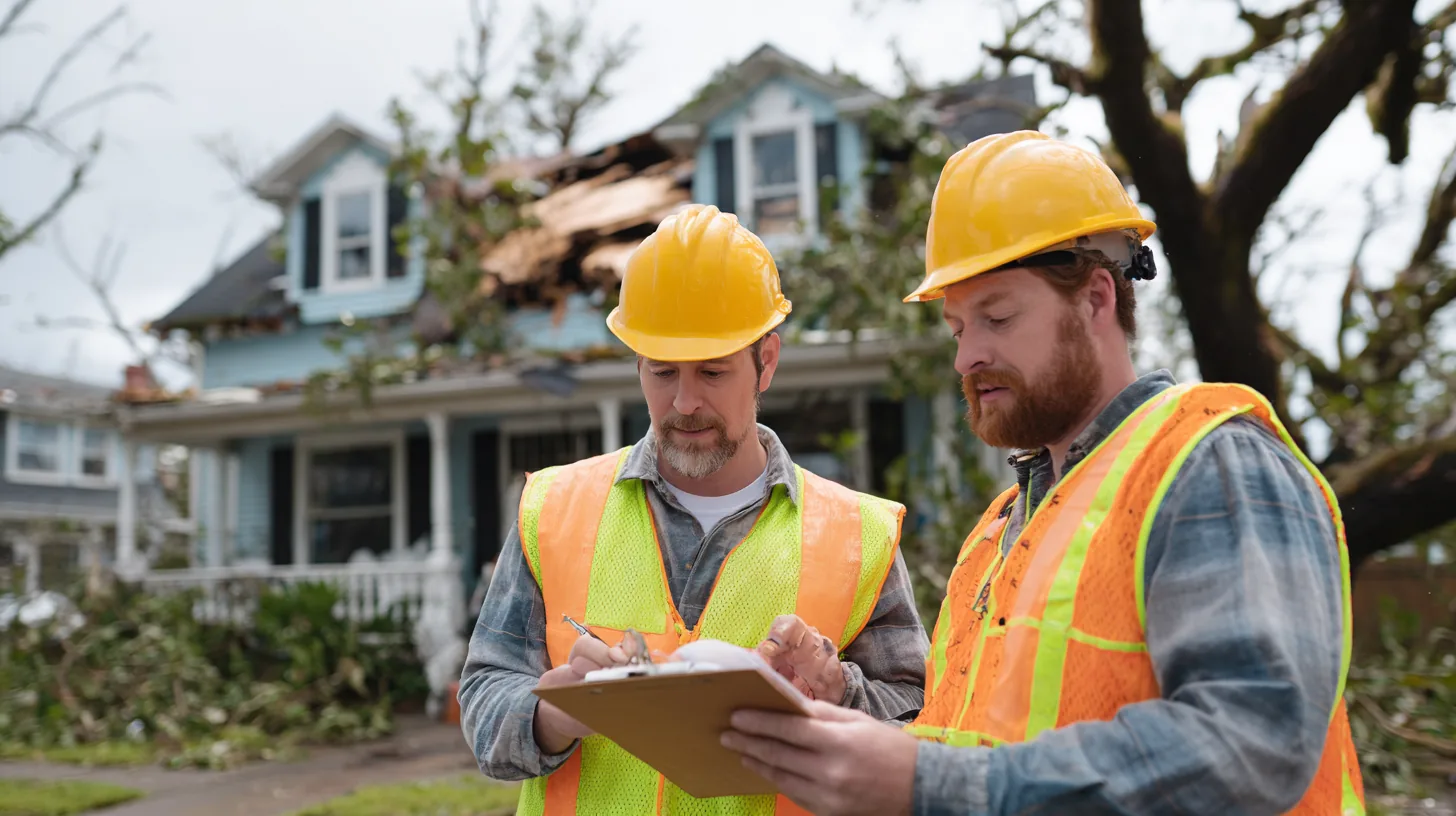
Read the Guide ↓After every major hurricane and tropical storm, unlicensed contractors, storm chasers, and outright fraudsters descend on affected coastal neighborhoods within hours. They target people who are stressed, displaced, and desperate to get their roofs fixed. This guide tells you exactly how to verify who you're dealing with, what your legal rights are, and how to report violations — in all 13 states we cover.
⬇ Download Free Contractor Checklist PDF Print it. Keep it in your storm kit.The numbers are staggering. Florida's Attorney General received over 6,000 price gouging complaints in the weeks following Hurricane Ian alone. Texas recorded thousands of unlicensed contractor complaints after Harvey. The Federal Trade Commission estimates that tens of millions of dollars are lost to storm-related contractor fraud after every major Gulf or Atlantic hurricane. And those are only the reported cases — consumer advocates estimate fewer than 10% of victims ever file a formal complaint.
How quickly storm chasers arrive after a hurricane landfall — sometimes before emergency services have cleared all roads
Price gouging complaints filed with Florida AG after Hurricane Ian — one storm, one state
Estimated percentage of storm contractor fraud victims who ever file a formal complaint
Storm chasers are professional operators — not naive opportunists. They travel in crews from storm to storm across the Gulf and Atlantic coast, following weather events the way gold prospectors followed gold rushes. They have marketing materials, vehicles with local-looking logos, and practiced sales scripts. They know exactly which homeowners are most likely to sign: the elderly, people who are displaced and can't easily supervise work, and anyone who has never dealt with a major insurance claim before.
The Gulf and Atlantic coast concentrates every vulnerability they target: the highest retiree population in the country, the highest concentration of vacation and seasonal properties (where owners may not be present), and the highest frequency of declared disasters that trigger price gouging protections that many homeowners don't know they have. Knowing the playbook is your protection.
License verification takes two minutes on your phone. Do it while the contractor is standing in front of you. A contractor who objects to waiting 120 seconds for you to verify their license is telling you something important. Every state in the StormRoofQuotes network has a public license lookup — here's exactly where to go:
Florida requires roofing contractors to hold a Certified Roofing Contractor (CCC) or Certified Building Contractor (CBC) license issued by the Florida DBPR. This is a state-level license — county registration is additional but the state license is primary.
Verify at: myfloridalicense.com/DBPR
Search by license number or company name. Confirm status is "Current, Active." Report unlicensed activity: 850-487-1395
Texas has no statewide roofing contractor license requirement — meaning anyone can legally call themselves a roofer. Your protection is insurance verification, local registration, RCAT membership, and manufacturer certifications. This makes Texas one of the highest-fraud states after storms.
Verify RCAT membership: rcat.org
Require proof of general liability AND workers' comp. Report price gouging: texasattorneygeneral.gov
Louisiana requires roofing contractors to be licensed by the Louisiana State Licensing Board for Contractors (LSLBC). Residential projects over $75,000 require a residential building contractor license.
Verify at: lslbc.louisiana.gov
Search by license number. Report violations: lslbc.louisiana.gov/complaints
Mississippi requires a contractor license from the Mississippi State Board of Contractors for projects over $50,000. Smaller projects may not require a state license, making due diligence on insurance and local references especially important.
Verify at: msboc.state.ms.us
Report unlicensed contracting to the MSBOC directly.
Alabama requires a General Contractor license from the Alabama Licensing Board for General Contractors for projects over $10,000. Verify before any residential roofing contract.
Verify at: genconbd.alabama.gov
Alabama's FORTIFIED program also has a list of certified contractors for storm-resistant construction.
Georgia requires residential contractors to be licensed by the Georgia State Licensing Board for Residential and General Contractors. Roofing falls under the residential contractor license for projects over $2,500.
Verify at: verify.sos.ga.gov
Report unlicensed contracting: sos.georgia.gov
South Carolina requires a Residential Builder or Specialty Contractor license from the SC Contractors' Licensing Board for roofing work.
Verify at: llr.sc.gov/con
Report unlicensed contracting to the SC Contractors' Licensing Board directly.
North Carolina requires a General Contractor license from the NC Licensing Board for General Contractors for projects over $30,000. A Limited license covers smaller projects.
Verify at: nclbgc.org
NC also has a separate Home Inspector licensing board — verify separately for inspection-only work.
Virginia requires Class A, B, or C contractor licenses from the Virginia Department of Professional and Occupational Regulation based on project size. Roofing falls under Class C ($10k–$120k) or Class B ($120k+).
Verify at: dpor.virginia.gov
Maryland requires all home improvement contractors — including roofers — to hold a Maryland Home Improvement Commission (MHIC) license. The MHIC license number must appear on every written contract by law. The MHIC Guaranty Fund provides up to $20,000 in protection if a licensed contractor defaults.
Verify at: dllr.state.md.us/license/mhic
New Jersey requires all home improvement contractors to register as a Home Improvement Contractor (HIC) with the NJ Division of Consumer Affairs. Working without HIC registration is illegal and unenforceable — homeowners can recover deposits from unlicensed contractors under the Consumer Fraud Act.
Verify at: njconsumeraffairs.gov
New York State requires home improvement contractors to register with the NY Department of State. Additionally, Nassau County and Suffolk County require separate county-level contractor licenses. Both are required to legally pull permits in those counties.
Verify at: dos.ny.gov
Nassau: nassaucountyny.gov | Suffolk: apps.suffolkcountyny.gov
One request. Up to 3 free estimates from licensed local contractors. Takes under a minute.
Every state in the StormRoofQuotes network has price gouging laws that activate during declared emergencies. These laws make it illegal to charge prices substantially above pre-emergency market rates for essential services — including roofing and construction. Violations are criminal, not just civil. Fines range from $1,000 to $25,000 per violation, with felony charges in some states.
Price gouging thresholds vary by state but generally mean charging 25–50% above the pre-emergency market rate for the same service. For roofing, the pre-emergency rate is what licensed local contractors were charging in that market before the disaster declaration. Getting three written estimates is your primary protection — a bid that is far above the others during an active emergency declaration is evidence of price gouging.
Important: Price gouging laws apply regardless of whether you ultimately pay the inflated price. The act of charging or attempting to charge an excessive price is the violation — you don't have to have been a victim to report it.
What to document for a price gouging report:
File your report with your state Attorney General immediately. Most AG offices have dedicated storm fraud hotlines that are staffed after major disasters.
| State | Triggers When | Penalty Per Violation | Report To |
|---|---|---|---|
| Florida | State of Emergency declared | Felony — up to $1,000 + restitution | 866-9-NO-SCAM |
| Texas | Disaster declaration | Class A misdemeanor — up to $10,000 | texasattorneygeneral.gov |
| Louisiana | State of Emergency | Misdemeanor — $500–$2,000 + jail | ag.louisiana.gov |
| Mississippi | Emergency declaration | Misdemeanor — up to $1,000 | ago.state.ms.us |
| Alabama | State of Emergency | Class A misdemeanor — up to $10,000 | ago.state.al.us |
| Georgia | State of Emergency | Misdemeanor — up to $5,000 | law.georgia.gov |
| S. Carolina | Emergency declaration | Misdemeanor — up to $1,000 + jail | scag.gov |
| N. Carolina | Emergency declared | Class 1 misdemeanor per violation | ncdoj.gov |
| Virginia | State of Emergency | Class 1 misdemeanor — up to $2,500 | oag.state.va.us |
| Maryland | State of Emergency | Misdemeanor — up to $1,000 + 1 year | oag.state.md.us |
| Delaware | State of Emergency | Misdemeanor — up to $10,000 | attorneygeneral.delaware.gov |
| New Jersey | Emergency declaration | 4th degree crime — up to $10,000 | njconsumeraffairs.gov |
| New York | Emergency declaration | Misdemeanor — up to $25,000 | ag.ny.gov |
One of the most common and most misunderstood storm contractor scams is the deductible waiver offer. A contractor approaches you after a storm and says: "We'll waive your deductible — you won't pay anything out of pocket." This sounds like a gift. It is actually insurance fraud — in every state — and you can be charged as a co-conspirator.
Your insurance policy requires you to pay your deductible. It is not optional. When a contractor "waives" your deductible, they are not eating the cost — they are inflating the scope of work or the material costs on the insurance estimate by the deductible amount so that the insurance company pays extra to cover it. The contractor submits a claim to the insurer for work that wasn't done or materials that cost less than stated. This is insurance fraud. It is a felony in most states.
Your role in the transaction makes you potentially liable as a co-conspirator even if you didn't understand what was happening. Insurers now specifically look for inflated scopes and are increasingly pursuing homeowners — not just contractors — for fraud recovery.
Your deductible is not waivable by a contractor. If you genuinely cannot afford your deductible, speak with your insurer about payment plan options — many offer them. Some states have assistance programs for disaster-affected homeowners. A legitimate contractor will discuss this with you honestly.
If you unknowingly participated in a deductible waiver arrangement, proactively contacting your insurer and your state AG before they contact you is your best protection. Voluntary disclosure is treated far more favorably than discovered fraud. Get legal advice before making contact.
A mechanics lien is a legal claim filed against your property by a contractor, subcontractor, or material supplier who claims they were not paid for work or materials. Once filed, a lien clouds your title — you cannot sell or refinance the home until it is resolved. In some states, an unpaid contractor can ultimately force a sale of your home to collect payment. Understanding liens before you sign any contract protects you.
The most common lien scenario after a storm: you hire a general roofing contractor, pay them in full, and believe the job is done. Unknown to you, the contractor used subcontractors or material suppliers who were never paid. Those subcontractors and suppliers have the right to file a lien against YOUR property — even though you paid the general contractor in full. You can be required to pay again.
This is not theoretical. After major hurricanes, when contractors take on more work than they can manage and cash flow problems compound, subcontractor and supplier non-payment is common.
A lien waiver is a document signed by the contractor (and ideally all subcontractors and suppliers) waiving their right to file a lien in exchange for payment. There are two types:
Require a signed lien waiver from the general contractor AND from any subcontractors or suppliers you're aware of before making final payment. A legitimate contractor will provide these without objection.
Mechanics lien filing deadlines vary significantly by state. In Florida, a contractor has 90 days from last furnishing labor or materials to file a lien. In Texas it's 15th day of the 4th month after the month work was completed. Louisiana gives contractors 60 days from substantial completion. Subcontractors and suppliers often have shorter windows than general contractors.
The practical implication: do not release final payment to any contractor without obtaining lien waivers from all parties — including subcontractors and major suppliers — within the applicable filing window for your state. Your real estate attorney can advise on the specific requirements in your state.
Everything on this page condensed into a printable PDF checklist. License verification steps, 12 red flags, price gouging reporting contacts for all 13 states, deposit limits by state, and a contractor record form. Print it and keep it in your storm kit.
⬇ Download Free PDF ChecklistFree. No email required. No signup. Just download.
Every contractor we connect you with is licensed in your state, carries current insurance, and is local to your area. No storm chasers. No out-of-state operators.
Get My Free Inspection →Use our 25-question checklist → before signing anything.
Active leak or major storm damage? We can get someone to you fast — or help you tarp right now.
📞 Request Same-Day Callback 🛖 Emergency Tarping Guide →