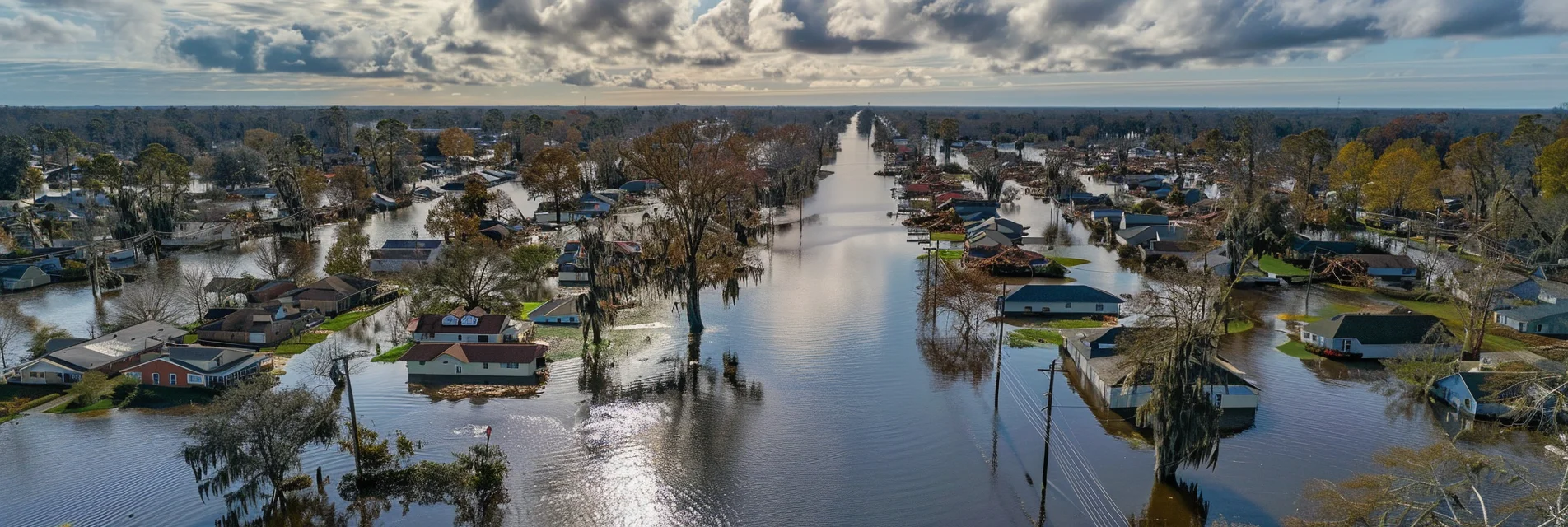
Louisiana jumped five spots in the IBHS 2024 building code rankings after making inspector training mandatory and adopting the 2021 IRC. A 2026 Louisiana House Bill now requires FORTIFIED roofs on new residential construction in all parishes within the coastal zone boundary. FORTIFIED certification can unlock significant insurance premium reductions — and several Louisiana programs offer grants toward upgrade costs.
Storm damage on Louisiana roofs
Louisiana roofs face a combination of sustained hurricane winds, storm surge moisture, and year-round humidity that creates hidden damage pathways.
Hurricane Ida (2021) caused $18.8 billion in insured losses in Louisiana — the costliest storm in state history. The combination of Category 4 wind uplift and surge moisture creates damage that starts at the ridge and works inward. Shingle seal failures, saturated decking, and compromised flashing allow water intrusion that doesn't surface as a ceiling stain for weeks after the event.
FORTIFIED roofing systems — which include enhanced attachment, sealed roof deck, and impact-rated coverings — are now required in coastal parishes for new construction and dramatically reduce documented claim rates when storms hit.
🌀 Recent Louisiana storm benchmarks
Katrina (2005), Ike (2008), Isaac (2012), Laura (2020), Ida (2021), and Zeta (2020) define Louisiana's storm history. Ida's 150 mph winds at landfall in Lafourche Parish produced widespread catastrophic roof failure across the southernmost parishes.
Coastal roof types & how they hold up in Louisiana
The right roof for a Louisiana coastal home balances wind rating, cost, and local climate exposure.
Architectural shingle
Most common choice. Impact-rated Class 4 shingles meet FORTIFIED requirements and qualify for Louisiana insurance discounts.
Metal roofing
Excellent for Louisiana's humidity and Ida-level winds. Standing seam metal easily earns FORTIFIED designation.
Tile roofing
Used in some south Louisiana markets. Heavy; requires structural review after any storm impact.
📋 Louisiana building code overview
Louisiana's 2026 FORTIFIED mandate covers all parishes within the coastal zone boundary designated under R.S. 49:214.24. The state follows the 2021 IRC statewide with mandatory FORTIFIED certification for new coastal residential roofs. IBHS FORTIFIED Home requires enhanced attachment, sealed deck, and impact-rated coverings at minimum.
2026 roof repair & replacement ranges
Ranges reflect 2026 quotes from licensed Louisiana roofers. South Louisiana coastal parishes typically run higher due to FORTIFIED requirements and post-Ida demand.
| Roof work | Typical range | Best for |
|---|---|---|
| Minor storm repair | $400 – $1,600 | Missing shingles, flashing, small leaks |
| Section / slope replacement | $1,500 – $6,000 | Wind or surge damage, one slope |
| Full roof replacement | $9,000 – $26,000+ | Major hurricane damage, Ida-level events |
| Free inspection | $0 | Every homeowner after a storm |
FORTIFIED certification adds modest upfront cost but unlocks meaningful insurance premium reductions. Some Louisiana grant programs offset FORTIFIED upgrade costs for qualifying homeowners.
Your roofing product or service here. Reach homeowners actively comparing storm-damage roofing options across 13 coastal states. High-intent audience, zero waste.
Storm roof claims in Louisiana
Louisiana's insurance market has tightened significantly since Hurricane Ida — documentation and timely filing are more critical than ever.
Several major insurers withdrew from Louisiana's market after Ida, making Louisiana Citizens Property Insurance and surplus lines carriers more common. A FORTIFIED roof certification is increasingly required for competitive premium eligibility — not just a discount option. After any storm, file promptly with complete dated documentation; Louisiana policies typically allow one year from the date of loss.
💰 Wind-mitigation discounts in Louisiana
Louisiana's FORTIFIED program offers tiered certification — Roof, Silver, and Gold. Each level unlocks greater insurance discounts from participating Louisiana insurers. The Louisiana Department of Insurance maintains a list of insurers offering FORTIFIED discounts. Some programs also offer low-interest loans and grants for qualifying homeowners to achieve FORTIFIED Roof status.
What to do once it's safe
Stay safe & tarp if needed
Don't climb a damaged roof. Cover active leaks from inside and call a pro for emergency tarping if water is actively entering. Step-by-step tarp guide →
Document everything with dates
Take dated photos of all visible damage — roof surface, ceilings, walls, attic, and any affected belongings. Date and timestamp are critical for claim correlation.
Get a free licensed inspection
A licensed local roofer assesses hidden damage — shingle seal failure, deck saturation, flashing separation — and produces a written report for your claim.
File within your window
Submit your claim promptly with the inspection report. Most Louisiana policies allow one year from the date of loss — but earlier is always stronger.
Louisiana's storm window is long — act fast after each event
Hurricane season runs June through November, but Louisiana also sees damaging storms in early spring. Claim filing deadlines are strict, adjusters need dated documentation, and FORTIFIED grant programs have limited funding that depletes quickly after major events.
How to verify a roofer in Louisiana
After any major storm, unlicensed contractors target affected neighborhoods. Here is how to protect yourself.
Louisiana roofing contractors must hold a state contractor's license through the Louisiana State Licensing Board for Contractors (LSLBC). Verify any contractor at lslbc.louisiana.gov before signing. After major Gulf events, storm chasers from out of state target Louisiana communities — always verify local licensure.
Verify state license
Check the state licensing board before signing anything.
Confirm insurance
Ask for a certificate of liability and workers' comp.
Use a local roofer
Local contractors know your county's permit process and are accountable after the job.
Licensed & insured
we connect you with local Louisiana contractors and stay out of your way — no commission, no pressure.
State licensed
Contractors in our Louisiana network represent themselves as state-licensed. Always verify before signing — check lslbc.louisiana.gov ↗
Fully insured
Liability and workers' compensation insurance confirmed on every contractor.
Local experience
Pros who know Louisiana code, your county's permit office, and local claim patterns.
Louisiana parishes we cover
Pick your parish for its local storm history, 2026 licensing notes, Citizens & FORTIFIED guidance, and licensed roofers near you. Each parish page lets you drill down to your city.
Get your free Louisiana roof inspection
No cost, no obligation. A licensed local roofer typically reaches out within 24–48 hours.
Request received!
A licensed local roofer will reach out within 24–48 hours to schedule your free Louisiana inspection.