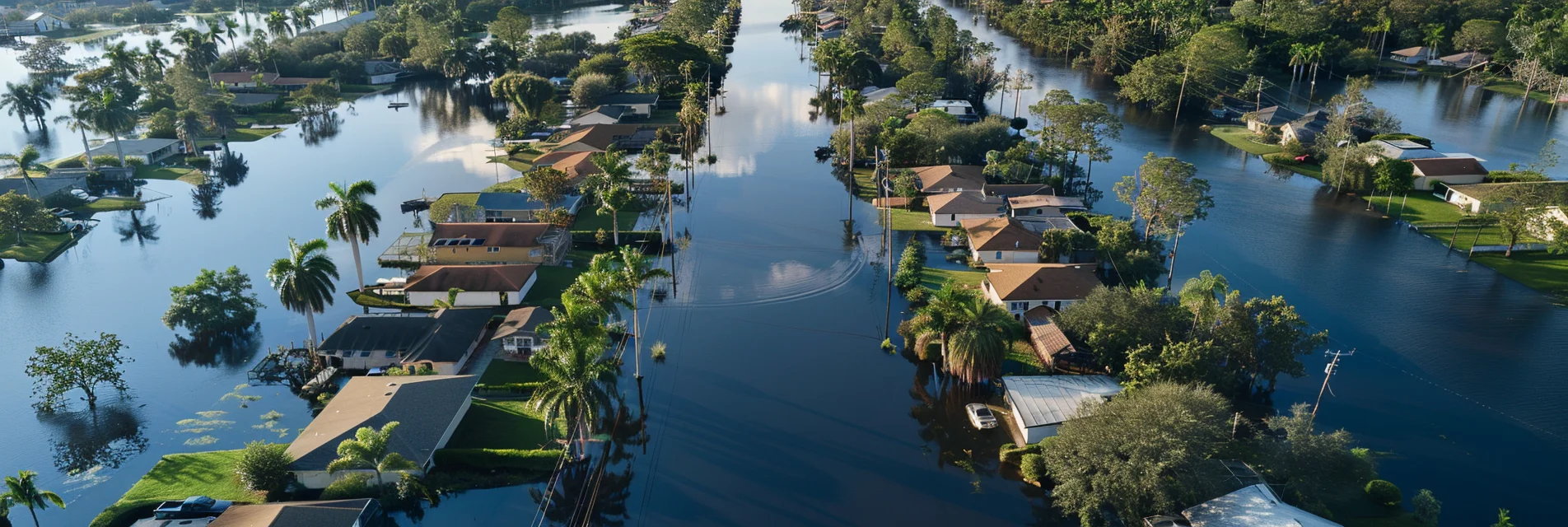
Delaware's storm exposure is concentrated in Sussex County — Rehoboth Beach, Lewes, Bethany Beach, and Dewey Beach — where the coastal wind zone requires impact-resistant windows, reinforced roof connections, and added bracing. Sussex County adopted the 2021 IBC/IRC effective January 2023, with coastal design wind speeds running 100–140 mph depending on location and risk category. New homes must carry gutters and downspouts, and FEMA flood-zone rules apply to much of the beach strip.
Storm damage on Delaware coastal roofs
Delaware's compact coastline takes the brunt of Atlantic nor'easters and tropical systems — and the damage often isn't visible from the ground.
Sussex County beach communities — Rehoboth, Lewes, Bethany, Dewey, and Fenwick Island — sit directly in the path of coastal storms. Tropical Storm Isaias in 2020 toppled trees and stripped shingles across the beaches, and Hurricane Sandy in 2012 drove surge and wind damage along the Delaware Bay and Atlantic coast. Salt spray off the ocean and Indian River Bay accelerates shingle granule loss and flashing corrosion, so coastal roofs age faster than inland ones.
Nor'easters are the more frequent threat — striking multiple times each winter with 40–70 mph sustained winds, heavy rain, and coastal flooding. Inland Kent and New Castle counties also see wind, hail, and ice-dam damage from the same systems. Documentation tied to a specific storm date is what protects a claim regardless of where in the state you are.
🌀 Recent Delaware storm benchmarks
Sandy (2012), Isaias (2020), Irene (2011), and Gloria (1985) are Delaware's benchmark coastal storms. Isaias in particular caused widespread tree and shingle damage across the Sussex County beaches, while annual nor'easters generate the most consistent claim volume.
Coastal roof types & how they hold up in Delaware
The right roof for a Delaware coastal home balances wind rating, cost, and local climate exposure.
Architectural shingle
Most common statewide. Class 4 impact-rated shingles recommended for Sussex County beach properties exposed to wind and salt air.
Metal roofing
Excellent for Delaware's salt-air beaches and nor'easter winds. Standing seam resists corrosion and handles coastal exposure well.
Cedar & specialty
Seen on historic Lewes and high-end beach homes. Requires a specialist and may face architectural-review rules in historic districts.
📋 Delaware building code overview
Sussex County — Delaware's coastal county — adopted the 2021 IBC/IRC effective January 1, 2023, with coastal wind-zone provisions requiring impact-resistant glazing, reinforced roof-to-wall connections, and added bracing; design wind speeds range 100–140 mph by location and risk category. New Castle County follows the 2021 IRC (effective January 2024) and Kent County the 2018 IBC/IRC with local amendments. DNREC's floodplain program governs construction in FEMA flood zones along the coast.
2026 roof repair & replacement ranges
Ranges reflect 2026 quotes from licensed Delaware roofers. Sussex County beach towns — Rehoboth, Lewes, Bethany — run highest due to wind-code requirements and seasonal demand.
| Roof work | Typical range | Best for |
|---|---|---|
| Minor storm repair | $350 – $1,500 | Missing shingles, nor'easter damage, flashing |
| Section / slope replacement | $1,500 – $6,000 | Wind or hail damage, one slope |
| Full roof replacement | $8,000 – $25,000+ | Major storm damage or aging coastal roof |
| Free inspection | $0 | Every homeowner after a storm |
Delaware charges no sales tax on roofing materials, saving roughly 6–7% versus neighboring states. Coastal Sussex County wind-code inspections and salt-air-rated materials push beach-town pricing toward the high end of these ranges.
Your roofing product or service here. Reach homeowners actively comparing storm-damage roofing options across 13 coastal states. High-intent audience, zero waste.
Storm roof claims in Delaware
Delaware homeowner's insurance covers wind and storm damage — but nor'easters and coastal storms require the same prompt documentation as hurricanes.
Standard Delaware policies treat nor'easter and hurricane wind damage as covered perils; storm-surge flooding requires separate NFIP flood insurance, a critical distinction for Sussex County beach properties. Adjusters want dated photos and a written assessment tying damage to a specific event. Delaware policies generally allow one year from the date of loss to file — but the sooner you document, the stronger the claim.
💰 Wind-mitigation discounts in Delaware
Delaware homeowners in Sussex County who install Class 3 or Class 4 impact-rated shingles or upgrade roof-to-wall connections may qualify for insurance premium discounts. Coastal wind-code compliance documented by a licensed roofer can also help on insurability. Contact your insurer before starting work to confirm qualifying products and documentation.
What to do once it's safe
Stay safe & tarp if needed
Don't climb a damaged roof. Cover active leaks from inside and call a pro for emergency tarping if water is actively entering. Step-by-step tarp guide →
Document everything with dates
Take dated photos of all visible damage — roof surface, ceilings, walls, attic, and any affected belongings. Date and timestamp are critical for claim correlation.
Get a free licensed inspection
A licensed local roofer assesses hidden damage — shingle seal failure, deck saturation, flashing separation — and produces a written report for your claim.
File within your window
Submit your claim promptly with the inspection report. Most Delaware policies allow one year from the date of loss — but earlier is always stronger.
Delaware nor'easters strike October through April — no off-season
Atlantic hurricane season runs June–November, but Delaware's most damaging nor'easters hit October through April. There is no safe window to delay a roof inspection after a storm. A free inspection creates the dated record that keeps your claim valid year-round.
How to verify a roofer in Delaware
After any major storm, unlicensed contractors target affected neighborhoods. Here is how to protect yourself.
Delaware does not issue a statewide roofing license, but every contractor must register as a Construction Contractor with the Delaware Department of Labor's Office of Contractor Registration and hold a business license from the Delaware Division of Revenue. Confirm registration and ask for current liability and workers' compensation certificates before signing. You can verify a contractor's business license through the Delaware Division of Revenue's online business-license search.
Verify state license
Check the state licensing board before signing anything.
Confirm insurance
Ask for a certificate of liability and workers' comp.
Use a local roofer
Local contractors know your county's permit process and are accountable after the job.
Licensed & insured
we connect you with local Delaware contractors and stay out of your way — no commission, no pressure.
State licensed
Contractors in our Delaware network represent themselves as state-licensed. Always verify before signing — check dpr.delaware.gov ↗
Fully insured
Liability and workers' compensation insurance confirmed on every contractor.
Local experience
Pros who know Delaware code, your county's permit office, and local claim patterns.
Delaware counties we cover
Pick your county for its local storm history — Sandy, nor'easters, Isaias, the remnants of Ida — plus contractor-registration and bond guidance, wind-vs-flood claim tips, and licensed roofers near you. Each county page lets you drill down to your city.
Get your free Delaware roof inspection
No cost, no obligation. A licensed local roofer typically reaches out within 24–48 hours.
Request received!
A licensed local roofer will reach out within 24–48 hours to schedule your free Delaware inspection.