Wet Carpet Removal <span class=After Storm Damage" loading="eager" fetchpriority="high" style="position:absolute;inset:0;width:100%;height:100%;object-fit:cover;z-index:0">
Storm Recovery · Water Damage
Wet Carpet Removal After Storm Damage

Saturated carpet must come out fast. Every hour it stays, mold risk grows — and your claim gets harder to settle.
Wet carpet after storm water intrusion — remove it immediately

Of everything in your home that gets wet during a storm, carpet is the single most dangerous material to leave in place. It holds gallons of water per square yard, can't be dried by fans from above, and creates mold, subfloor damage, and liability risks that compound with every hour it stays down.

Act Within Hours — Not Days

Wet carpet after storm water intrusion — remove it immediately

Of everything in your home that gets wet during a storm, carpet is the single most dangerous material to leave in place. It looks like a soft furnishing problem. It is actually a biological and structural emergency that compounds with every hour it stays down — and it creates liability risks that most homeowners never see coming until they're in a dispute with their insurer, a contractor, or in the worst cases, a subsequent occupant of the home.

Why wet carpet is your most urgent removal priority

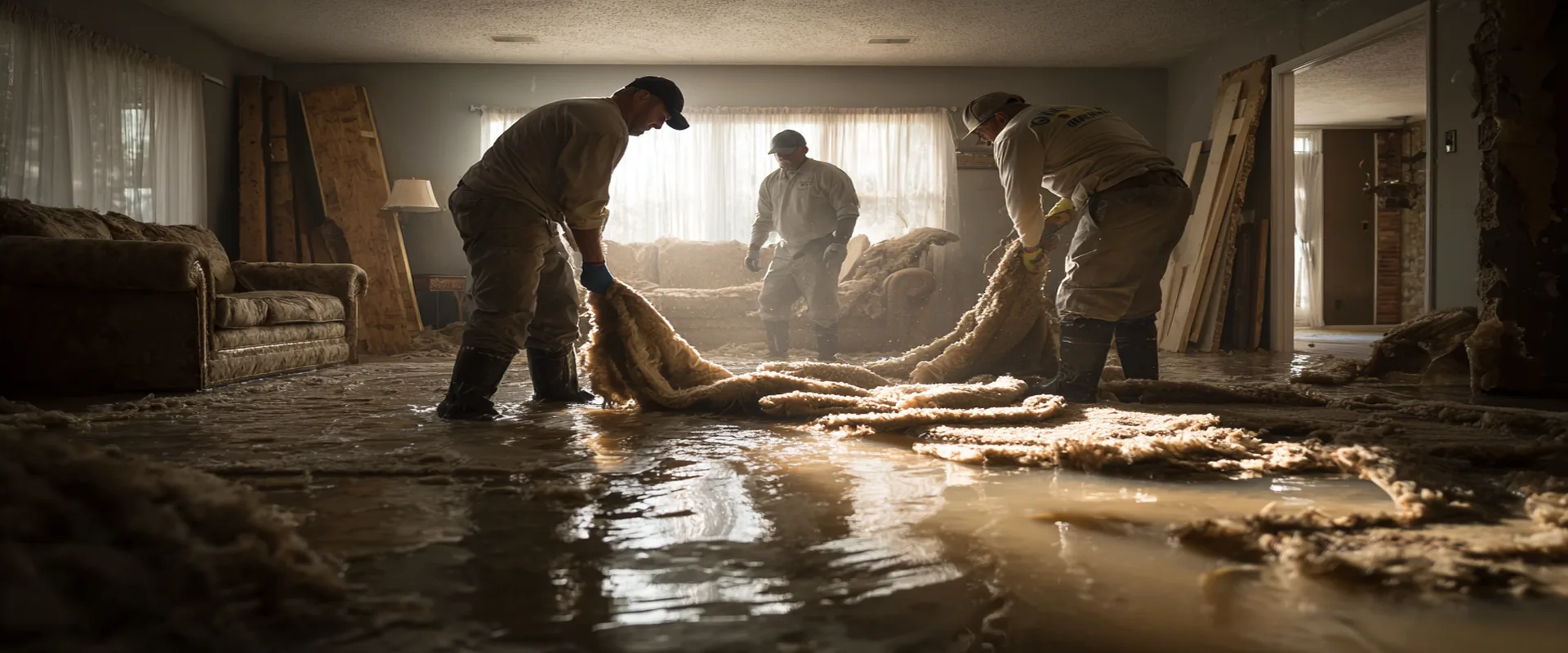
Workers in protective gear removing wet carpet after storm flooding

Carpet is engineered to hold things. That is its entire purpose — to trap and retain particles, fibers, and moisture at the surface level while providing cushion below. In a dry home that is a feature. In a wet home after a storm it is a catastrophe. A soaked carpet with its padding underneath can hold several gallons of water per square yard — water that cannot evaporate, cannot be extracted by fans or dehumidifiers through the top surface, and that sits in constant contact with your subfloor 24 hours a day.

The padding beneath carpet is even worse. Carpet padding is typically open-cell foam — it functions like a sponge and holds water almost indefinitely. A dehumidifier running in the room above soaked padding will pull moisture from the air. It will not pull moisture from inside a compressed foam pad. The only way to remove that water is to physically remove the pad.

Hour 1–6

Carpet absorbs maximum water. Padding is fully saturated. Water begins wicking laterally into baseboards and wall bottom plates. Subfloor begins absorbing moisture through the padding.

Hour 6–24

Mold spores in the padding begin germinating. The subfloor — whether OSB, plywood, or concrete — is now saturated. Wall bottom plates are wet to 12–18 inches up from the floor. The biological clock is running.

Hour 24–48

Mold is now established in the padding and subfloor. The carpet may feel merely damp on top. Underneath it is a contained mold culture. Removing it now requires containment, protective equipment, and proper disposal. You have moved from household chore to remediation project.

72 hours+

The subfloor beneath the carpet may require replacement. Mold in the wall base requires drywall removal 12–24 inches up from the floor. What was a carpet removal job is now a full room remediation. Cost: $3,000–$15,000 per room.

✅ Who should remove wet carpet — and when you can do it yourself

Carpet removal within the first 6 hours of water intrusion, before mold has established, is a task a homeowner can handle safely with basic precautions. The earlier you act the more options you have.

DIY is appropriate if:

  • You begin removal within 6 hours of the water intrusion
  • There is no visible mold growth on the carpet, padding, or subfloor
  • There is no musty smell — smell indicates microbial activity already underway
  • The carpet was wet from clean water (rainwater through roof), not sewage backup or floodwater from outside
  • You have a place to take or store the removed material outside the home immediately

How to remove it safely:

  1. Wear rubber gloves and old clothes — wet carpet water is not clean
  2. Cut the carpet into manageable 3–4 foot wide strips using a utility knife
  3. Roll each strip away from the wet area — rolling traps moisture inside and makes disposal easier
  4. Remove the padding in pieces — it will be extremely heavy with water
  5. Get all of it outside the home immediately — do not stack wet carpet in a garage or enclosed space
  6. Photograph the subfloor condition before and after removal — this is insurance documentation
  7. Run fans directly on the exposed subfloor and dehumidifiers in the room immediately

🚫 When you must call a professional — not optional

Some wet carpet situations are not DIY removals — they are remediation projects that require licensed professionals, proper containment, and documented disposal. Attempting DIY removal in these situations can spread contamination, void insurance coverage, and in cases involving sewage or toxic mold, create serious health risks.

Any visible mold growth

Black, green, gray, or white fuzzy or powdery growth on carpet, padding, or subfloor. Do not disturb it — call a certified mold remediation contractor. Disturbing mold without containment spreads spores through your HVAC system and into every room in the home.

Any musty or earthy smell

Smell precedes visible mold. If the room smells wrong, mold is already active in the padding or subfloor even if you can't see it. Call a water mitigation company before removing anything — they will test, contain, and document before removal.

Floodwater or sewage contact

If the water that wet your carpet came from outside flooding, storm surge, or any sewage backup — that water is Category 3 contaminated (blackwater) under IICRC water damage standards. This carpet cannot be dried and reused. It must be removed by professionals in protective equipment and disposed of as contaminated material.

48+ hours of saturation

Carpet wet for more than 48 hours is contaminated by definition under IICRC S500 standards — even if there is no visible mold. At this point the material cannot be salvaged and removal requires professional handling and documented disposal for insurance purposes.

⚖️ The liability risks nobody talks about

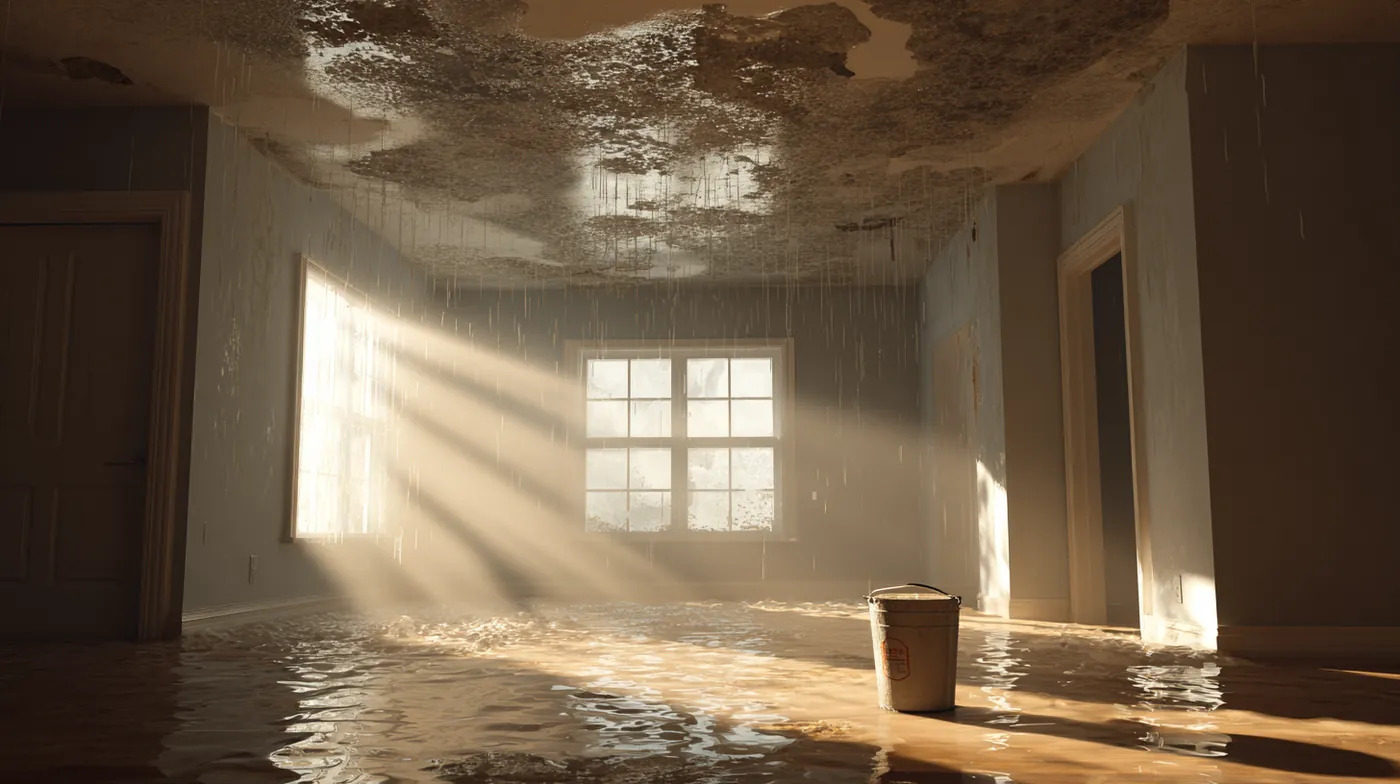
Water damage and mold risk inside home after storm roof failure

Wet carpet creates liability exposure that goes well beyond your insurance claim — and it can follow you for years after the storm. Most homeowners are completely unaware of these risks until they materialize.

Liability to your insurer

Every homeowner policy contains a duty to mitigate clause. You are legally required to take reasonable steps to prevent further damage after a loss. Leaving wet carpet in place when you had the ability to remove it is a failure to mitigate. Insurers use this to deny or reduce mold-related claims that developed from carpet that was left down. The standard language: "We do not cover loss caused by your failure to protect the property from further damage." Document every mitigation action you take with photos, timestamps, and receipts.

Liability to future occupants and buyers

In most states, property sellers are required to disclose known material defects — including prior water damage and mold. If you had wet carpet after a storm and did not properly remediate, and later sell the home, and the buyer discovers mold in the subfloor, you can be held liable for non-disclosure. This is true even if the carpet itself was replaced. The mold was in the subfloor and wall base — not the carpet.

Liability to renters and guests

If you rent your property — full-time, short-term, or occasionally — and a tenant or guest develops health problems attributable to mold exposure in a home where you knew of prior water damage, you face potential personal injury liability. Stachybotrys (black mold) and Chaetomium (common in water-damaged wood and carpet) are recognized health hazards. Landlord liability for mold exposure is well-established in litigation across Gulf and Atlantic coast states.

Liability in insurance disputes

When an insurer denies a mold claim and you dispute it, the paper trail of what you did and when is everything. A homeowner who can show dated photos of carpet removal, documented fan and dehumidifier operation, and a professional mitigation report is in a fundamentally stronger position than one who cannot. The insurer's argument is always "this was preventable." Your documentation is the rebuttal.

🧪 Can wet carpet be dried and saved?

Sometimes — but only under very specific conditions. Carpet that has been wet for fewer than 24 hours, was contacted by clean water only (not floodwater or sewage), shows no mold or odor, and can be dried to below 15% moisture content within 24–48 hours of the water event may be salvageable.

The padding almost never survives — remove it regardless. A water mitigation professional with a moisture meter can assess whether the carpet itself is worth attempting to dry versus replacing. In most post-storm situations in coastal climates, replacement is the correct economic decision even for otherwise salvageable carpet.

🏗️ What the subfloor tells you

Once the carpet and padding are removed, the subfloor is your diagnostic surface. Use a moisture meter — available at any hardware store for $15–$25 — to check readings in multiple locations. Wood subfloor should read below 19% moisture content. Above that, active drying is required before any new flooring goes down.

Look for: dark staining on OSB or plywood (early mold), soft or spongy areas (structural saturation), separation at seams (swelling), and white powdery residue (efflorescence on concrete subfloors — indicates ongoing moisture movement from below). Any of these findings need to go in your insurance documentation.

🗑️ Disposing of wet carpet correctly

After a major storm, municipalities in affected areas typically open expanded debris pickup and roll-off dumpster programs. Check with your local government — in Florida, FEMA-declared disaster counties are required to provide free debris removal for storm-damaged materials including carpet and flooring.

Do not put wet carpet in a closed container or enclosed space — it will incubate mold rapidly. Roll it cut-side in, place it at the curb or in an open dumpster, and document the disposal with a photo and date. For contaminated material (floodwater, sewage contact, visible mold), your mitigation contractor handles disposal and provides a documented chain of custody — required for your insurance claim.

📋 The carpet removal documentation checklist — protect your claim

Every action you take removing wet carpet should be documented. This is not bureaucratic overkill — it is the difference between a paid claim and a denied one.

  • 📸 Photo of carpet in place showing water saturation — before you touch it
  • 📸 Photo of the underside of the carpet as you pull it back — shows padding condition
  • 📸 Photo of the padding being removed — moisture visible
  • 📸 Photo of the exposed subfloor immediately after removal
  • 📸 Moisture meter reading on the subfloor — photograph the meter display against the floor
  • 📸 Photo of removed material outside the home — with timestamp
  • 🧾 Receipt for any rental equipment (fans, dehumidifiers, wet vac)
  • 📝 Written log: date, time, what you observed and what you did
  • 📞 Call your insurer before or immediately after removal to report the mitigation action — get a name and confirmation number
  • 📋 If professional help: get a written scope from the mitigation company before work begins
Need Immediate Help?

Get a licensed local roofer on-site today

Emergency tarping, damage assessment, same-day response available in most Gulf and Atlantic coastal markets.

🚨 Request Same-Day Help →
Free — No Obligation

Get a licensed roofer to inspect your roof

One request. Up to 3 free estimates from licensed local contractors. Takes under a minute.

🚨 Emergency Tarping
🚨 Emergency Help ×

Active leak or major storm damage? We can get someone to you fast — or help you tarp right now.

📞 Request Same-Day Help → 🛖 After-Storm Guide →
Tap the red tab on the right edge to open or close this panel anytime.