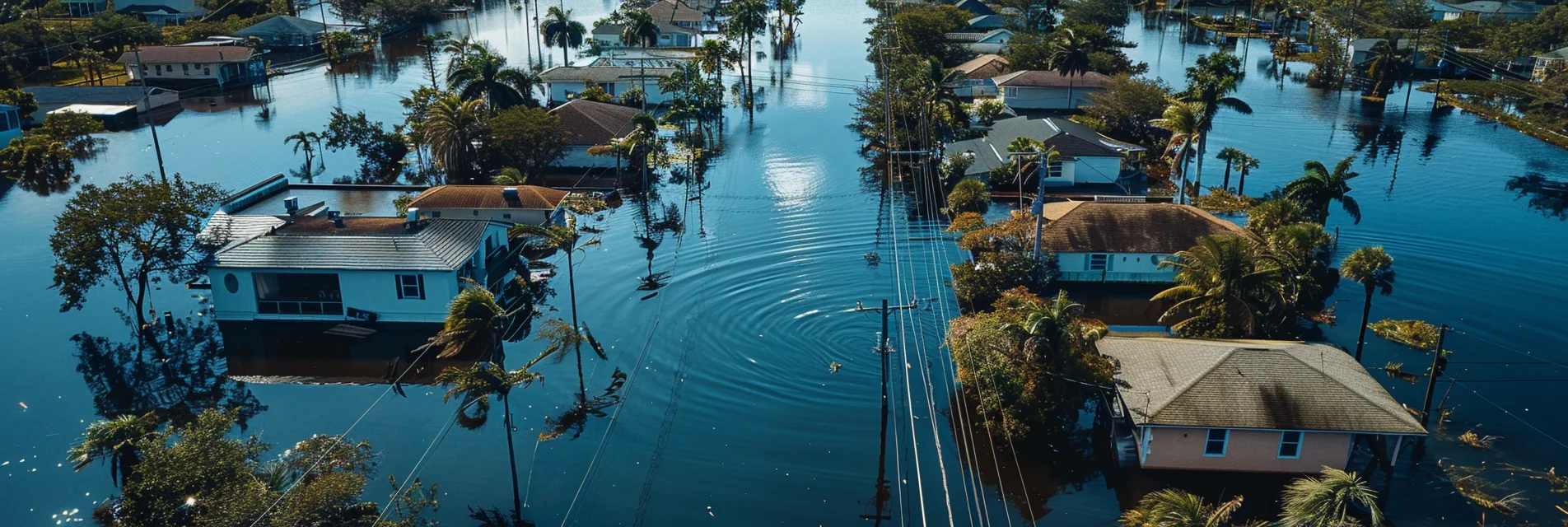
Westchester County — Yonkers, New Rochelle, and the Long Island Sound shore north of the city — takes coastal surge from hurricanes and severe flash flooding from storms like Ida.
Storm damage on Westchester County roofs
Westchester County roofs face real storm exposure — and the most expensive damage is often invisible from the ground.
Superstorm Sandy (2012) brought surge and wind to the Long Island Sound shoreline in Mamaroneck, Rye, and New Rochelle, and the remnants of Hurricane Ida (2021) caused severe flash flooding across the county, with Mamaroneck hit especially hard. Hurricane Irene (2011) flooded earlier. Wind and falling trees damage roofs throughout the densely populated county.
🌀 Westchester storm history
Sandy (2012) brought Sound-shore surge; Ida (2021) caused severe flash flooding (Mamaroneck); Irene (2011) flooded earlier.
📋 Westchester County building & wind code
New York enforces the State Uniform Fire Prevention and Building Code (the Residential Code of New York State), and New York City has its own Building Code; coastal Long Island and the city's shore neighborhoods build to high-wind and, since Superstorm Sandy, flood-elevation requirements. Every reroof must be permitted by the local building department, and downstate jurisdictions require the contractor to be locally licensed before a permit is issued. Building to current wind standards holds up far better in the next storm.
Storm-ready roof types in Westchester County
The right roof here balances wind rating, impact resistance, and durability.
Architectural shingle
Most common. Class 4 impact-rated shingles resist wind and hail and may earn an insurance credit.
Metal roofing
Excellent wind resistance and longevity — a strong fit for storm- and nor'easter-prone New York.
Flat & low-slope
Common on rowhomes and attached houses; needs proper membrane and flashing detail to resist wind-driven rain.
2026 roof repair & replacement ranges
Ranges reflect 2026 quotes from licensed contractors serving Westchester County.
| Roof work | Typical range | Best for |
|---|---|---|
| Minor storm repair | $500 – $1,800 | A few damaged shingles, small leaks |
| Section / slope replacement | $2,200 – $7,500 | Localized wind or hail damage, one slope |
| Full roof replacement | $9,500 – $32,000+ | Widespread damage, aging roof, full tear-off |
| Free inspection | $0 | Every homeowner after a storm |
Confirm your contractor holds the required local home-improvement license — downstate building departments won't issue a permit without it.
Your roofing product or service here. Reach homeowners actively comparing storm-damage roofing options across 13 coastal states. High-intent audience, zero waste.
Storm roof claims in Westchester County
In New York, the most important claim question is often which policy applies — wind or flood.
Wind and wind-driven-rain roof damage is covered by your homeowner policy, and coastal Long Island and city shore policies often carry a separate hurricane or windstorm deductible (some carry coverage through New York's coastal market of last resort, the NY Property Insurance Underwriting Association). Flood and storm-surge damage is NOT covered by a homeowner policy and needs separate flood insurance (NFIP). Document everything with dated photos and get a licensed contractor's written report.
💧 The Sandy & Ida lesson: wind vs. flood
New York's worst storms — Superstorm Sandy's surge and Hurricane Ida's flash flooding — did most of their damage through water, which a homeowner or wind policy does not cover; rising water needs separate flood insurance (NFIP). Wind and wind-driven-rain roof damage is covered. After a storm, document both, and have a licensed roofer separate wind damage from flood damage in writing — it determines which claim pays.
What to do once it's safe
Stay safe & tarp if needed
Don't climb a damaged roof. Cover active leaks from inside and call a pro for emergency tarping. Step-by-step tarp guide →
Document everything with dates
Dated photos of all visible damage — roof, ceilings, walls, attic. Separate wind damage from any flooding.
Get a free licensed inspection
A licensed local Westchester County contractor finds hidden damage and writes the report your claim needs.
File within your window
Submit promptly with the inspection report, and confirm the repair will be permitted.
How to verify a roofer in Westchester County
New York licenses home-improvement contractors locally — and unlicensed contractors can't even enforce a contract against you.
There is no statewide license: New York City (through the Department of Consumer and Worker Protection), Nassau, Suffolk, Westchester, Rockland, and Putnam counties all require a Home Improvement Contractor license, and many towns add their own rules. NYC's license even carries a Home Improvement Contractor Trust Fund that can reimburse homeowners harmed by a licensed contractor — protection you lose if you hire someone unlicensed. Verify the license with your city, county, or town consumer-affairs office before signing, confirm liability and workers' compensation insurance, and get a written contract.
Verify the local license
NYC (DCWP), Nassau, Suffolk, Westchester, and Rockland all license home-improvement contractors — check before signing.
Confirm insurance & recourse
Licensing keeps your legal recourse intact — and in NYC, Trust Fund eligibility. Ask for liability and workers' comp.
Use a local roofer
Local pros stay accountable; unlicensed contractors can't enforce a contract in New York.
Find your Westchester County city
Choose your city for a local, no-cost storm-damage roof inspection and a roofer near you.
Get your free Westchester County roof inspection
No cost, no obligation. A licensed local contractor reaches out within 24–48 hours.
Request received!
A licensed local contractor will reach out within 24–48 hours to schedule your free Westchester County inspection.
Recent storm activity in Westchester County
Westchester County — White Plains, Yonkers, New Rochelle, Mount Vernon, Scarsdale, and the communities of the Hudson Valley's southern corridor — faces a storm exposure profile shaped by its inland position north of New York City and its relationship with the Long Island Sound to the east. Hurricane Sandy (October 2012) produced significant impacts across Westchester, with the Sound-facing communities of New Rochelle, Mamaroneck, and Rye experiencing coastal flooding and surge while inland communities from Yonkers to Tarrytown absorbed wind damage that produced widespread tree falls and roof damage throughout the county's densely forested residential neighborhoods. Mamaroneck and the Sheldrake River corridor experienced particularly severe flooding, with the combination of Sound surge and river flooding inundating communities that had previously only experienced river flooding in isolation.
The remnants of Hurricane Ida (September 1, 2021) produced the most catastrophic rainfall event in Westchester County's recorded history. Some Westchester stations recorded over 3 inches of rain per hour — a rainfall intensity without modern precedent in the county. The resulting flooding killed three people in the county, overwhelmed every stormwater system, and drove water through roofing systems that had never leaked under previous storm events. The failure mechanism was primarily at flashings, valleys, skylights, and dormers — details that perform adequately under design rainfall rates but cannot prevent water infiltration under the hydraulic pressure created by extraordinary rainfall intensity. Henri (August 2021) had preceded Ida by less than a month, delivering near-hurricane conditions to Long Island Sound shores that pre-stressed roofing systems just weeks before Ida's rainfall event.
Westchester County's housing stock is among the most architecturally diverse in the New York metro area, with properties ranging from 19th-century Victorian mansions with complex slate and copper rooflines to mid-century colonials to contemporary construction. The older housing stock — much of it in Bronxville, Tuckahoe, Pelham, and the Sound Shore communities — features roof geometries, materials, and construction details that require specialty contractors familiar with historic and high-end residential work. The roof maintenance needs of a 1910 slate-roofed Victorian in Pelham differ fundamentally from a 1980s ranch in Yorktown Heights.
What this means for Westchester County homeowners
- Ida remnant damage (September 2021) to flashings, valleys, and skylights may still be actionable under NY's 2-year litigation window if claims were underpaid or denied.
- Sandy-era roof replacements (2012–2014) are now 10–12 years old and have absorbed Henri, Ida, and multiple subsequent storm events — professional inspection is advisable.
- New York State requires home improvement contractors to register with the state — verify at dos.ny.gov before signing any contract.
Westchester County storm roof claim: what to expect
Westchester County homeowners operate within New York's insurance regulatory framework — prompt-pay requirements and a 2-year litigation window. The specific challenge in Westchester is the Ida rainfall event, where the extraordinary precipitation intensity creates documentation requirements that differ from standard wind or surge claims.
New York claim filing deadlines
NY: prompt notice per policy terms; 2-year statute of limitations from claim denial to file suit. Check your specific policy for suit limitation clauses — some NY policies have shorter internal limits.
The Westchester County claim process
- Storm hits → Document all damage with dated photos within 24 hours. For Ida-type events: photograph water entry points at flashings, skylights, and valleys as soon as access is safe — these are where documentation matters most.
- Day 1–3 → File your claim. Reference the specific storm event and NWS precipitation records for your area — Ida's extraordinary intensity is documented and refutes maintenance-based denials.
- Day 15 → NY requires insurer acknowledgment within 15 business days.
- Contractor selection → For historic or high-end Westchester properties, specialty contractor experience matters — verify NY state registration and ask specifically about experience with the roof type on your property.
- NY state registration → Home improvement contractors must be registered with the NY Department of State. Verify at dos.ny.gov.
- Payment → NY requires payment within 25 business days of receiving proof of loss.