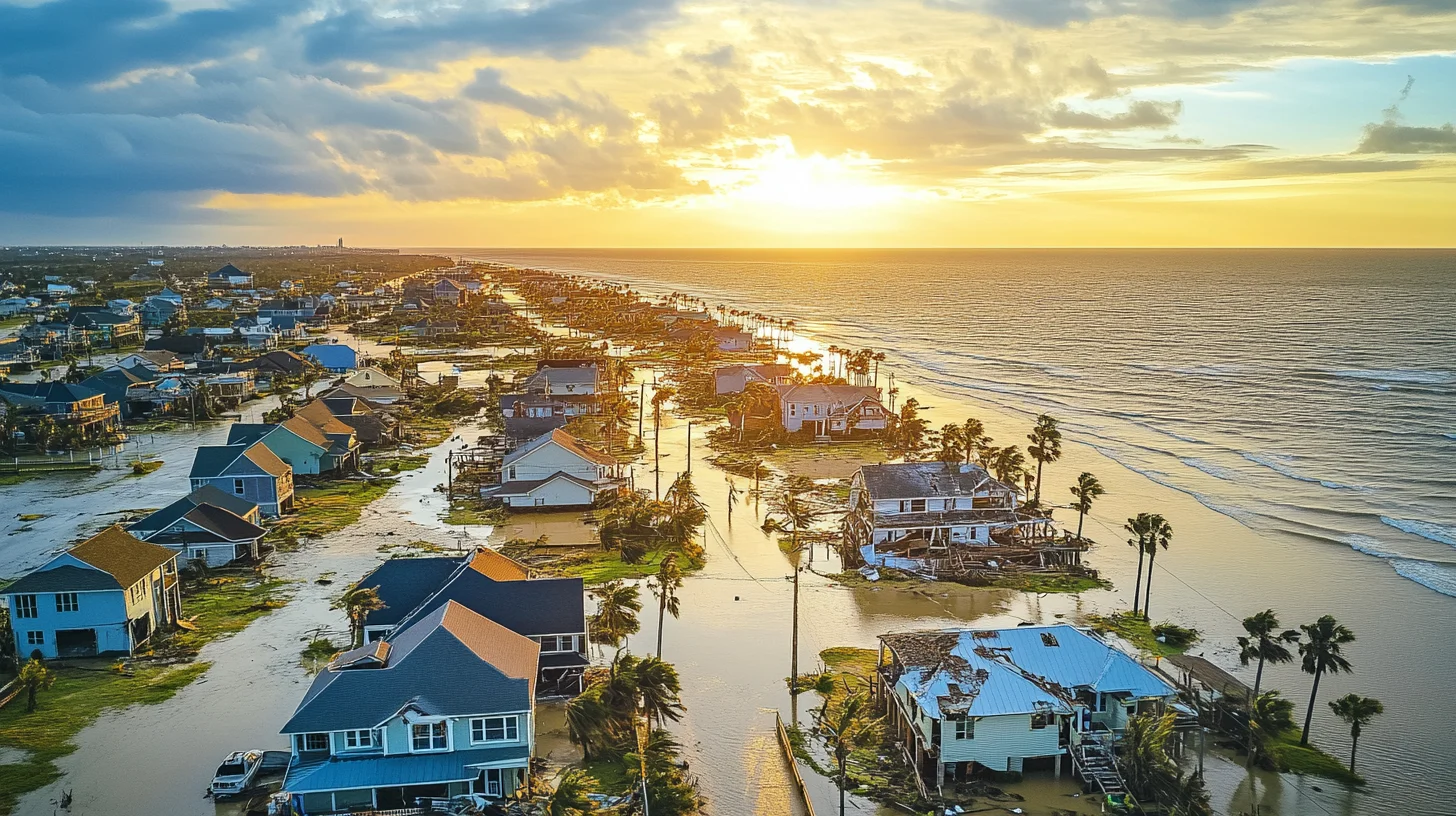
Pinellas County — St. Petersburg, Clearwater, and the barrier beaches — is one of Florida's most densely populated and surge-vulnerable peninsulas. The 2024 season was historic and devastating.
Storm damage on Pinellas County roofs
Pinellas County roofs face real, repeated storm exposure — and the most expensive damage is often invisible from the ground.
Pinellas is nearly surrounded by water, and Hurricane Helene (2024) drove record storm surge across its barrier islands — Clearwater Beach, St. Pete Beach, Treasure Island — flooding homes and tearing roofs. Two weeks later Milton (2024) struck with damaging winds and a tornado outbreak. Tens of thousands of Pinellas roofs were damaged across the two storms; inspections still find compounded, undocumented damage.
🌀 Pinellas County storm history
Helene (2024, record surge) and Milton (2024) hit within two weeks — the most destructive back-to-back roofing events in Pinellas history.
📋 Pinellas County building code
Florida's statewide building code (2020 Florida Building Code, 7th Edition) governs installation, and all roofing materials must carry a Florida Product Approval. Coastal wind-borne debris regions require enhanced shingle attachment and impact-rated coverings; a wind-mitigation inspection documents qualifying features for premium discounts.
Coastal roof types in Pinellas County
The right roof here balances wind rating, salt-air durability, and cost.
Architectural shingle
Most common. Class 4 impact-rated shingles are preferred on the coast and qualify for insurance discounts.
Metal roofing
Excellent wind and salt-air resistance. Standing seam earns the strongest wind-mitigation credits.
Tile (clay / concrete)
Durable and common in Florida. Heavier; requires a structural review after any impact damage.
2026 roof repair & replacement ranges
Ranges reflect 2026 quotes from licensed roofers serving Pinellas County. Coastal and barrier-island addresses run toward the higher end.
| Roof work | Typical range | Best for |
|---|---|---|
| Minor storm repair | $400 – $1,500 | A few damaged shingles or tiles, small leaks |
| Section / slope replacement | $1,800 – $6,500 | Localized wind or hail damage, one slope |
| Full roof replacement | $9,000 – $30,000+ | Widespread damage, aging roof, full tear-off |
| Free inspection | $0 | Every homeowner after a storm |
Florida Product Approval materials and coastal wind-zone installation add modest cost but reduce storm damage and claims over the roof's life.
Your roofing product or service here. Reach homeowners actively comparing storm-damage roofing options across 13 coastal states. High-intent audience, zero waste.
Storm roof claims in Pinellas County
Wind and storm damage is commonly covered in Florida — but claims move on a strict clock and live or die on documentation.
Florida law requires insurers to acknowledge a claim within 14 days and pay or deny within 90 days, and most Pinellas County policies carry a separate, higher hurricane deductible for named storms. Adjusters need dated evidence tying damage to a specific event — a free inspection produces exactly that. Florida's 2023 assignment-of-benefits reforms also changed what you can sign with a contractor, so read your policy first.
💰 Wind-mitigation discounts
Florida insurers are required by law to offer premium discounts for qualifying roof features — shape, deck attachment, opening protection, and covering type. A Pinellas County wind-mitigation inspection documents these and often saves homeowners $500–$2,000 a year.
What to do once it's safe
Stay safe & tarp if needed
Don't climb a damaged roof. Cover active leaks from inside and call a pro for emergency tarping. Step-by-step tarp guide →
Document everything with dates
Dated photos of all visible damage — roof, ceilings, walls, attic. Timestamps matter for claim correlation.
Get a free licensed inspection
A licensed Pinellas County roofer finds hidden damage and writes the report your claim needs.
File within your window
Submit promptly with the inspection report. Earlier is always stronger.
How to verify a roofer in Pinellas County
After any major storm, unlicensed crews flood affected Pinellas County neighborhoods. Protect yourself.
Florida roofing contractors must hold a state Certified (CRC) or Registered (RRC) roofing license — verify any contractor at MyFloridaLicense.com before signing. Confirm they pull local county permits and carry current liability and workers' compensation insurance.
Verify state license
Check MyFloridaLicense.com before signing anything.
Confirm insurance
Ask for liability and workers' comp certificates.
Use a local roofer
Local pros know Pinellas County permits and stay accountable.
Find your Pinellas County city
Choose your city for a local, no-cost storm-damage roof inspection and a roofer near you.
Get your free Pinellas County roof inspection
No cost, no obligation. A licensed local roofer typically reaches out within 24–48 hours.
Request received!
A licensed local roofer will reach out within 24–48 hours to schedule your free Pinellas County inspection.
Recent storm activity in Pinellas County
Pinellas County — St. Petersburg, Clearwater, Largo, Dunedin, and the barrier communities of Clearwater Beach, Indian Rocks Beach, and Madeira Beach — occupies one of the most geographically vulnerable positions of any densely populated county in the United States. The county is a narrow peninsula entirely surrounded by water on three sides: Tampa Bay to the east, the Gulf of Mexico to the west, and the open bay to the north. There is essentially no inland refuge from storm surge, and the county's dense development — over 800,000 residents on roughly 280 square miles, one of the most densely populated counties in Florida — means the consequences of a direct hit would be staggering.
Hurricane Helene (September 2024) made that risk concrete. While Helene's landfall was near Keaton Beach to the north, the storm's counterclockwise rotation drove surge southward through the Gulf and into Tampa Bay simultaneously from both sides of the Pinellas Peninsula. Clearwater Beach, Sand Key, and the barrier island communities experienced Gulf-side surge, while the St. Petersburg waterfront and Low-lying Shore Acres, Riviera Bay, and other bayside neighborhoods faced bay-side surge. Roof damage across Pinellas County from Helene's wind and the aftermath of surge water infiltration was among the most widespread in recent Florida history for a storm that didn't directly cross the county.
The Pinellas insurance market is under extreme stress following Helene. Citizens Property Insurance dominates the market, and the post-storm claim volume has been substantial. Several private carriers who had been writing policies in Pinellas have announced withdrawal or significant rate increases. Homeowners who have not reviewed their coverage structure since before Helene should do so immediately — Citizens' policies and surplus-lines policies have materially different terms than the admitted private carrier policies many homeowners previously held.
What this means for Pinellas County homeowners
- Pinellas barrier island and bayside properties face dual surge exposure — Gulf-side and bay-side — that makes NFIP flood coverage essential regardless of current FEMA zone designation.
- Helene roof claims must be filed by September 2025 under Florida's 1-year deadline — act immediately if you haven't filed.
- Post-Helene mold in saturated roof assemblies develops within 24–72 hours in Pinellas's climate — document before remediation, not after.
Pinellas County storm roof claim: what to expect
Pinellas County's post-Helene claims environment reflects the complexity of a densely populated barrier peninsula hit simultaneously by wind, Gulf surge, and bay surge. Sorting out which damage mechanism applies to which claim — and which policy covers each — is the defining challenge for most Pinellas claimants.
Florida claim filing deadlines
Florida's 2023 reform: 1 year initial, 18 months supplemental, both from date of loss. Pinellas hurricane deductibles are percentage-based — typically 2–5% of Coverage A. Calculate yours before calling your insurer.
The Pinellas County claim process
- Storm hits → Document wind damage and surge damage separately and immediately. Wind-created openings followed by rain entry = homeowner claim. Rising water from outside = NFIP claim.
- Day 1 → File both homeowner (wind) and NFIP (flood) claims if applicable. These are separate processes.
- Day 14 → FL law requires insurer acknowledgment within 14 days.
- Citizens specifics → If on Citizens, their adjuster process is separate from private carriers. Citizens has dedicated post-storm response protocols — follow up if you don't hear within 2 weeks of filing.
- Contractor → FL CCC or CBC license required. Verify at myfloridalicense.com before any commitment.
- Payment → ACV issued first, RCV supplement after permitted completion and documentation.