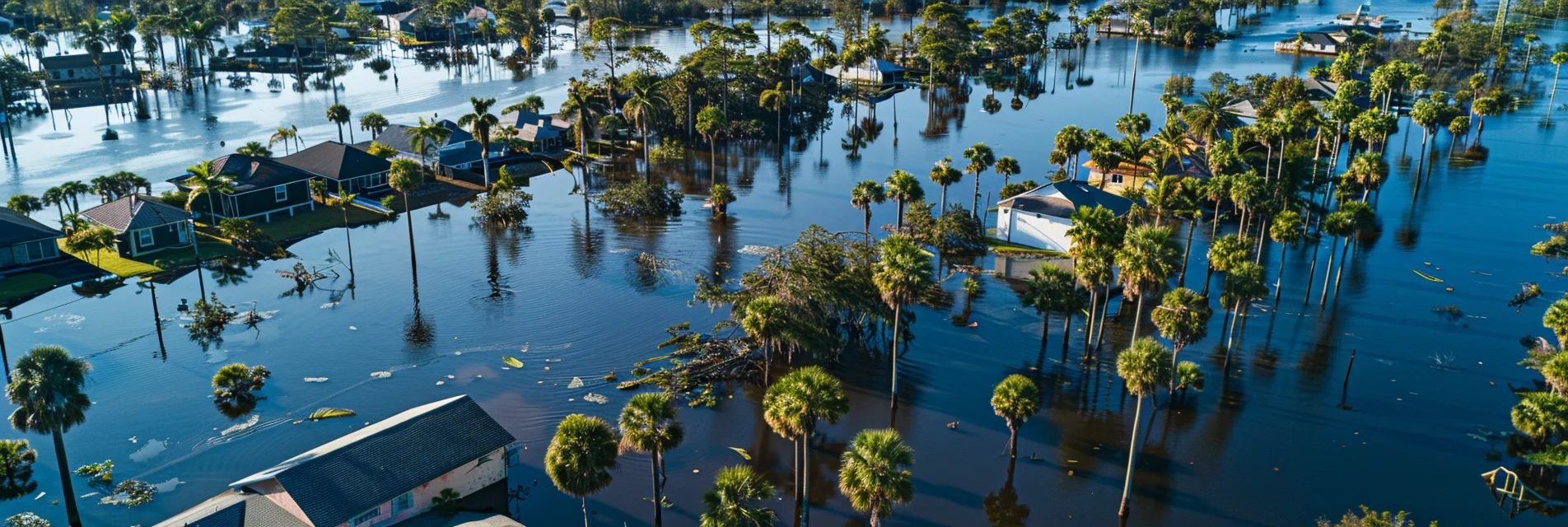
New Hanover County — Wilmington, Wrightsville Beach, and Carolina Beach — took the brunt of Hurricane Florence in 2018, when the city was effectively cut off for days.
Storm damage on New Hanover County roofs
New Hanover County roofs face real storm exposure — and the most expensive damage is often invisible from the ground.
Hurricane Florence (2018) stalled over the Cape Fear coast, battering New Hanover County with days of hurricane-force wind and historic rain that tore roofs, downed countless trees, and isolated Wilmington. Hurricane Fran (1996) had earlier devastated the area. The county's beaches and barrier islands sit in the high-wind coastal zone with direct Atlantic exposure.
🌀 New Hanover County storm history
Florence (2018) was catastrophic — days of wind and record rain over Wilmington; Fran (1996) struck earlier as a major hurricane.
📋 New Hanover County building & wind code
North Carolina enforces the State Building Code (the NC Residential Code), with high-wind design and wind-borne-debris requirements along the coast — design wind speeds reach 150 mph at the Outer Banks. Every reroof must be permitted by the local building authority; for work valued at $40,000 or more, the department will require proof of a licensed general contractor before issuing the permit. Building to current wind standards holds up far better in the next storm.
Storm-ready roof types in New Hanover County
The right roof here balances wind rating, impact resistance, and long-term durability.
Architectural shingle
Most common. Class 4 impact-rated shingles resist wind and hail and may earn an insurance credit.
Metal roofing
Excellent wind resistance and longevity — a strong fit for hurricane- and storm-prone North Carolina.
Tile & specialty
Durable but heavier; needs a structural review and proper wind detailing after any impact.
2026 roof repair & replacement ranges
Ranges reflect 2026 quotes from licensed contractors serving New Hanover County.
| Roof work | Typical range | Best for |
|---|---|---|
| Minor storm repair | $400 – $1,500 | A few damaged shingles, small leaks |
| Section / slope replacement | $1,800 – $6,500 | Localized wind or hail damage, one slope |
| Full roof replacement | $8,500 – $28,000+ | Widespread damage, aging roof, full tear-off |
| Free inspection | $0 | Every homeowner after a storm |
Confirm the quote includes a permit pulled with the local building authority — and for work of $40,000 or more, North Carolina requires a licensed general contractor before a permit will be issued.
Your roofing product or service here. Reach homeowners actively comparing storm-damage roofing options across 13 coastal states. High-intent audience, zero waste.
Storm roof claims in New Hanover County
In North Carolina, the most important claim question is often which policy applies — wind or flood.
Wind and wind-driven-rain roof damage is covered by your homeowner policy; coastal homeowners often carry separate wind/hail coverage through the North Carolina Insurance Underwriting Association (the "Beach Plan"), with a percentage-based named-storm deductible. Document storm damage thoroughly with dated photos, file promptly, and get a licensed contractor's written report — and make sure your repair is permitted.
💧 Wind vs. flood — know the difference
North Carolina's worst storms — Floyd, Matthew, Florence, and Helene — did most of their damage through flooding, which a standard homeowner or wind policy does not cover; rising-water flood damage needs separate flood insurance (NFIP). Wind and wind-driven-rain roof damage is covered. After a storm, document both, and have a licensed roofer separate the wind damage from flood damage in writing — it matters for your claim.
What to do once it's safe
Stay safe & tarp if needed
Don't climb a damaged roof. Cover active leaks from inside and call a pro for emergency tarping. Step-by-step tarp guide →
Document everything with dates
Dated photos of all visible damage — roof, ceilings, walls, attic. Separate wind damage from any flooding.
Get a free licensed inspection
A licensed local New Hanover County contractor finds hidden damage and writes the report your claim needs.
File within your window
Submit promptly with the inspection report, and confirm the repair will be permitted.
How to verify a roofer in New Hanover County
North Carolina has no dedicated roofing license, and the Licensing Board actively prosecutes the out-of-state "storm chasers" who descend after every hurricane.
For work valued at $40,000 or more, state law requires a licensed General Contractor — with the appropriate building, residential, or roofing-specialty classification — from the NC Licensing Board for General Contractors; performing larger work without a license is the unlicensed practice of general contracting. Verify any contractor at the NCLBGC before signing, confirm liability and workers' compensation insurance, get the scope and price in writing, and make sure a local permit is pulled.
Verify the NCLBGC license
NC requires a licensed GC for work of $40,000+ — check the NC Licensing Board for General Contractors.
Confirm insurance
Ask for liability and workers' comp certificates — out-of-state crews often lack them.
Use a local roofer
Local pros stay accountable long after the storm-chasers leave.
Find your New Hanover County city
Choose your city for a local, no-cost storm-damage roof inspection and a roofer near you.
Get your free New Hanover County roof inspection
No cost, no obligation. A licensed local contractor reaches out within 24–48 hours.
Request received!
A licensed local contractor will reach out within 24–48 hours to schedule your free New Hanover County inspection.
Recent storm activity in New Hanover County
New Hanover County — home to Wilmington, Wrightsville Beach, Carolina Beach, and Kure Beach — has the unenviable distinction of being the most storm-impacted major city on the North Carolina coast. Hurricane Florence made landfall at Wrightsville Beach on September 14, 2018 as a Category 1 storm and then essentially parked over southeastern North Carolina for four days, delivering over 35 inches of rain in Wilmington — the most rain ever recorded from a landfalling hurricane in North Carolina history. The flooding was catastrophic and long-lasting: the Cape Fear River crested days after landfall, flooding communities well inland, and the sustained saturation compromised roofing systems across the county in ways that continue to manifest years later as slow leaks, decking deterioration, and mold infiltration.
Hurricane Dorian (2019) arrived just one year after Florence, tracking up the coast as a Category 1 storm and delivering tropical-force winds and surge to the barrier island communities that were still recovering. The back-to-back major storms in 2018–2019 produced an insurance and contractor market strain that pushed many claims into multi-year disputes and left a significant backlog of partially repaired or minimally patched roofs across the county. Hurricane Matthew (2016) had preceded both, making New Hanover County's roofing stock one of the most repeatedly storm-stressed in the entire coastal Carolinas market.
The practical reality for New Hanover County homeowners in 2025 is that any roof that survived Florence, Dorian, and Matthew without full replacement has absorbed three significant storm loads over nine years and should be professionally evaluated. The combination of age, accumulated damage, and North Carolina's increasingly active storm seasons makes proactive inspection the most cost-effective risk management strategy available.
What this means for New Hanover County homeowners
- Florence saturation damage (2018) frequently manifests as ongoing moisture infiltration and decking deterioration — roofs that appeared fine after Florence may have accelerated deterioration that a 2025 inspection will reveal.
- North Carolina's 3-year statute of limitations on insurance suits means Dorian (2019) claims may still be actionable if previously underpaid — act immediately if you believe you were shortchanged.
- Wrightsville Beach and Carolina Beach properties in CAMA (Coastal Area Management Act) jurisdiction have additional permitting requirements for roofing work that affects repair timelines.
New Hanover County storm roof claim: what to expect
North Carolina's insurance regulatory environment provides solid consumer protections, and the state's 3-year limitation period gives homeowners meaningful time to pursue underpaid claims. The post-Florence market in New Hanover County was one of the most heavily scrutinized in the state's history, with tens of thousands of concurrent claims creating adjuster backlogs and documentation disputes.
North Carolina claim filing deadlines
North Carolina gives homeowners a 3-year statute of limitations to file suit after a claim denial. File your initial claim promptly after each event — NC policies require "prompt notice" or notification "as soon as reasonably possible."
The New Hanover County claim process
- Storm hits → Document all damage within 24 hours with photos and video, including attic and ceiling inspection for water infiltration.
- Day 1–3 → File your homeowner claim. If in a FEMA flood zone, file NFIP simultaneously.
- Day 1–15 → NC requires insurers to acknowledge claims within 10 business days and complete investigation within 30 days.
- Contractor inspection → Get a NC-licensed contractor's written scope. Verify NC general contractor or roofing license at nclbgc.org.
- CAMA compliance → For Wrightsville Beach and barrier island properties, confirm repair scope does not require CAMA major permit before beginning work.
- Payment → NC requires payment within 30 days of receiving proof of loss. Delayed payments accrue interest.