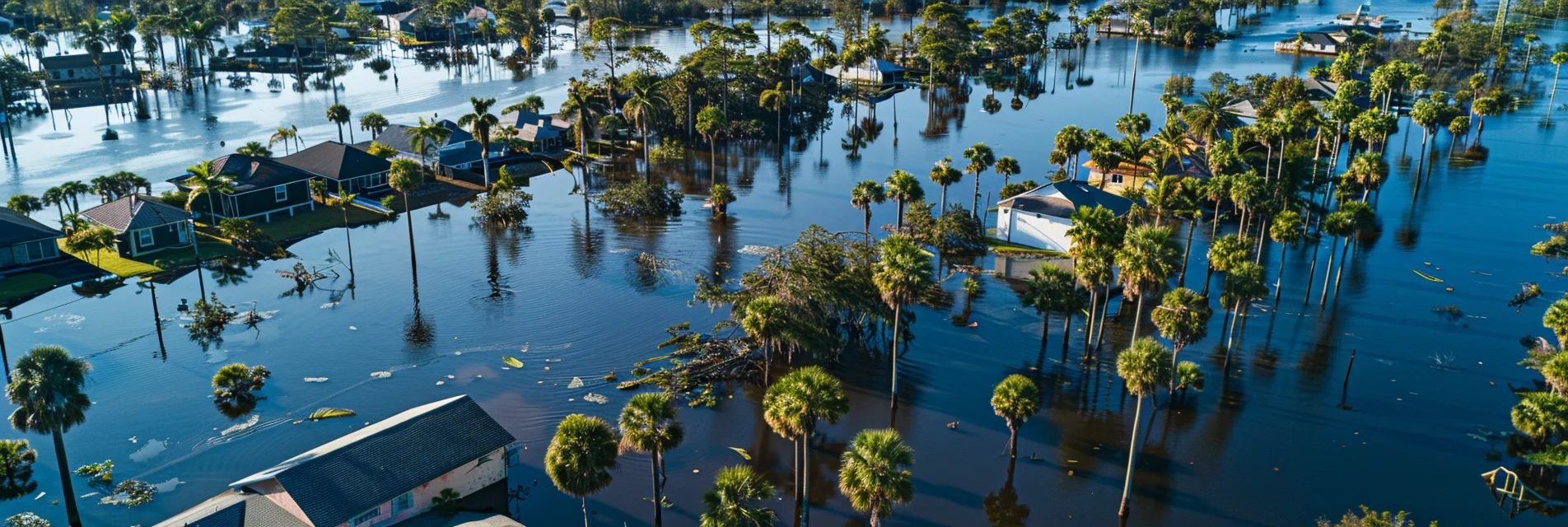
Escambia County — anchored by Pensacola and Perdido Key — sits at Florida's far western tip, one of the most hurricane-exposed stretches of the Gulf Coast. Hurricane Ivan in 2004 and Hurricane Sally in 2020 both made direct, devastating landfalls here.
Storm damage on Escambia County roofs
Escambia County roofs face real, repeated storm exposure — and the most expensive damage is often invisible from the ground.
Pensacola and Perdido Key take direct Gulf landfalls that combine extreme wind with storm surge. Hurricane Sally (2020) crawled ashore at Category 2 and parked over the county, dumping rain and tearing roofs across Pensacola Beach and the mainland. Ivan (2004) was worse — a Category 3 landfall that destroyed thousands of roofs and reshaped the local building code. Salt air off Pensacola Bay accelerates fastener corrosion, so coastal roofs age fast.
🌀 Escambia County storm history
Ivan (2004, Cat 3) and Sally (2020) are Escambia's defining storms, with Erin and Dennis (2005) adding to the record. Pensacola consistently ranks among Florida's most hurricane-struck cities.
📋 Escambia County building code
Florida's statewide building code (2020 Florida Building Code, 7th Edition) governs installation, and all roofing materials must carry a Florida Product Approval. Coastal wind-borne debris regions require enhanced shingle attachment and impact-rated coverings; a wind-mitigation inspection documents qualifying features for premium discounts.
Coastal roof types in Escambia County
The right roof here balances wind rating, salt-air durability, and cost.
Architectural shingle
Most common. Class 4 impact-rated shingles are preferred on the coast and qualify for insurance discounts.
Metal roofing
Excellent wind and salt-air resistance. Standing seam earns the strongest wind-mitigation credits.
Tile (clay / concrete)
Durable and common in Florida. Heavier; requires a structural review after any impact damage.
2026 roof repair & replacement ranges
Ranges reflect 2026 quotes from licensed roofers serving Escambia County. Coastal and barrier-island addresses run toward the higher end.
| Roof work | Typical range | Best for |
|---|---|---|
| Minor storm repair | $400 – $1,500 | A few damaged shingles or tiles, small leaks |
| Section / slope replacement | $1,800 – $6,500 | Localized wind or hail damage, one slope |
| Full roof replacement | $9,000 – $30,000+ | Widespread damage, aging roof, full tear-off |
| Free inspection | $0 | Every homeowner after a storm |
Florida Product Approval materials and coastal wind-zone installation add modest cost but reduce storm damage and claims over the roof's life.
Your roofing product or service here. Reach homeowners actively comparing storm-damage roofing options across 13 coastal states. High-intent audience, zero waste.
Storm roof claims in Escambia County
Wind and storm damage is commonly covered in Florida — but claims move on a strict clock and live or die on documentation.
Florida law requires insurers to acknowledge a claim within 14 days and pay or deny within 90 days, and most Escambia County policies carry a separate, higher hurricane deductible for named storms. Adjusters need dated evidence tying damage to a specific event — a free inspection produces exactly that. Florida's 2023 assignment-of-benefits reforms also changed what you can sign with a contractor, so read your policy first.
💰 Wind-mitigation discounts
Florida insurers are required by law to offer premium discounts for qualifying roof features — shape, deck attachment, opening protection, and covering type. A Escambia County wind-mitigation inspection documents these and often saves homeowners $500–$2,000 a year.
What to do once it's safe
Stay safe & tarp if needed
Don't climb a damaged roof. Cover active leaks from inside and call a pro for emergency tarping. Step-by-step tarp guide →
Document everything with dates
Dated photos of all visible damage — roof, ceilings, walls, attic. Timestamps matter for claim correlation.
Get a free licensed inspection
A licensed Escambia County roofer finds hidden damage and writes the report your claim needs.
File within your window
Submit promptly with the inspection report. Earlier is always stronger.
How to verify a roofer in Escambia County
After any major storm, unlicensed crews flood affected Escambia County neighborhoods. Protect yourself.
Florida roofing contractors must hold a state Certified (CRC) or Registered (RRC) roofing license — verify any contractor at MyFloridaLicense.com before signing. Confirm they pull local county permits and carry current liability and workers' compensation insurance.
Verify state license
Check MyFloridaLicense.com before signing anything.
Confirm insurance
Ask for liability and workers' comp certificates.
Use a local roofer
Local pros know Escambia County permits and stay accountable.
Find your Escambia County city
Choose your city for a local, no-cost storm-damage roof inspection and a roofer near you.
Get your free Escambia County roof inspection
No cost, no obligation. A licensed local roofer typically reaches out within 24–48 hours.
Request received!
A licensed local roofer will reach out within 24–48 hours to schedule your free Escambia County inspection.