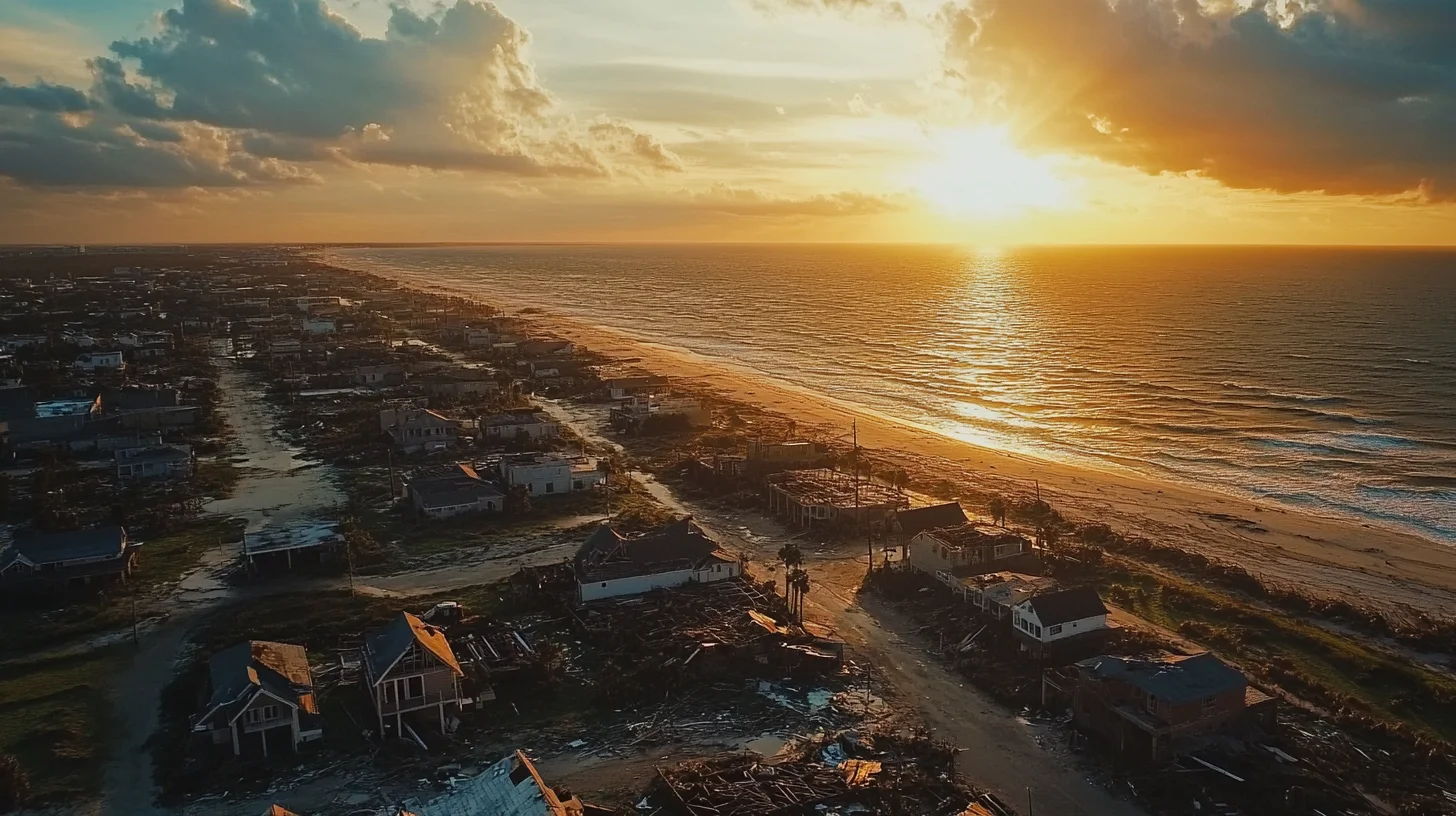
Duval County — Jacksonville and its beaches — anchors Northeast Florida. Hurricanes Matthew (2016) and Irma (2017) brought record flooding and wind to the St. Johns River and the beaches.
Storm damage on Duval County roofs
Duval County roofs face real, repeated storm exposure — and the most expensive damage is often invisible from the ground.
Matthew (2016) paralleled the coast with hurricane-force gusts and storm surge at Jacksonville Beach, Atlantic Beach, and Neptune Beach; Irma (2017) then drove record St. Johns River flooding through downtown and San Marco. Jacksonville's huge housing stock means large claim volumes, and beachside roofs face direct Atlantic wind and salt exposure.
🌀 Duval County storm history
Matthew (2016) and Irma (2017) are Duval's defining recent storms, bringing wind, surge, and record river flooding.
📋 Duval County building code
Florida's statewide building code (2020 Florida Building Code, 7th Edition) governs installation, and all roofing materials must carry a Florida Product Approval. Coastal wind-borne debris regions require enhanced shingle attachment and impact-rated coverings; a wind-mitigation inspection documents qualifying features for premium discounts.
Coastal roof types in Duval County
The right roof here balances wind rating, salt-air durability, and cost.
Architectural shingle
Most common. Class 4 impact-rated shingles are preferred on the coast and qualify for insurance discounts.
Metal roofing
Excellent wind and salt-air resistance. Standing seam earns the strongest wind-mitigation credits.
Tile (clay / concrete)
Durable and common in Florida. Heavier; requires a structural review after any impact damage.
2026 roof repair & replacement ranges
Ranges reflect 2026 quotes from licensed roofers serving Duval County. Coastal and barrier-island addresses run toward the higher end.
| Roof work | Typical range | Best for |
|---|---|---|
| Minor storm repair | $400 – $1,500 | A few damaged shingles or tiles, small leaks |
| Section / slope replacement | $1,800 – $6,500 | Localized wind or hail damage, one slope |
| Full roof replacement | $9,000 – $30,000+ | Widespread damage, aging roof, full tear-off |
| Free inspection | $0 | Every homeowner after a storm |
Florida Product Approval materials and coastal wind-zone installation add modest cost but reduce storm damage and claims over the roof's life.
Your roofing product or service here. Reach homeowners actively comparing storm-damage roofing options across 13 coastal states. High-intent audience, zero waste.
Storm roof claims in Duval County
Wind and storm damage is commonly covered in Florida — but claims move on a strict clock and live or die on documentation.
Florida law requires insurers to acknowledge a claim within 14 days and pay or deny within 90 days, and most Duval County policies carry a separate, higher hurricane deductible for named storms. Adjusters need dated evidence tying damage to a specific event — a free inspection produces exactly that. Florida's 2023 assignment-of-benefits reforms also changed what you can sign with a contractor, so read your policy first.
💰 Wind-mitigation discounts
Florida insurers are required by law to offer premium discounts for qualifying roof features — shape, deck attachment, opening protection, and covering type. A Duval County wind-mitigation inspection documents these and often saves homeowners $500–$2,000 a year.
What to do once it's safe
Stay safe & tarp if needed
Don't climb a damaged roof. Cover active leaks from inside and call a pro for emergency tarping. Step-by-step tarp guide →
Document everything with dates
Dated photos of all visible damage — roof, ceilings, walls, attic. Timestamps matter for claim correlation.
Get a free licensed inspection
A licensed Duval County roofer finds hidden damage and writes the report your claim needs.
File within your window
Submit promptly with the inspection report. Earlier is always stronger.
How to verify a roofer in Duval County
After any major storm, unlicensed crews flood affected Duval County neighborhoods. Protect yourself.
Florida roofing contractors must hold a state Certified (CRC) or Registered (RRC) roofing license — verify any contractor at MyFloridaLicense.com before signing. Confirm they pull local county permits and carry current liability and workers' compensation insurance.
Verify state license
Check MyFloridaLicense.com before signing anything.
Confirm insurance
Ask for liability and workers' comp certificates.
Use a local roofer
Local pros know Duval County permits and stay accountable.
Find your Duval County city
Choose your city for a local, no-cost storm-damage roof inspection and a roofer near you.
Get your free Duval County roof inspection
No cost, no obligation. A licensed local roofer typically reaches out within 24–48 hours.
Request received!
A licensed local roofer will reach out within 24–48 hours to schedule your free Duval County inspection.
Recent storm activity in Duval County
Duval County — Jacksonville, Jacksonville Beach, Neptune Beach, Atlantic Beach, and the communities of the St. Johns River corridor — occupies a unique position on Florida's northeast coast: far enough north to be outside the most active hurricane landfall zone, yet close enough to both the Atlantic and the Gulf (via weather systems crossing the peninsula) to experience significant tropical impacts. Hurricane Irma (2017) produced the most memorable storm event in recent Duval County history when it crossed the Florida peninsula and drove unprecedented storm surge up the St. Johns River — a body of water that flows northward, allowing surge from the Atlantic to push far inland. Jacksonville's downtown and historic Riverside areas experienced flooding that exceeded any flood event in living memory, with the St. Johns River reaching levels 5 feet above its banks in some locations.
While Irma's surge impact was the headline event, the wind damage across Duval County was also significant. Jacksonville Beach, Neptune Beach, and the beachside communities experienced direct tropical-force winds that caused widespread shingle damage, flashing failures, and tree falls on roofs across the county. Hurricane Matthew (2016) had preceded Irma, passing close offshore as a Category 3 storm and producing the most significant beachside damage Duval had seen since the 1960s. The back-to-back years of Matthew and Irma produced a rebuilding wave that is now nearly a decade old — putting those repairs in the window where re-evaluation makes sense.
Hurricane Ian (2022) tracked across Central Florida and crossed the east coast north of Duval, generating additional wind and rain events. Duval County's northeast Florida position means it regularly absorbs tropical energy from both Atlantic storms tracking northward along the coast and Gulf storms crossing the peninsula — a dual exposure that accumulates over time even when no individual storm produces catastrophic local damage.
What this means for Duval County homeowners
- Matthew/Irma-era repairs (2016–2018) are now 7–9 years old and have absorbed multiple subsequent storm events — inspection is advisable before the next active season.
- The St. Johns River surge risk is real and underappreciated inland — NFIP flood insurance is advisable for any property within several miles of the river.
- Florida's 1-year claim deadline applies to all current storm damage — document and file immediately after any event.
Duval County storm roof claim: what to expect
Duval County's insurance market reflects northeast Florida's somewhat lower storm frequency relative to South Florida — but the post-2023 Florida insurance reform applies statewide, and Jacksonville homeowners face the same tightened claim deadlines and AOB restrictions as Miami-Dade homeowners.
Florida claim filing deadlines
Florida: 1 year initial, 18 months supplemental, from date of loss. These deadlines apply equally to Duval County as to the rest of the state regardless of the lower storm frequency.
The Duval County claim process
- Storm hits → Document all damage with dated photos within 24 hours. For St. Johns River corridor properties: document surge and flood damage separately from wind damage.
- Day 1–3 → File claim. Duval County's lower storm frequency means many homeowners have never filed a major storm claim — the post-2023 process is different from what may have been experienced before.
- Day 14 → FL insurer acknowledgment required.
- Contractor → FL CCC or CBC license required. Verify at myfloridalicense.com. Jacksonville is large enough to attract unlicensed storm chasers after any significant event.
- AOB note → Do not sign any Assignment of Benefits or direction-to-pay agreement that transfers your claim rights to a contractor — this is now significantly restricted under Florida law and can complicate your claim.
- Payment → ACV first, RCV after permitted completion.