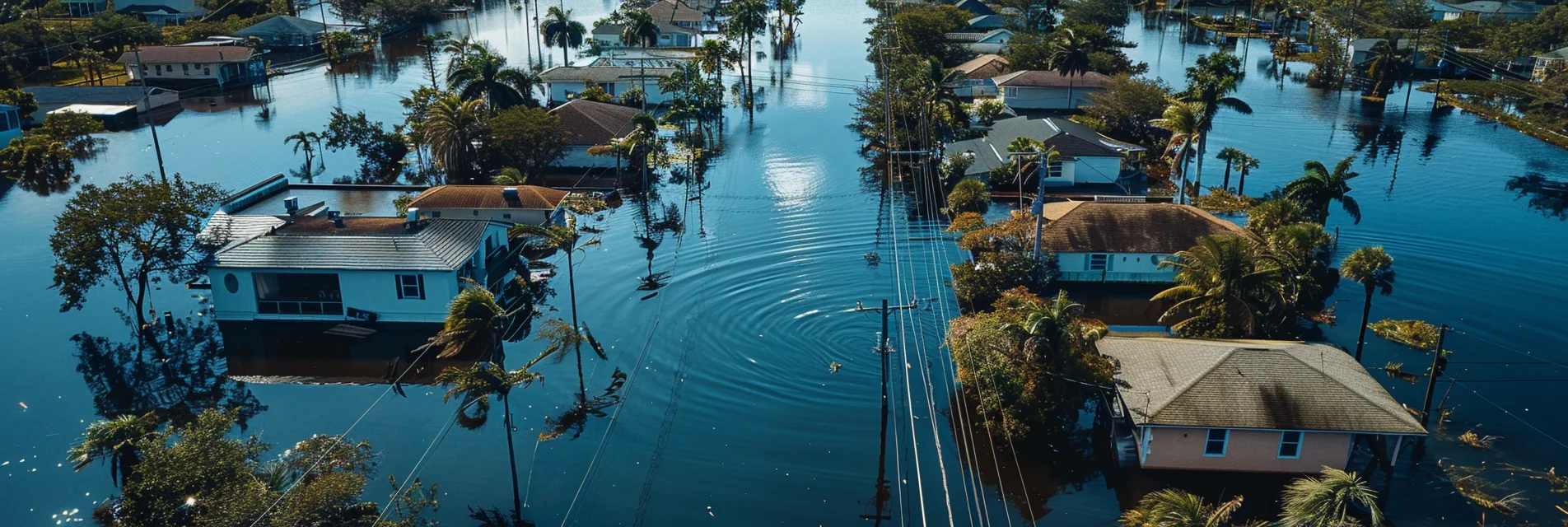
Broward County — Fort Lauderdale, Hollywood, and Pompano Beach — is Florida's second High-Velocity Hurricane Zone county, enforcing the same Notice-of-Acceptance roofing standards as Miami-Dade.
Storm damage on Broward County roofs
Broward County roofs face real, repeated storm exposure — and the most expensive damage is often invisible from the ground.
Broward's dense coastal development faces HVHZ-level wind exposure. Hurricane Wilma (2005) crossed the county and caused widespread roof damage and weeks-long power outages; Irma (2017) brought more wind and water. As an HVHZ county, every roof repair must use NOA-approved materials and meet the secondary-water-barrier requirement, so quick non-compliant patches don't pass inspection.
🌀 Broward County storm history
Wilma (2005) caused the county's most widespread modern roof damage; Irma (2017) and Andrew's (1992) northern bands also affected Broward.
📋 Broward County building code
As a High-Velocity Hurricane Zone county, every roofing material installed here must carry a Miami-Dade Notice of Acceptance (NOA) — the strictest product-approval standard in the United States, alongside a mandatory secondary water barrier. These rules exist because of Hurricane Andrew and remain the toughest residential wind standards in the country.
Coastal roof types in Broward County
The right roof here balances wind rating, salt-air durability, and cost.
Architectural shingle
Most common. Class 4 impact-rated shingles are preferred on the coast and qualify for insurance discounts.
Metal roofing
Excellent wind and salt-air resistance. Standing seam earns the strongest wind-mitigation credits.
Tile (clay / concrete)
Durable and common in Florida. Heavier; requires a structural review after any impact damage.
2026 roof repair & replacement ranges
Ranges reflect 2026 quotes from licensed roofers serving Broward County. Coastal and barrier-island addresses run toward the higher end.
| Roof work | Typical range | Best for |
|---|---|---|
| Minor storm repair | $400 – $1,500 | A few damaged shingles or tiles, small leaks |
| Section / slope replacement | $1,800 – $6,500 | Localized wind or hail damage, one slope |
| Full roof replacement | $9,000 – $30,000+ | Widespread damage, aging roof, full tear-off |
| Free inspection | $0 | Every homeowner after a storm |
HVHZ Notice of Acceptance materials and the required secondary water barrier add cost but are mandatory for code and insurance eligibility.
Your roofing product or service here. Reach homeowners actively comparing storm-damage roofing options across 13 coastal states. High-intent audience, zero waste.
Storm roof claims in Broward County
Wind and storm damage is commonly covered in Florida — but claims move on a strict clock and live or die on documentation.
Florida law requires insurers to acknowledge a claim within 14 days and pay or deny within 90 days, and most Broward County policies carry a separate, higher hurricane deductible for named storms. Adjusters need dated evidence tying damage to a specific event — a free inspection produces exactly that. Florida's 2023 assignment-of-benefits reforms also changed what you can sign with a contractor, so read your policy first.
💰 Wind-mitigation discounts
Florida insurers are required by law to offer premium discounts for qualifying roof features — shape, deck attachment, opening protection, and covering type. A Broward County wind-mitigation inspection documents these and often saves homeowners $500–$2,000 a year.
What to do once it's safe
Stay safe & tarp if needed
Don't climb a damaged roof. Cover active leaks from inside and call a pro for emergency tarping. Step-by-step tarp guide →
Document everything with dates
Dated photos of all visible damage — roof, ceilings, walls, attic. Timestamps matter for claim correlation.
Get a free licensed inspection
A licensed Broward County roofer finds hidden damage and writes the report your claim needs.
File within your window
Submit promptly with the inspection report. Earlier is always stronger.
How to verify a roofer in Broward County
After any major storm, unlicensed crews flood affected Broward County neighborhoods. Protect yourself.
Florida roofing contractors must hold a state Certified (CRC) or Registered (RRC) roofing license — verify any contractor at MyFloridaLicense.com before signing. In HVHZ counties, also confirm they pull Miami-Dade HVHZ permits and install NOA-approved systems.
Verify state license
Check MyFloridaLicense.com before signing anything.
Confirm insurance
Ask for liability and workers' comp certificates.
Use a local roofer
Local pros know Broward County permits and stay accountable.
Find your Broward County city
Choose your city for a local, no-cost storm-damage roof inspection and a roofer near you.
Get your free Broward County roof inspection
No cost, no obligation. A licensed local roofer typically reaches out within 24–48 hours.
Request received!
A licensed local roofer will reach out within 24–48 hours to schedule your free Broward County inspection.
Recent storm activity in Broward County
Broward County has experienced a near-constant state of elevated storm exposure since 2020. While no major hurricane made direct landfall, the county absorbed significant wind and rain events from Eta (2020), which dropped record rainfall and triggered widespread flood damage, and Elsa (2021), which moved through South Florida faster than expected and left lifted shingles across Fort Lauderdale's aging housing stock. Ian (2022) tracked north of Broward but generated Category 1-equivalent gusts over the coast, exposing roofs that had skipped post-Wilma upgrades. Nicole (2022) then delivered a rare November landfall on Florida's Atlantic coast, sending water under marginally sealed ridge caps and flashings throughout the county.
The cumulative effect on Broward's roofing market has been significant. The 2023 Florida insurance reform reshaped the claims landscape — AOB (Assignment of Benefits) restrictions changed how contractors could bill insurers directly, and many smaller carriers exited the market entirely. Homeowners who file claims in 2024–2026 are dealing with a smaller pool of insurers, stricter documentation requirements, and adjusters who are increasingly aggressive about depreciation on anything older than 10 years.
Perhaps most concerning: a large share of Broward's residential roofs were replaced or repaired after Wilma in 2005–2007. That puts many roofs at 17–20 years old — past the typical 15-year mark where HVHZ-rated shingles begin losing their wind-uplift performance. A roof that passed inspection in 2006 may technically still be "intact" but performing well below its original wind rating. The next major storm will expose that gap fast.
What this means for Broward homeowners
- If your roof was replaced after Wilma (2005–2008), it is approaching or past its optimal wind-resistance window — get it inspected before the next season.
- Nicole and Eta damage is frequently hidden under surface granules — missing shingles are obvious, but creased tabs and broken seals are not.
- Florida's 2023 insurance reforms mean your claim must be filed within 1 year of the loss event (down from 3 years) — delayed reporting is the #1 reason Broward claims are denied.
Broward County storm roof claim: what to expect
Florida has some of the most homeowner-friendly insurance statutes in the country on paper — but Broward's dense market and history of fraud have made local insurers extraordinarily scrutiny-heavy. Understanding the timeline before you file is the difference between a smooth claim and a six-month fight.
Florida claim filing deadlines
As of 2023, Florida law requires storm damage claims to be filed within 1 year of the date of loss. Supplemental claims must be filed within 18 months. These are hard deadlines — missing them forfeits your right to coverage regardless of how clear the damage is. Document everything the day the storm passes.
What to expect step by step
- Storm hits → Document damage with dated photos same day. Cover active leaks.
- Day 1–3 → File your claim with your insurer. Get your claim number in writing.
- Day 7–14 → Insurer must acknowledge your claim within 14 days under Florida law.
- Day 14–45 → Adjuster inspection. Have your free contractor inspection report ready to present.
- Day 45–90 → Insurer must accept or deny within 90 days of receiving proof of loss.
- Payment → ACV check issued first. RCV supplement paid after repairs are completed and documented.
Adjuster tips specific to Broward
Broward adjusters are trained to look for pre-existing wear, improper prior repairs, and any indication that damage predates the storm event. Before your adjuster visit: gather your permit history (available at the Broward County Building Division), have your NOA documentation for your current roofing materials, and if possible get your contractor inspection report in hand so you can point to specific damage zones. Never let an adjuster's initial estimate be the final word — supplements are routine and expected in HVHZ markets.