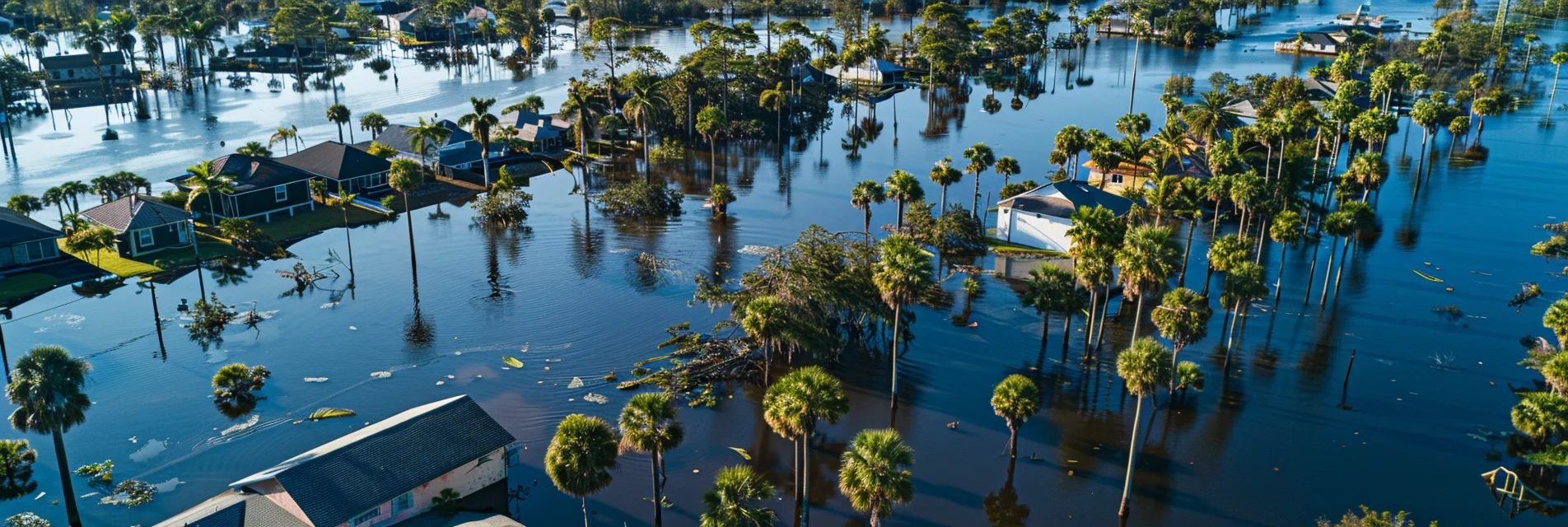
Nassau County — Fernandina Beach and Amelia Island — is Florida's northeasternmost coast, where Matthew (2016) and Irma (2017) brought wind, surge, and flooding to the barrier island and historic downtown.
Storm damage on Nassau County roofs
Nassau County roofs face real, repeated storm exposure — and the most expensive damage is often invisible from the ground.
Amelia Island's oceanfront and historic Fernandina Beach took wind and surge from Matthew (2016) and flooding from Irma (2017). The barrier island faces direct Atlantic exposure and salt air, while inland Yulee sees wind and hurricane-remnant damage. Historic Fernandina structures need specialist roofing.
🌀 Nassau County storm history
Matthew (2016) and Irma (2017) are Nassau's defining recent storms, bringing wind, surge, and flooding to Amelia Island.
📋 Nassau County building code
Florida's statewide building code (2020 Florida Building Code, 7th Edition) governs installation, and all roofing materials must carry a Florida Product Approval. Coastal wind-borne debris regions require enhanced shingle attachment and impact-rated coverings; a wind-mitigation inspection documents qualifying features for premium discounts.
Coastal roof types in Nassau County
The right roof here balances wind rating, salt-air durability, and cost.
Architectural shingle
Most common. Class 4 impact-rated shingles are preferred on the coast and qualify for insurance discounts.
Metal roofing
Excellent wind and salt-air resistance. Standing seam earns the strongest wind-mitigation credits.
Tile (clay / concrete)
Durable and common in Florida. Heavier; requires a structural review after any impact damage.
2026 roof repair & replacement ranges
Ranges reflect 2026 quotes from licensed roofers serving Nassau County. Coastal and barrier-island addresses run toward the higher end.
| Roof work | Typical range | Best for |
|---|---|---|
| Minor storm repair | $400 – $1,500 | A few damaged shingles or tiles, small leaks |
| Section / slope replacement | $1,800 – $6,500 | Localized wind or hail damage, one slope |
| Full roof replacement | $9,000 – $30,000+ | Widespread damage, aging roof, full tear-off |
Florida Product Approval materials and coastal wind-zone installation add modest cost but reduce storm damage and claims over the roof's life.
Your roofing product or service here. Reach homeowners actively comparing storm-damage roofing options across 13 coastal states. High-intent audience, zero waste.
Storm roof claims in Nassau County
Wind and storm damage is commonly covered in Florida — but claims move on a strict clock and live or die on documentation.
Florida law requires insurers to acknowledge a claim within 14 days and pay or deny within 90 days, and most Nassau County policies carry a separate, higher hurricane deductible for named storms. Adjusters need dated evidence tying damage to a specific event — a professional inspection produces exactly that. Florida's 2023 assignment-of-benefits reforms also changed what you can sign with a contractor, so read your policy first.
💰 Wind-mitigation discounts
Florida insurers are required by law to offer premium discounts for qualifying roof features — shape, deck attachment, opening protection, and covering type. A Nassau County wind-mitigation inspection documents these and often saves homeowners $500–$2,000 a year.
Two numbers decide most of what a claim is worth: the hurricane deductible your policy applies, and whether a coinsurance penalty reduces the payout. Both are worth working out before you sign anything, alongside current roof replacement costs.
What to do once it's safe
Stay safe & tarp if needed
Don't climb a damaged roof. Cover active leaks from inside and call a pro for emergency tarping. Step-by-step tarp guide →
Document everything with dates
Dated photos of all visible damage — roof, ceilings, walls, attic. Timestamps matter for claim correlation.
Hire a licensed roofer to inspect
A licensed Nassau County roofer finds hidden damage and writes the report your claim needs.
File within your window
Submit promptly with the inspection report. Earlier is always stronger.
How to verify a roofer in Nassau County
After any major storm, unlicensed crews flood affected Nassau County neighborhoods. Protect yourself.
Florida roofing contractors must hold a state Certified (CRC) or Registered (RRC) roofing license — verify any contractor at MyFloridaLicense.com before signing. Confirm they pull local county permits and carry current liability and workers' compensation insurance.
Verify state license
Check MyFloridaLicense.com before signing anything.
Confirm insurance
Ask for liability and workers' comp certificates.
Use a local roofer
Local pros know Nassau County permits and stay accountable.
Find your Nassau County city
Choose your city for a local, no-cost storm-damage roof inspection and a roofer near you.
How to hire a licensed Nassau County roofer
StormRoofQuotes is an independent, ad-supported information resource. We don't arrange inspections or refer you to any contractor — the guides below explain how to document damage and hire a licensed local roofer yourself.
StormRoofQuotes is an independent, ad-supported information resource. We publish storm-recovery guides and clearly-labeled roofing advertisements. We do not arrange inspections, take commissions, or refer you to any contractor.
How this site works →Recent storm activity in Nassau County, Florida
Nassau County — Fernandina Beach, Yulee, Hilliard, Callahan, and Amelia Island — occupies Florida's northeastern corner at the Georgia border, a position that creates a distinctive storm exposure profile. The county is south of the traditional South Carolina/North Carolina hurricane landfall zone and north of the most active Florida Atlantic coast storm tracks, but it sits directly in the path of Atlantic storms that track up the Florida coast before turning north. Hurricane Matthew (October 2016) passed close offshore as a Category 3 storm, generating the most significant wind event Nassau County had experienced in decades — sustained tropical-force winds over Fernandina Beach and Amelia Island for over 12 hours, with gusts exceeding 60 mph producing widespread shingle damage, downed trees, and flooding on Amelia Island's western (Intracoastal) side.
Hurricane Irma (September 2017) added to Nassau County's storm exposure the following year, making landfall on the Florida Gulf coast but crossing the state and generating significant wind and rain as its remnants moved northeast through Jacksonville and Nassau County. The combination of Matthew in 2016 and Irma in 2017 — back-to-back years with significant tropical impacts — produced a pattern of cumulative loading on Nassau County's housing stock that professional inspections have since found to be more consequential than either storm's individual impact would suggest. Repairs made after Matthew were re-stressed by Irma before they had time to fully set and age, producing a cohort of roofs with questionable long-term integrity.
Amelia Island's distinctive character — one of Florida's Sea Islands, with a significant inventory of historic properties, coastal cottages, and high-end resort development — creates specific roofing considerations. The island's Gulf Stream proximity means a salt-air environment that accelerates roofing material degradation faster than even most Florida coastal communities, and the mix of historic and contemporary structures means repair and replacement decisions involve both standard code requirements and preservation-minded aesthetic considerations.
What this means for Nassau County homeowners
- Matthew/Irma repairs (2016–2018) that patched rather than replaced are now 7–9 years old — inspection advisable before the next storm season.
- Florida's 1-year claim filing deadline applies statewide including Nassau County — document and file all new storm damage within 12 months.
- Amelia Island's salt-air environment accelerates roofing material aging — annual inspection is advisable for oceanfront and near-ocean properties.
Nassau County, Florida storm roof claim: what to expect
Nassau County homeowners operate within Florida's statewide insurance framework — post-2023 reform applies here as much as in Miami-Dade. The county's relatively lower storm frequency compared to South Florida has meant that many Nassau homeowners have less experience navigating the claim process than their counterparts further south.
Florida claim filing deadlines
Florida: 1 year initial, 18 months supplemental, from date of loss. Hurricane deductibles are percentage-based — typically 2% of dwelling coverage for most Nassau County policies.
The Nassau County, FL claim process
- Storm hits → Document all damage with dated photos within 24 hours. Note the storm name and date explicitly in all communications with your insurer.
- Day 1–3 → File your claim. Florida's 2023 AOB restrictions mean you must manage your own claim — do not sign assignment agreements that transfer claim rights to a contractor.
- Day 14 → FL law requires insurer acknowledgment within 14 days.
- Amelia Island CCCL → Properties on Amelia Island seaward of the CCCL require FDEP review for repair work — confirm with the Nassau County Building Department before authorizing any significant repair scope.
- Contractor → FL CCC or CBC license required. Verify at myfloridalicense.com.
- Payment → ACV first, RCV after permitted completion with final inspection.