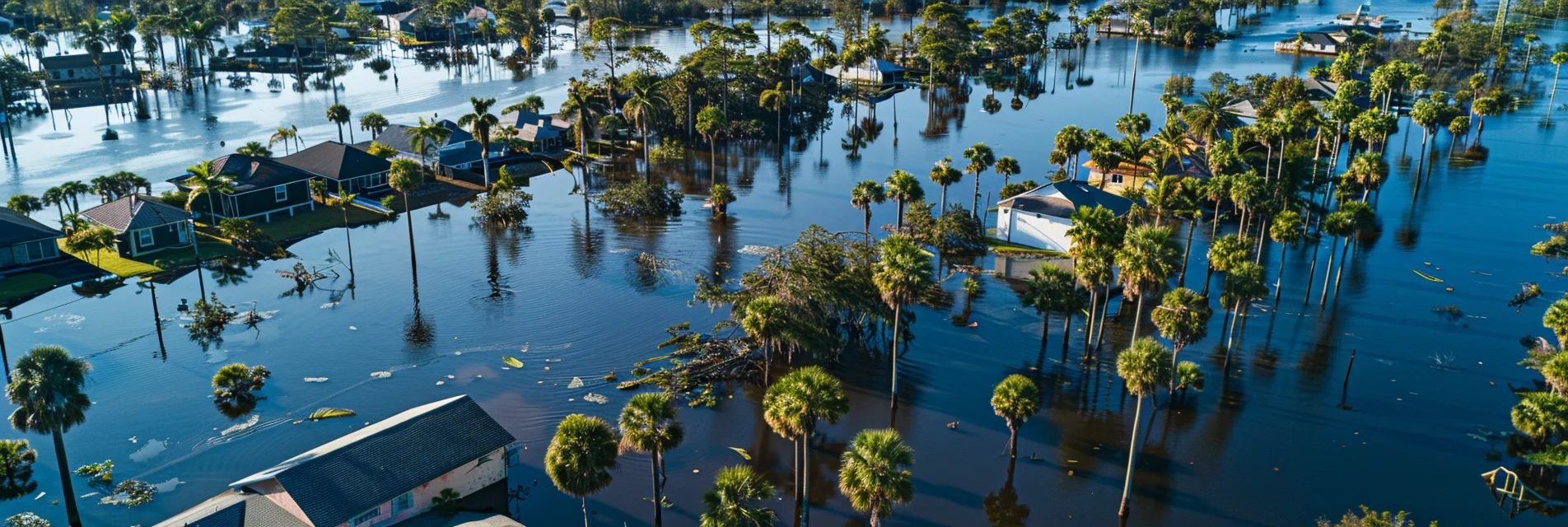
Nassau County — Long Beach, Freeport, Massapequa, and the South Shore of western Long Island — saw its barrier beaches and bayfront communities devastated by Superstorm Sandy. (For Florida's Nassau County, see our Florida guide.)
Storm damage on Nassau County roofs
Nassau County roofs face real storm exposure — and the most expensive damage is often invisible from the ground.
Superstorm Sandy (2012) drove a catastrophic surge into Long Beach, Island Park, Freeport, and Bay Park, flooding tens of thousands of South Shore homes and tearing roofs across the county, while Hurricane Gloria (1985) and the 1938 Long Island Express are remembered as historic disasters. The low South Shore and barrier island face direct ocean and bay surge.
🌀 Nassau storm history
Sandy (2012) devastated the South Shore; Gloria (1985) and the historic 1938 Long Island Express also struck Nassau.
📋 Nassau County building & wind code
New York enforces the State Uniform Fire Prevention and Building Code (the Residential Code of New York State), and New York City has its own Building Code; coastal Long Island and the city's shore neighborhoods build to high-wind and, since Superstorm Sandy, flood-elevation requirements. Every reroof must be permitted by the local building department, and downstate jurisdictions require the contractor to be locally licensed before a permit is issued. Building to current wind standards holds up far better in the next storm.
Storm-ready roof types in Nassau County
The right roof here balances wind rating, impact resistance, and durability.
Architectural shingle
Most common. Class 4 impact-rated shingles resist wind and hail and may earn an insurance credit.
Metal roofing
Excellent wind resistance and longevity — a strong fit for storm- and nor'easter-prone New York.
Flat & low-slope
Common on rowhomes and attached houses; needs proper membrane and flashing detail to resist wind-driven rain.
2026 roof repair & replacement ranges
Ranges reflect 2026 quotes from licensed contractors serving Nassau County.
| Roof work | Typical range | Best for |
|---|---|---|
| Minor storm repair | $500 – $1,800 | A few damaged shingles, small leaks |
| Section / slope replacement | $2,200 – $7,500 | Localized wind or hail damage, one slope |
| Full roof replacement | $9,500 – $32,000+ | Widespread damage, aging roof, full tear-off |
Confirm your contractor holds the required local home-improvement license — downstate building departments won't issue a permit without it.
Your roofing product or service here. Reach homeowners actively comparing storm-damage roofing options across 13 coastal states. High-intent audience, zero waste.
Storm roof claims in Nassau County
In New York, the most important claim question is often which policy applies — wind or flood.
Wind and wind-driven-rain roof damage is covered by your homeowner policy, and coastal Long Island and city shore policies often carry a separate hurricane or windstorm deductible (some carry coverage through New York's coastal market of last resort, the NY Property Insurance Underwriting Association). Flood and storm-surge damage is NOT covered by a homeowner policy and needs separate flood insurance (NFIP). Document everything with dated photos and get a licensed contractor's written report.
💧 The Sandy & Ida lesson: wind vs. flood
New York's worst storms — Superstorm Sandy's surge and Hurricane Ida's flash flooding — did most of their damage through water, which a homeowner or wind policy does not cover; rising water needs separate flood insurance (NFIP). Wind and wind-driven-rain roof damage is covered. After a storm, document both, and have a licensed roofer separate wind damage from flood damage in writing — it determines which claim pays.
Two numbers decide most of what a claim is worth: the hurricane deductible your policy applies, and whether a coinsurance penalty reduces the payout. Both are worth working out before you sign anything, alongside current roof replacement costs.
What to do once it's safe
Stay safe & tarp if needed
Don't climb a damaged roof. Cover active leaks from inside and call a pro for emergency tarping. Step-by-step tarp guide →
Document everything with dates
Dated photos of all visible damage — roof, ceilings, walls, attic. Separate wind damage from any flooding.
Hire a licensed roofer to inspect
A licensed local Nassau County contractor finds hidden damage and writes the report your claim needs.
File within your window
Submit promptly with the inspection report, and confirm the repair will be permitted.
How to verify a roofer in Nassau County
New York licenses home-improvement contractors locally — and unlicensed contractors can't even enforce a contract against you.
There is no statewide license: New York City (through the Department of Consumer and Worker Protection), Nassau, Suffolk, Westchester, Rockland, and Putnam counties all require a Home Improvement Contractor license, and many towns add their own rules. NYC's license even carries a Home Improvement Contractor Trust Fund that can reimburse homeowners harmed by a licensed contractor — protection you lose if you hire someone unlicensed. Verify the license with your city, county, or town consumer-affairs office before signing, confirm liability and workers' compensation insurance, and get a written contract.
Verify the local license
NYC (DCWP), Nassau, Suffolk, Westchester, and Rockland all license home-improvement contractors — check before signing.
Confirm insurance & recourse
Licensing keeps your legal recourse intact — and in NYC, Trust Fund eligibility. Ask for liability and workers' comp.
Use a local roofer
Local pros stay accountable; unlicensed contractors can't enforce a contract in New York.
Find your Nassau County city
Choose your city for a local, no-cost storm-damage roof inspection and a roofer near you.
How to hire a licensed Nassau County roofer
StormRoofQuotes is an independent, ad-supported information resource. We don't arrange inspections or refer you to any contractor — the guides below explain how to document damage and hire a licensed local roofer yourself.
StormRoofQuotes is an independent, ad-supported information resource. We publish storm-recovery guides and clearly-labeled roofing advertisements. We do not arrange inspections, take commissions, or refer you to any contractor.
How this site works →Recent storm activity in Nassau County
Nassau County — the western half of Long Island, comprising communities from Great Neck and Garden City to Long Beach, Freeport, and Oceanside — experienced Hurricane Sandy's most devastating surge impacts of any New York county in October 2012. The storm drove a record surge of 9–14 feet through Reynolds Channel and into the back bays of Long Beach, Oceanside, Baldwin, and East Rockaway, flooding thousands of homes and causing complete roof failures through a combination of structural collapse and surge water infiltration from below. The Long Beach barrier island was particularly devastated, with the boardwalk destroyed and many homes requiring complete reconstruction. Sandy remains the defining event for Nassau County's understanding of storm risk, and its physical and insurance legacy continues to shape every aspect of the county's residential roofing market.
Since Sandy, Nassau County has experienced Tropical Storm Isaias (August 2020), which made landfall in the Carolinas but tracked northeast and delivered sustained 60–70 mph gusts across Long Island, causing widespread tree damage and roof uplift that produced the most significant insurance claim volume in Nassau County since Sandy. Over 350,000 PSEG Long Island customers lost power during Isaias, and thousands of Nassau roofs sustained damage from falling trees and wind-driven debris. Hurricane Henri (August 2021) added additional tropical moisture and near-hurricane conditions to the South Shore, and Ida's remnants (September 2021) produced a historic rainfall event — several inches per hour — that caused flash flooding across Nassau and overwhelmed valley flashings, skylights, and aging flat-roof systems in the county's dense suburban housing stock.
Nassau County's housing stock is among the oldest in the New York metro area — the post-World War II Levittown-era development that defined much of the county was built in the late 1940s and 1950s, with roof systems that have been replaced multiple times since. The current generation of replacement roofs, many of which were installed after Sandy in 2012–2014, is now 10–12 years old and approaching the age where post-Sandy storm loading should be professionally assessed.
What this means for Nassau County homeowners
- Post-Sandy roof replacements (2012–2014) are now 10–12 years old and have absorbed Isaias, Henri, and Ida remnants — a professional inspection is advisable.
- Isaias (2020) and Ida remnant (2021) damage may still be actionable under NY's 2-year litigation window if claims were underpaid.
- Nassau County home improvement contractors must be licensed by Nassau County Consumer Affairs — verify at nassaucountyny.gov before signing any contract.
Nassau County storm roof claim: what to expect
Nassau County homeowners — particularly on the Long Beach barrier island and the bay-front communities of Oceanside, Freeport, and Baldwin — frequently manage the complexity of simultaneous NFIP flood and homeowner wind claims after significant storm events. The post-Sandy insurance landscape in Nassau County has also produced unique coverage structures that differ from typical inland NY policies.
New York claim filing deadlines
NY requires prompt notification of loss per policy terms. Litigation after claim denial has a 2-year statute of limitations. Check your policy for suit limitation clauses — some Long Island policies include 1-year internal limitations that are enforceable.
The Nassau County claim process
- Storm hits → Document wind damage and surge damage separately and immediately. For bay-front and oceanfront properties: photograph surge water levels with reference points (door frames, fence heights) to establish surge height documentation.
- Day 1–3 → File homeowner (wind) and NFIP (flood) claims simultaneously if applicable. These are separate claim processes with separate adjusters.
- Day 15 → NY requires insurer acknowledgment within 15 business days.
- Nassau County contractor → Nassau County requires home improvement contractors to be licensed by Nassau County Department of Consumer Affairs — separate from NY state registration. Verify at nassaucountyny.gov/agencies/consumer-affairs.
- Elevation certificates → For Long Beach and South Shore bay-front properties, current elevation certificates affect NFIP premiums and maximum coverage — confirm yours is current.
- Payment → NY requires payment within 25 business days of receiving proof of loss.