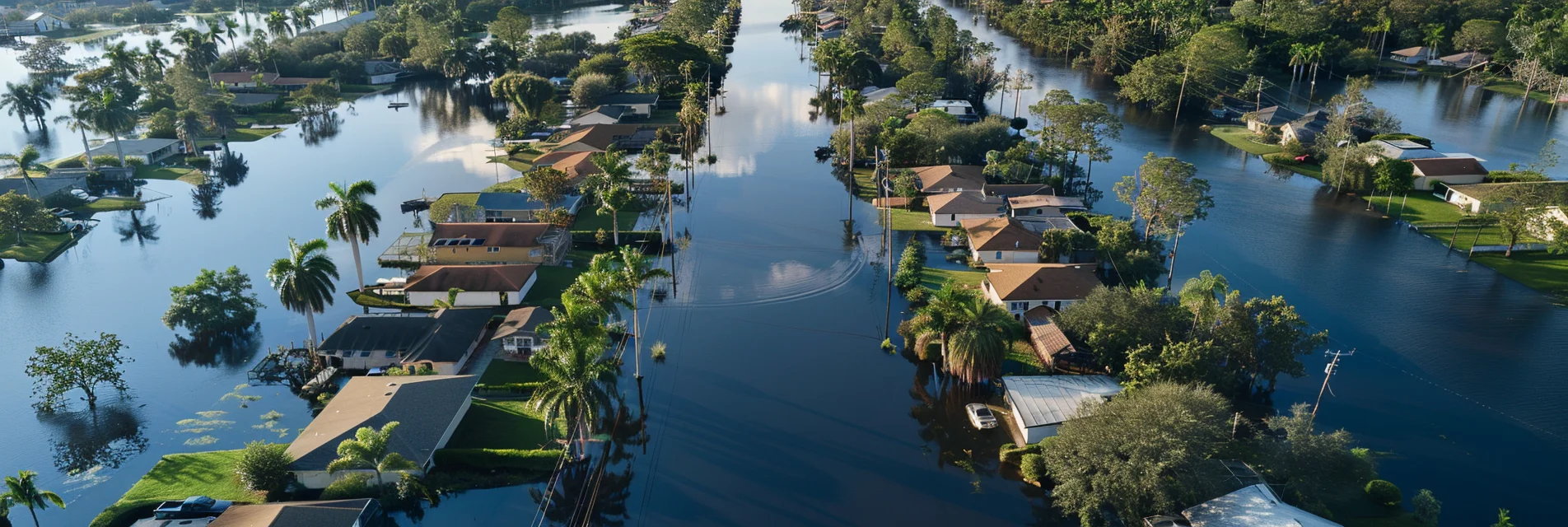
Monmouth County — Long Branch, Asbury Park, Sea Bright, and the northern Jersey Shore — was ground zero for Superstorm Sandy, which devastated its barrier beaches and bayshore towns.
Storm damage on Monmouth County roofs
Monmouth County roofs face real storm exposure — and the most expensive damage is often invisible from the ground.
Superstorm Sandy (2012) drove a catastrophic surge into Sea Bright, Highlands, and Union Beach and battered the shore from Long Branch to Belmar, destroying or damaging thousands of homes and tearing roofs countywide. Nor'easters regularly follow up with more wind and coastal flooding. Shore and bayshore roofs face direct wind and surge exposure.
🌀 Monmouth County storm history
Sandy (2012) was catastrophic for the northern shore and bayshore; nor'easters bring recurring wind and coastal flooding.
📋 Monmouth County building & wind code
New Jersey enforces the Uniform Construction Code (based on the International Residential Code), and after Superstorm Sandy it strengthened coastal flood-elevation and high-wind requirements at the shore. Every reroof must be permitted by the local construction official — who will not issue a permit to an unregistered contractor — and shore and flood-zone work may trigger elevation requirements. Building to current wind standards holds up far better in the next storm.
Storm-ready roof types in Monmouth County
The right roof here balances wind rating, impact resistance, and durability.
Architectural shingle
Most common. Class 4 impact-rated shingles resist wind and hail and may earn an insurance credit.
Metal roofing
Excellent wind resistance and longevity — a strong fit for storm- and nor'easter-prone New Jersey.
Tile & specialty
Durable but heavier; needs a structural review and proper wind detailing after any impact.
2026 roof repair & replacement ranges
Ranges reflect 2026 quotes from registered contractors serving Monmouth County.
| Roof work | Typical range | Best for |
|---|---|---|
| Minor storm repair | $450 – $1,600 | A few damaged shingles, small leaks |
| Section / slope replacement | $2,000 – $7,000 | Localized wind or hail damage, one slope |
| Full roof replacement | $9,000 – $30,000+ | Widespread damage, aging roof, full tear-off |
Any New Jersey home-improvement contract over $500 must be in writing with the contractor's registration number — and a municipality won't permit the work for an unregistered contractor.
Your roofing product or service here. Reach homeowners actively comparing storm-damage roofing options across 13 coastal states. High-intent audience, zero waste.
Storm roof claims in Monmouth County
Superstorm Sandy taught New Jersey the most important claim lesson there is — wind and flood are different policies.
Wind and wind-driven-rain roof damage is covered by your homeowner policy, and coastal policies may carry a separate hurricane or wind deductible. Flood and storm-surge damage is NOT covered by a homeowner policy and requires separate flood insurance (NFIP). Document everything with dated photos, file promptly, and get a registered contractor's written report.
💧 The Sandy lesson: wind vs. flood
Superstorm Sandy taught New Jersey homeowners the hard way that storm-surge and flood damage are not covered by a homeowner or wind policy — only by separate flood insurance (NFIP). Wind and wind-driven-rain roof damage is covered. After a storm, document both, and have a registered roofer separate wind damage from flood damage in writing — it determines which claim pays.
Before you compare a settlement offer, it helps to know the arithmetic behind it — the hurricane deductible calculator shows what a percentage deductible actually takes off a claim, and the coinsurance calculator shows what happens when a policy limit falls short of replacement cost.
What to do once it's safe
Stay safe & tarp if needed
Don't climb a damaged roof. Cover active leaks from inside and call a pro for emergency tarping. Step-by-step tarp guide →
Document everything with dates
Dated photos of all visible damage — roof, ceilings, walls, attic. Separate wind damage from any flooding.
Hire a licensed roofer to inspect
A registered local Monmouth County contractor finds hidden damage and writes the report your claim needs.
File within your window
Submit promptly with the inspection report, and confirm the repair will be permitted.
How to verify a roofer in Monmouth County
New Jersey has strong contractor rules and an active enforcement record against storm-chasers — use them.
Every home improvement contractor, including roofers, must register with the New Jersey Division of Consumer Affairs and carry at least $500,000 in commercial general liability insurance; the state is now phasing in full licensure with added training and bonding under a 2023 law. The registration number must appear on contracts and ads, contracts over $500 must be in writing, and municipalities won't permit work by an unregistered contractor. New Jersey's Consumer Fraud Act gives homeowners strong recourse — including potential triple damages. Verify the registration before signing, and never pay in cash.
Verify the registration
NJ requires Division of Consumer Affairs registration (now phasing into full licensure) — check it before signing.
$500k insurance required
Registered NJ contractors must carry at least $500,000 in liability insurance — ask for the certificate.
Use a local roofer
Local pros stay accountable; the Division cites out-of-state storm-chasers.
Find your Monmouth County city
Choose your city for a local, no-cost storm-damage roof inspection and a roofer near you.
How to hire a licensed Monmouth County roofer
StormRoofQuotes is an independent, ad-supported information resource. We don't arrange inspections or refer you to any contractor — the guides below explain how to document damage and hire a licensed local roofer yourself.
StormRoofQuotes is an independent, ad-supported information resource. We publish storm-recovery guides and clearly-labeled roofing advertisements. We do not arrange inspections, take commissions, or refer you to any contractor.
How this site works →Recent storm activity in Monmouth County
Monmouth County — including Asbury Park, Long Branch, Red Bank, Freehold, and the barrier beach communities of Manasquan, Sea Girt, Spring Lake, and Belmar — was among the hardest-hit New Jersey counties during Hurricane Sandy in October 2012. The storm made landfall near Brigantine to the south, but Monmouth County's orientation on the NJ coastline placed it directly in the path of Sandy's most intense onshore winds and surge. Sea Bright, Belmar, and Avon were particularly devastated, with surge heights of 7–9 feet above ground in beachfront communities. The barrier beach communities sustained damage that in many cases required complete structural replacement, and the rebuilding process reshaped the county's coastal real estate market significantly.
Since Sandy, Monmouth County has experienced Tropical Storm Isaias (2020), which made landfall in South Carolina and tracked northeast, delivering sustained 60–70 mph gusts across Monmouth's coastal areas and causing widespread tree damage and roof uplift — the most significant event since Sandy. Henri (2021) brought additional tropical moisture, and the Ida remnants (September 2021) produced record-breaking rainfall that overwhelmed valley flashings, skylights, and aged flat-roof sections across the county's older housing stock. Repeated nor'easters in 2022–2023 added cumulative loading stress to barrier beach roofs that had survived Sandy and Isaias.
The cumulative effect is significant: barrier beach communities in Monmouth County that rebuilt after Sandy now have 12-year-old post-storm construction that has been stress-tested multiple times. Inland communities have large numbers of homes built in the 1960s–1990s that have never been fully replaced and are now showing the accumulated effects of a decade of repeated tropical and nor'easter loading. A professional inspection can distinguish between cosmetic aging and functional deterioration — and that distinction matters enormously for both insurance coverage and storm performance.
What this means for Monmouth County homeowners
- Isaias (2020) and Ida remnant (2021) damage may still be actionable under NJ's 2-year litigation window if claims were underpaid — consult a public adjuster if your settlement seemed low.
- Post-Sandy reconstruction on barrier beaches is now 12 years old and due for its first comprehensive inspection under the stress of multiple subsequent storm events.
- NJ HIC contractor registration is required — always verify at njconsumeraffairs.gov before signing any contract.
Monmouth County storm roof claim: what to expect
New Jersey's insurance consumer protection framework is among the stronger in the Northeast, but Monmouth County's coastal and barrier beach property owners frequently navigate the additional complexity of simultaneous NFIP flood and homeowner wind claims — the same challenge that defined the post-Sandy claims process for thousands of county residents.
New Jersey claim filing deadlines
NJ requires prompt notification of loss per policy terms. Litigation after claim denial has a 2-year statute of limitations. Check your policy for any shorter internal "suit limitation" clauses — these are enforceable under NJ law.
The Monmouth County claim process
- Storm hits → Document wind damage separately from water/surge damage — they go to different policies.
- Day 1–3 → File homeowner (wind) and NFIP (flood) claims simultaneously if applicable.
- Day 10 → NJ requires insurers to acknowledge within 10 business days.
- Contractor inspection → Get independent inspection from a NJ HIC-registered contractor before the insurer's adjuster visits.
- Payment → NJ requires payment within 30 days of proof of loss. Delays accrue penalty interest.
Monmouth County home improvement contractors must be registered with NJ Division of Consumer Affairs as a Home Improvement Contractor (HIC) — verify at njconsumeraffairs.gov. After Sandy and Isaias, the county experienced significant influxes of out-of-state contractors operating without proper registration.