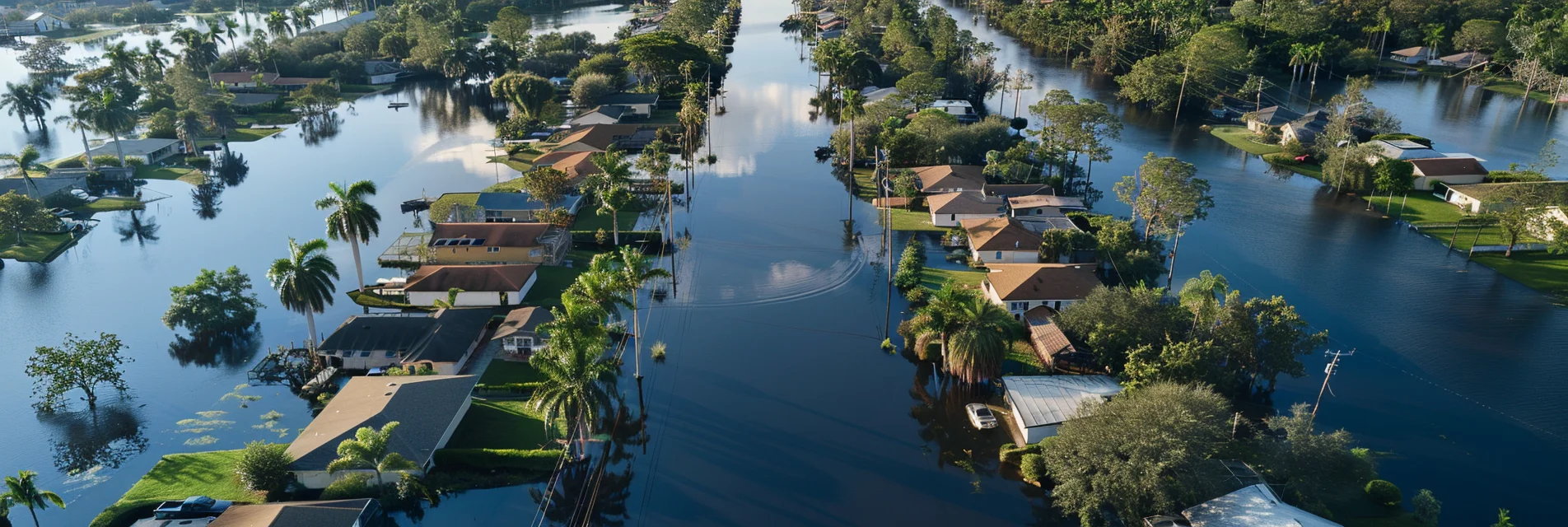
Harris County — Houston and its industrial east side — is the largest market on the Texas coast and has been battered repeatedly: Ike, Harvey, Imelda, Nicholas, and Beryl all hit within 16 years. The eastern part of the county falls in the TWIA windstorm area.
Storm damage on Harris County roofs
Harris County roofs face real, repeated storm exposure — and the most expensive damage is often invisible from the ground.
Hurricane Ike (2008) tore roofs across Houston and knocked out power for weeks. Harvey (2017) brought catastrophic, record-setting flooding. Imelda (2019) and Nicholas (2021) added more, and Hurricane Beryl (2024) made landfall to the south and raked Houston with damaging wind, downing transmission towers and leaving millions without power. With a vast housing stock, Harris County sees enormous post-storm roof-claim volume.
🌀 Harris County storm history
Ike (2008), Harvey (2017), Imelda (2019), Nicholas (2021), and Beryl (2024) — a relentless run of wind and flood events.
📋 Harris County windstorm building rules
Texas has no statewide residential building code, but this county sits in the Texas windstorm catastrophe area. To qualify for TWIA wind-and-hail coverage, roofing work here must meet Texas windstorm building standards and be documented with a Texas Department of Insurance windstorm certificate (form WPI-8), issued after inspection by a TDI-approved inspector or qualified engineer. Skipping that certification can leave your roof ineligible for windstorm coverage.
Coastal roof types in Harris County
The right roof here balances wind rating, hail resistance, and windstorm-certification eligibility.
Architectural shingle
Most common. Class 4 impact-rated shingles resist hail and can earn insurance discounts in Texas.
Metal roofing
Excellent wind and hail resistance and a strong fit for windstorm-certified coastal installs.
Tile & specialty
Durable but heavier; requires a structural review and proper windstorm detailing after any impact.
2026 roof repair & replacement ranges
Ranges reflect 2026 quotes from roofers serving Harris County. Coastal and barrier-island addresses run toward the higher end.
| Roof work | Typical range | Best for |
|---|---|---|
| Minor storm repair | $400 – $1,500 | A few damaged shingles, small leaks |
| Section / slope replacement | $1,800 – $6,500 | Localized wind or hail damage, one slope |
| Full roof replacement | $9,000 – $30,000+ | Widespread damage, aging roof, full tear-off |
Windstorm-certified installation and impact-rated coverings add some cost, but they keep your roof eligible for TWIA coverage and cut storm damage over time.
Your roofing product or service here. Reach homeowners actively comparing storm-damage roofing options across 13 coastal states. High-intent audience, zero waste.
Storm roof claims in Harris County
In coastal Texas, wind and hail usually aren't part of your standard homeowner policy — and claims hinge on proof of compliant construction.
Across the coastal counties, standard homeowner policies typically exclude windstorm and hail; that coverage comes through the Texas Windstorm Insurance Association (TWIA) — the state's insurer of last resort — or a separate windstorm policy. Texas's prompt-payment law sets deadlines for insurers to acknowledge, accept or reject, and pay claims, and a windstorm claim often turns on proof of code-compliant construction (your WPI-8 certificate). Document everything with dated photos and keep your certificate handy.
💰 Windstorm certification & discounts
A current WPI-8 windstorm certificate is what makes your roof eligible for TWIA coverage, and many Texas insurers offer premium discounts for impact-resistant (Class 4) roofing. Replacing a roof here is the moment to build to windstorm standards and get it certified — it protects your home and your coverage.
Work the numbers before the adjuster does. The coinsurance calculator and the hurricane deductible calculator between them explain most of the gap homeowners find between what a roof costs and what a policy pays.
What to do once it's safe
Stay safe & tarp if needed
Don't climb a damaged roof. Cover active leaks from inside and call a pro for emergency tarping. Step-by-step tarp guide →
Document everything with dates
Dated photos of all visible damage — roof, ceilings, walls, attic. Timestamps help tie damage to a specific storm.
Hire a licensed roofer to inspect
A local Harris County roofer finds hidden damage and writes the report your windstorm claim needs.
File within your window
Submit promptly with the inspection report and your WPI-8. Earlier is always stronger.
How to vet a roofer in Harris County
After any major storm, out-of-town crews flood affected Harris County neighborhoods. In Texas, vetting matters even more.
Texas does not license roofing contractors at the state level, so there's no state license to look up — which makes your own due diligence essential. Confirm the roofer carries current general liability and workers' compensation insurance, ask about Roofing Contractors Association of Texas (RCAT) membership and manufacturer certifications, check local references and a permanent local address, and make sure they're experienced with TWIA windstorm certification (WPI-8).
Confirm insurance
Texas doesn't license roofers — proof of liability and workers' comp matters most.
Check credentials
Look for RCAT membership and manufacturer certifications.
Use a local roofer
Local pros know TWIA windstorm certification and stay accountable.
Find your Harris County city
Choose your city for a local, no-cost storm-damage roof inspection and a roofer near you.
How to hire a licensed Harris County roofer
StormRoofQuotes is an independent, ad-supported information resource. We don't arrange inspections or refer you to any contractor — the guides below explain how to document damage and hire a licensed local roofer yourself.
StormRoofQuotes is an independent, ad-supported information resource. We publish storm-recovery guides and clearly-labeled roofing advertisements. We do not arrange inspections, take commissions, or refer you to any contractor.
How this site works →Recent storm activity in Harris County
Harris County has experienced more significant named-storm impacts in the past decade than virtually any other major US metropolitan area. Hurricane Harvey (2017) delivered what remains the most costly rainfall event in US history, with some Harris County stations recording over 60 inches of rain over four days. While Harvey's wind damage was relatively limited at landfall strength, the catastrophic flooding caused massive interior damage that in turn produced widespread roof failures — saturated decking, collapsed ceilings that destroyed structural framing, and mold infiltration that compromised roof systems from the inside out. The Harvey claims process stretched years and introduced tens of thousands of Harris County homeowners to the complexity of Texas storm insurance for the first time.
Hurricane Beryl made landfall near Matagorda Bay on July 8, 2024, as a Category 1 storm and moved directly over Houston. Despite its relatively modest wind speed at landfall, Beryl caused widespread roof damage across Harris County — particularly in the older residential neighborhoods of the inner loop and the dense subdivisions of Katy, Pearland, and Sugar Land. Extended power outages (some lasting over two weeks) and record July heat made post-storm assessments difficult, and the surge of demand for roofing contractors created backlogs and elevated pricing throughout the second half of 2024. Many Beryl-damaged roofs remain unrepaired or improperly patched as of 2025.
The pattern in Harris County is increasingly clear: the question is not whether a significant storm will damage your roof, but when. Roofs installed before the mid-2010s building standard updates — particularly those with standard 3-tab shingles rather than Class 4 impact-rated architectural shingles — are significantly more vulnerable to the types of wind events Harris County regularly experiences.
What this means for Harris County homeowners
- Beryl (2024) damage should be reported to your insurer immediately — Texas has a 2-year statute of limitations on storm damage claims, but earlier documentation produces better outcomes.
- Harris County has no statewide roofing contractor license requirement — verifying insurance and local references is your primary protection against fraudulent operators.
- Class 4 impact-rated shingles can earn a premium discount of 20–30% from many Texas insurers — ask about this when replacing.
Harris County storm roof claim: what to expect
Texas has some of the strongest consumer protections for storm insurance claimants in the country, including the Texas Prompt Payment of Claims Act, which sets firm deadlines for insurer acknowledgment and payment. Understanding these rights is essential in Harris County, where post-Harvey and post-Beryl claim backlogs have tested every insurer operating in the market.
Texas claim filing deadlines
Texas law gives homeowners 2 years from the date of loss to file a storm damage claim — longer than most states. However, earlier filings consistently produce better outcomes. Documentation degrades, adjusters' memories fade, and the longer a damaged roof sits unrepaired, the more insurers argue that subsequent damage is maintenance-related rather than storm-caused.
The Harris County claim process
- Storm hits → Document damage same day with dated photos/video. Note the storm name and date — this ties your damage to a covered event.
- Days 1–15 → File your claim. Texas law requires your insurer to acknowledge receipt within 15 days.
- Days 15–45 → Insurer has 15 business days after receiving your proof of loss to accept or deny. Get an independent contractor inspection in this window.
- Payment → Insurer must pay within 5 business days of accepting the claim. Delays beyond this trigger 18% annual interest penalties under Texas law — a powerful lever if your insurer is slow-paying.
- Supplement → Supplements are common and expected. Your contractor's scope vs. the insurer's scope will differ — negotiate with documentation, not verbal arguments.
TWIA and Harris County
Harris County is within the Texas windstorm catastrophe area, meaning properties near the coast may be covered by TWIA rather than standard homeowner policies for wind and hail. If your property is in the TWIA area, your wind claim goes to TWIA (not your homeowner carrier) and has different rules, timelines, and documentation requirements. Know which policy covers what before a storm hits.