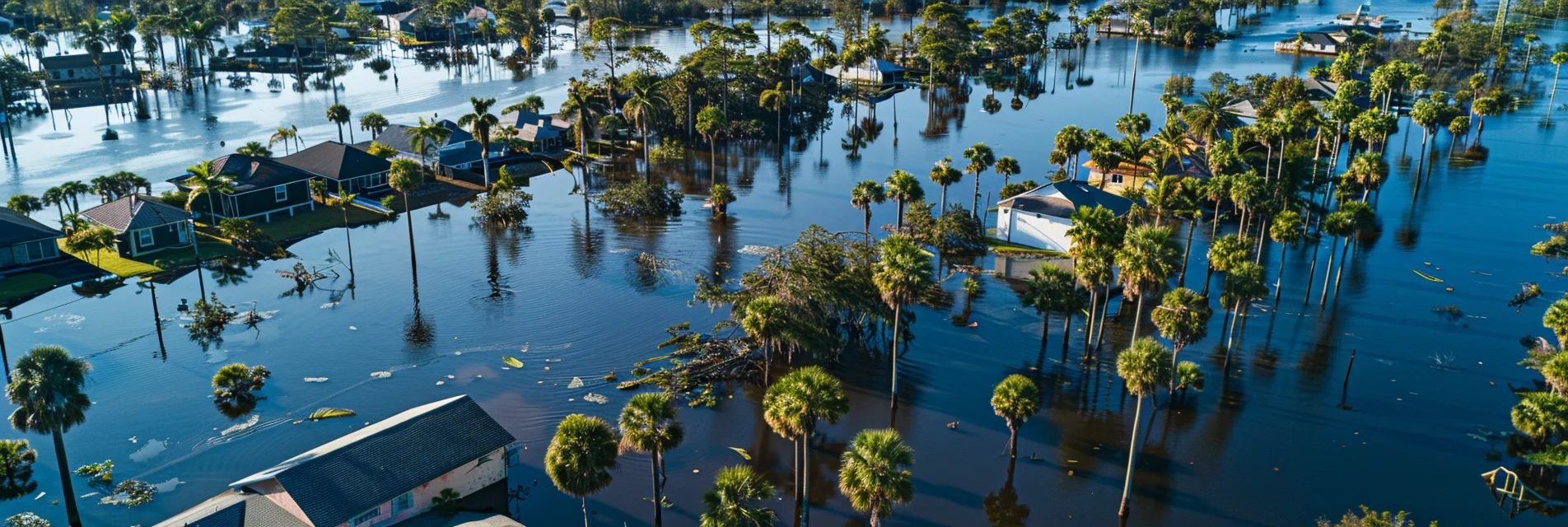
Brunswick County — Southport, Oak Island, Leland, and the South Brunswick beaches — took Hurricane Isaias's 2020 landfall and sits along North Carolina's most hurricane-exposed coast.
Storm damage on Brunswick County roofs
Brunswick County roofs face real storm exposure — and the most expensive damage is often invisible from the ground.
Hurricane Isaias (2020) made landfall at Ocean Isle Beach, spinning up tornadoes and tearing roofs across Brunswick County, and Hurricane Florence (2018) brought days of wind and flooding. Historic Hurricane Hazel (1954) devastated the same coast as a Category 4. The county's beach communities face direct Atlantic exposure in the high-wind zone.
🌀 Brunswick County storm history
Isaias (2020, landfall at Ocean Isle Beach), Florence (2018), and historic Hazel (1954) define the county's storm record.
📋 Brunswick County building & wind code
North Carolina enforces the State Building Code (the NC Residential Code), with high-wind design and wind-borne-debris requirements along the coast — design wind speeds reach 150 mph at the Outer Banks. Every reroof must be permitted by the local building authority; for work valued at $40,000 or more, the department will require proof of a licensed general contractor before issuing the permit. Building to current wind standards holds up far better in the next storm.
Storm-ready roof types in Brunswick County
The right roof here balances wind rating, impact resistance, and long-term durability.
Architectural shingle
Most common. Class 4 impact-rated shingles resist wind and hail and may earn an insurance credit.
Metal roofing
Excellent wind resistance and longevity — a strong fit for hurricane- and storm-prone North Carolina.
Tile & specialty
Durable but heavier; needs a structural review and proper wind detailing after any impact.
2026 roof repair & replacement ranges
Ranges reflect 2026 quotes from licensed contractors serving Brunswick County.
| Roof work | Typical range | Best for |
|---|---|---|
| Minor storm repair | $400 – $1,500 | A few damaged shingles, small leaks |
| Section / slope replacement | $1,800 – $6,500 | Localized wind or hail damage, one slope |
| Full roof replacement | $8,500 – $28,000+ | Widespread damage, aging roof, full tear-off |
Confirm the quote includes a permit pulled with the local building authority — and for work of $40,000 or more, North Carolina requires a licensed general contractor before a permit will be issued.
Your roofing product or service here. Reach homeowners actively comparing storm-damage roofing options across 13 coastal states. High-intent audience, zero waste.
Storm roof claims in Brunswick County
In North Carolina, the most important claim question is often which policy applies — wind or flood.
Wind and wind-driven-rain roof damage is covered by your homeowner policy; coastal homeowners often carry separate wind/hail coverage through the North Carolina Insurance Underwriting Association (the "Beach Plan"), with a percentage-based named-storm deductible. Document storm damage thoroughly with dated photos, file promptly, and get a licensed contractor's written report — and make sure your repair is permitted.
💧 Wind vs. flood — know the difference
North Carolina's worst storms — Floyd, Matthew, Florence, and Helene — did most of their damage through flooding, which a standard homeowner or wind policy does not cover; rising-water flood damage needs separate flood insurance (NFIP). Wind and wind-driven-rain roof damage is covered. After a storm, document both, and have a licensed roofer separate the wind damage from flood damage in writing — it matters for your claim.
Before you compare a settlement offer, it helps to know the arithmetic behind it — the hurricane deductible calculator shows what a percentage deductible actually takes off a claim, and the coinsurance calculator shows what happens when a policy limit falls short of replacement cost.
What to do once it's safe
Stay safe & tarp if needed
Don't climb a damaged roof. Cover active leaks from inside and call a pro for emergency tarping. Step-by-step tarp guide →
Document everything with dates
Dated photos of all visible damage — roof, ceilings, walls, attic. Separate wind damage from any flooding.
Hire a licensed roofer to inspect
A licensed local Brunswick County contractor finds hidden damage and writes the report your claim needs.
File within your window
Submit promptly with the inspection report, and confirm the repair will be permitted.
How to verify a roofer in Brunswick County
North Carolina has no dedicated roofing license, and the Licensing Board actively prosecutes the out-of-state "storm chasers" who descend after every hurricane.
For work valued at $40,000 or more, state law requires a licensed General Contractor — with the appropriate building, residential, or roofing-specialty classification — from the NC Licensing Board for General Contractors; performing larger work without a license is the unlicensed practice of general contracting. Verify any contractor at the NCLBGC before signing, confirm liability and workers' compensation insurance, get the scope and price in writing, and make sure a local permit is pulled.
Verify the NCLBGC license
NC requires a licensed GC for work of $40,000+ — check the NC Licensing Board for General Contractors.
Confirm insurance
Ask for liability and workers' comp certificates — out-of-state crews often lack them.
Use a local roofer
Local pros stay accountable long after the storm-chasers leave.
Find your Brunswick County city
Choose your city for a local, no-cost storm-damage roof inspection and a roofer near you.
How to hire a licensed Brunswick County roofer
StormRoofQuotes is an independent, ad-supported information resource. We don't arrange inspections or refer you to any contractor — the guides below explain how to document damage and hire a licensed local roofer yourself.
StormRoofQuotes is an independent, ad-supported information resource. We publish storm-recovery guides and clearly-labeled roofing advertisements. We do not arrange inspections, take commissions, or refer you to any contractor.
How this site works →Recent storm activity in Brunswick County
Brunswick County — Ocean Isle Beach, Holden Beach, Sunset Beach, Calabash, Bolivia, Shallotte, and Southport — is the southernmost of North Carolina's coastal counties, sharing a border with South Carolina and occupying some of the most storm-exposed real estate on the Carolina coast. The county's barrier island chain — separated from the mainland by the Intracoastal Waterway — faces both Atlantic storm exposure and the specific vulnerability of shallow-water barrier geographies where surge builds quickly and arrives with little warning. Hurricane Florence made landfall approximately 50 miles northeast at Wrightsville Beach in September 2018, but Brunswick County's position southwest of landfall placed it in Florence's left-front quadrant — a different wind exposure than New Hanover County but still significant, with prolonged rainfall that exceeded 15 inches in some locations and produced flooding that the Lumber River and its tributaries amplified for days after the storm passed.
Hurricane Dorian (2019) tracked up the North Carolina coast as a Category 1 storm just one year after Florence, delivering additional tropical-force winds to barrier communities that were still recovering. The consecutive-year impacts of Florence and Dorian on Brunswick County's housing stock represent the kind of accumulated loading that accelerates roofing system degradation — adhesive strips flex and partially re-bond, fasteners shift in their substrate, and valley sealants that survived Florence may have finally failed under Dorian's additional stress. Hurricane Matthew (2016) had preceded both, making Brunswick County one of the most repeatedly storm-tested coastal counties in the Carolinas.
Brunswick County's rapid growth — it has been one of North Carolina's fastest-growing counties for over a decade, driven by retirees and remote workers seeking coastal access — means that alongside the older housing stock that has absorbed multiple storms, there is a large inventory of recently built homes that has never been tested by a major direct hit. The construction quality in rapid-growth markets varies considerably, and a professional inspection can reveal whether new construction was built to the higher end of current NC building code requirements or the minimum.
What this means for Brunswick County homeowners
- Matthew/Florence/Dorian roofs that were repaired (not replaced) are now carrying repairs from 2016–2019 that should be professionally re-evaluated before another active season.
- North Carolina's 3-year suit limitation means Dorian (2019) claims may still be actionable if previously underpaid — consult a public adjuster if your settlement seemed low.
- Brunswick County's barrier island properties require Brunswick County permit office approval plus potential CAMA review for roofing work in ocean hazard areas.
Brunswick County storm roof claim: what to expect
North Carolina's insurance regulatory framework provides solid consumer protections, including a 3-year litigation window and relatively clear prompt-pay requirements. Brunswick County homeowners who experienced Florence, Dorian, or Matthew damage and received settlements they believed were insufficient may still have recourse depending on the specific claim history.
North Carolina claim filing deadlines
NC gives homeowners a 3-year statute of limitations from a claim denial to file suit — one of the most generous in the Southeast. File initial claims promptly after each storm event per your policy's notice requirements.
The Brunswick County claim process
- Storm hits → Document all damage with dated photos within 24 hours. Barrier island properties: document both ocean-side and sound-side conditions separately.
- Day 1–3 → File homeowner claim. If in NFIP flood zone, file flood claim simultaneously.
- Day 15 → NC requires insurer acknowledgment within 10 business days.
- CAMA check → For ocean hazard area properties, confirm whether repair scope requires a CAMA permit from the NC Division of Coastal Management before pulling a local building permit.
- Contractor → NC General Contractor license required for projects over $30,000 — verify at nclbgc.org.
- Payment → NC requires payment within 30 days of receiving satisfactory proof of loss.